How to Choose the Right Industrial Robot: Key Factors to Consider Before You Buy
A practical guide to selecting an industrial robot. Covers application matching, payload and reach, mounting options, IP ratings, controller choice, precision requirements, and extra considerations for buying used.
Tyche Robotic
6/3/20266 min read
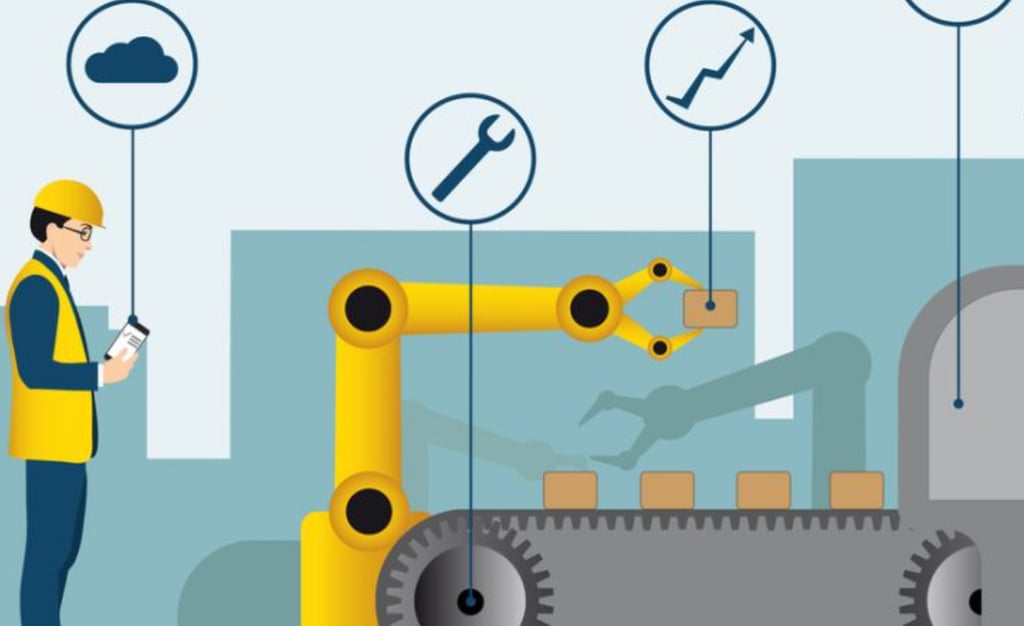
Picking an industrial robot off a spec sheet is easy. Picking one that will still be the right choice three years from now, after the product line has changed twice and the integrator has moved on to other projects, is harder. A robot is not a standalone machine. It is a component in a production system, and the decisions made during selection, what application it needs to run, how much it needs to lift, where it will be mounted, what environment it will work in, and which controller it will use, determine whether that system runs smoothly or fights itself every cycle. The list of considerations is not long, but each one matters. Skip one, and the savings from buying the wrong robot disappear into integration hours, rework, and downtime.
Start with the Application
The application is the first filter because it eliminates most of the catalog before any other spec is even considered. A robot built for high-speed pick-and-place is not the same machine as one built for heavy palletizing, even if they share a similar payload. Arc welding demands a robot with a slim wrist and smooth path accuracy because the torch has to snake into tight joints and hold a consistent travel speed. Spot welding demands a robot that can carry a weld gun weighing over a hundred kilograms through millions of high-force cycles without losing position. Palletizing demands reach and payload above all else, with less concern for precision. Assembly and machine tending demand repeatability and the ability to integrate with vision and force sensors. The application tells you which spec matters and which ones you can compromise on. Get the application wrong, and everything else you specify after that is correcting a mistake.
Payload and Reach: The Two Numbers That Matter Most
Payload and reach are the two specs that show up on every robot datasheet, and they are the ones that cause the most expensive mistakes when they are underestimated. Payload has to cover the weight of the part, the end-of-arm tooling, and a safety margin. A gripper that weighs fifteen kilograms on a robot rated for twenty kilograms leaves only five kilograms for the part. That math works on paper until the part comes in slightly overweight or the gripper needs a bracket that adds another two kilos. Reach is just as unforgiving. The robot has to access every point in the work envelope, not just at full horizontal extension, but with the wrist oriented into whatever angle the process needs. A robot that can stretch to a spot on a spec sheet may not be able to reach it while holding a tool at a forty-five degree angle. For heavy spot welding, the FANUC R-2000iB/210F carries 210 kilograms over 2,655 millimeters and is the benchmark machine in body shops worldwide. The ABB IRB 6640-205 handles 205 kilograms over 2,750 millimeters and is common in foundry and heavy material handling. The KUKA KR 210 carries a similar payload over 2,696 millimeters and competes directly in spot welding and heavy palletizing. The Motoman MH series covers comparable heavy-payload ground with a strong presence in structural steel and fabrication welding. In arc welding, the FANUC Arc Mate series and the Motoman AR series are the two most common families, with payloads in the single-digit to low-teen kilogram range and reaches around 1,400 to 2,200 millimeters.
Mounting Options: Floor, Wall, Ceiling, or Angle
Mounting position changes how the robot interacts with the workspace, and not every robot supports every orientation. Floor mounting is the default and the simplest to engineer. Wall, ceiling, and angle mounting save floor space and can give the robot better access to parts that are presented from above or below. Motoman robots are known for supporting a wide range of mounting orientations across their product line, but all four major brands offer multiple options on most models. The mounting decision should be made early because it affects the reach calculation. A robot mounted upside down on a gantry has a completely different work envelope than the same robot bolted to the floor. The integration complexity also changes. A ceiling-mounted robot needs a rigid support structure, and that structure costs money and engineering time that a floor-mounted cell does not.
Environment: What Your Floor Throws at the Robot
A robot that works perfectly in a climate-controlled assembly room can be destroyed within months in a foundry. The environment determines the protection level the robot needs, and getting this wrong is one of the most expensive mistakes in robot selection. IP65 means the robot is dust-tight and can handle low-pressure water jets from any direction. It is the baseline for most general manufacturing. IP67 adds temporary immersion, the standard for foundries, grinding cells, and wet machining environments. IP69K is a different category entirely, built for high-pressure, high-temperature washdown in food, beverage, and pharmaceutical production. The four major brands each have their own way of delivering environmental protection. FANUC FoundryPro applies IP67 in three protection zones across the robot, with double oil seals and epoxy-coated castings. ABB Foundry Plus and Foundry Plus 2 tier the protection, with Plus 2 capable of withstanding high-pressure steam washdown. KUKA's Foundry series centers on a V2A stainless steel wrist and offers IP65 and IP67 dual certification with an ambient temperature rating of 55 degrees Celsius. Yaskawa's XP option upgrades standard robots to IP65, with high-temperature variants reaching IP67 and rated for operation at 180 degrees Celsius. For cleanrooms, food-grade applications, and explosive environments, each brand offers specialized variants. The environment should be written into the spec before the robot is selected, not discovered after the first failure.
Controller and Precision: The Stuff That Gets Overlooked
Two factors that rarely make the shortlist but determine how well a robot integrates and performs over time are the controller ecosystem and the precision requirement. The controller is what the integrator and the maintenance team will interact with every day. FANUC's R-30iB is a closed, stable system that runs the same way for years without drift. ABB's IRC5 and OmniCore are built around motion control, with TrueMove and QuickMove providing path accuracy and cycle time optimization. KUKA's KRC4 and KRC5 run on a Windows-based open architecture that gives integrators more flexibility but requires more IT maintenance. Yaskawa's YRC1000 handles multi-robot coordination natively, with up to eight robots and 72 axes from a single controller. The brand choice often comes down to which controller the local integrator knows best.
Precision is the other overlooked variable. A robot that holds ±0.01 mm is built for precision assembly, laser cutting, and delicate insertion tasks. A robot at ±0.06 mm handles arc welding and general material handling with room to spare. A robot at ±0.3 mm is perfectly fine for spot welding and heavy palletizing. Buying more precision than the application needs adds cost with no return. Buying less means scrapped parts and rework. The application tells you which precision grade to target, and the controller tells you which brand ecosystem you are buying into.
What to Consider When Buying a Used Robot
Buying used adds a layer of considerations on top of the standard selection criteria. Brand preference shifts when you are shopping the secondary market, because availability depends on what factories in your region have been retiring. FANUC and KUKA heavy-payload robots flood the used market from automotive retooling cycles, so they are easier to find and pricing is more transparent. ABB and Motoman welding robots show up regularly but in smaller volumes. The condition level of the robot, refurbished, tested and working, or as-is, determines not just the price but how much work the robot will need before it runs production. A refurbished robot with a documented inspection report and a loaded test log is the closest thing to a known quantity on the used market. An as-is robot sold with no guarantees is a project. The buyer's in-house maintenance capability should decide which condition level makes sense, not just the purchase price. A loaded test report is the single most valuable document in a used robot purchase. It tells you whether the robot was tested under conditions that reflect real work, not just powered on and jogged.
This article was prepared by Tyche Robotic, a supplier of refurbished six-axis industrial robots serving integrators and resellers in Latin America, Southeast Asia, and Europe.
Contact Us
As a professional supplier of used industrial robots, Jiangmen Tyche Robotic Co., Ltd. is committed to providing customers with integrated solutions—from hardware selection and configuration to software programming, debugging, and after‑sales maintenance.
© 2025. All rights reserved.

Mr. Victor Ismael