FANUC vs. Yaskawa Motoman: How Two Japanese Heavyweights Stack Up for Used Buyers
A practical comparison of FANUC and Yaskawa Motoman industrial robots covering controllers, applications, precision, and used market performance. Includes inspection tips for used FANUC and Motoman robots.
Tyche Robotic
5/26/20266 min read
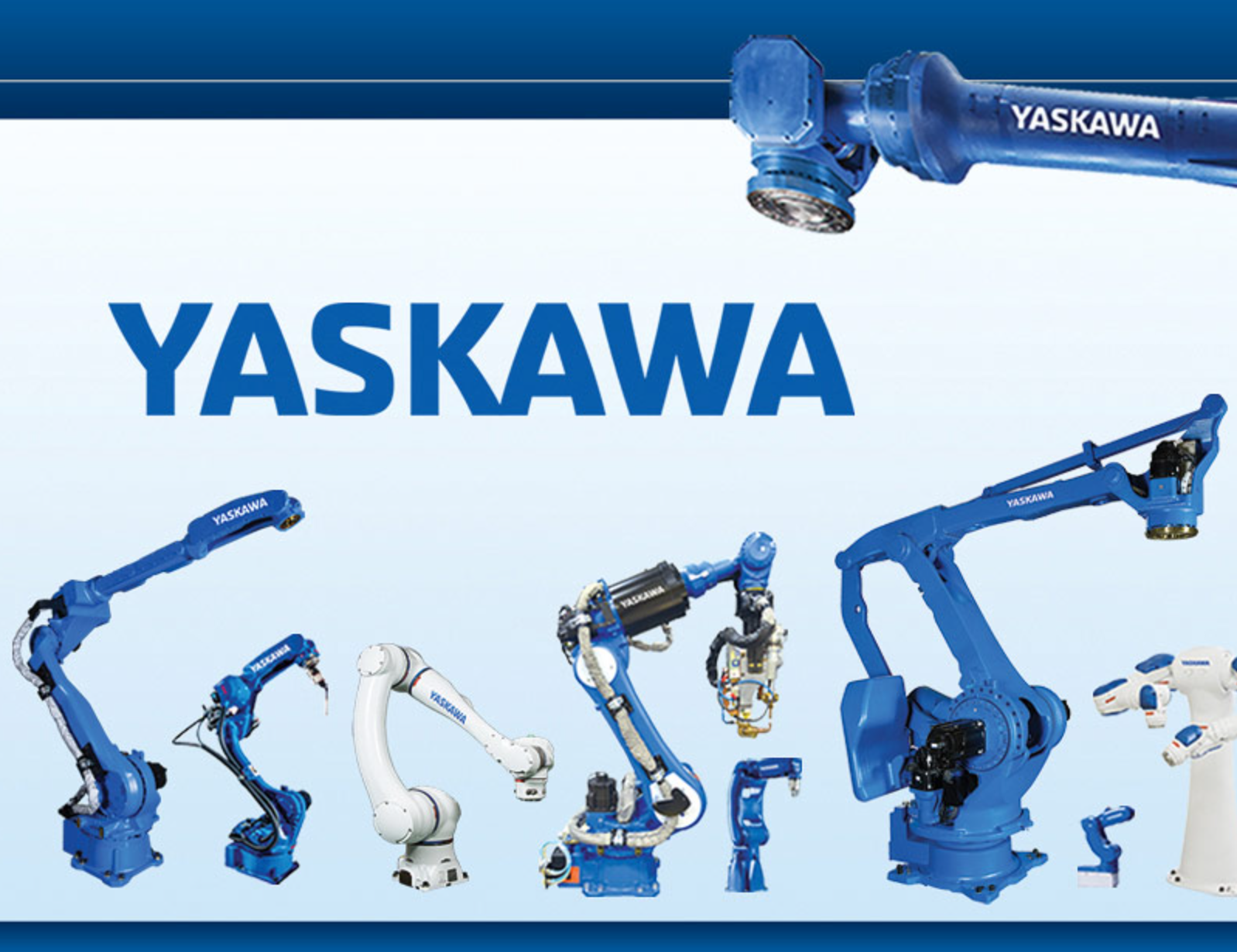
FANUC and Yaskawa Motoman are both Japanese industrial robot builders, and they share some DNA. Both companies trace their roots back decades. Both have installed bases measured in the hundreds of thousands, FANUC with over one million units globally, Motoman with roughly five hundred fifty thousand. Between them, they account for roughly nineteen to twenty-five percent of the global industrial robot market. They are the two biggest Japanese names in the business, and they compete directly in a lot of factories. But they got to where they are by different paths. FANUC built its name on reliability and volume. Motoman built its name on welding and multi-robot coordination. On the used market, both show up regularly, but the reasons they show up and the buyers who want them are not the same.
The Brands at a Glance
FANUC is the biggest robot builder on the planet by installed base. The product line stretches from tiny tabletop arms that lift a few kilos to monsters that handle over two tons. More than a hundred models cover pretty much any payload and reach combination a factory could need. The yellow paint is the shorthand. When someone says a robot is bulletproof, they are usually talking about a FANUC. Motoman, a division of Yaskawa Electric, is the number two Japanese player. The product range runs from half a kilo to nine hundred kilograms, covering welding, handling, palletizing, and assembly. But where FANUC tries to be the best at everything, Motoman poured its focus into arc welding. Yaskawa ships roughly forty thousand welding robots a year, more than any other company in the world. If a factory is doing high-volume arc welding, there is a very good chance a blue Motoman arm is holding the torch. FANUC is the generalist that happens to be great at spot welding and heavy handling. Motoman is the welding specialist that also builds capable general-purpose robots.
Applications: Where Each Brand Earned Its Reputation
FANUC owns the body shop. The R-2000iB series is the most common spot welding robot anywhere, and the Arc Mate line runs a huge chunk of robotic arc welding too. In heavy palletizing, the M-410iC series handles payloads up to seven hundred kilograms. In general material handling, FANUC robots are so common that most integrators have worked with them at some point. Motoman owns arc welding. The AR and MA series are the go-to machines for fabricators who weld structural steel, agricultural equipment, and automotive components. Where Motoman really separates itself is multi-robot coordination. The YRC1000 controller can manage up to eight robots and seventy-two axes in synchronized motion. That means a single controller can run multiple arms working on the same part at the same time, something that requires extra hardware and engineering on most other platforms. For a fab shop welding large, complex assemblies with multiple robots in a single cell, that capability is hard to beat. In the heavy payload classes, the two brands compete head-to-head. A FANUC R-2000iB/210F carrying two hundred ten kilograms over two thousand six hundred fifty-five millimeters goes up against a Motoman MH250 with similar specs. In arc welding, the FANUC Arc Mate 120iD and the Motoman AR1440 are direct competitors. The specs are close. The choice usually comes down to controller preference and local service.
Controller Philosophy: R-30iB vs. YRC1000
The controller is where FANUC and Motoman really diverge, and it matters a lot on the used market because the controller is what the integrator has to work with every day. FANUC's R-30iB is a closed, purpose-built system. It does not run Windows. It does not invite tinkering. What it does is run the same program the same way for years without drifting. iRVision integrates directly into the controller without a separate PC, which simplifies vision-guided applications. The trade-off is that the system is not flexible. If FANUC did not build a feature into the controller, you are not adding it yourself. Motoman's YRC1000 is built around multi-robot coordination. The controller can handle up to eight robots, seventy-two axes, sixteen concurrent tasks, and thirty-two control groups all from a single unit. For a complex welding cell with multiple robots and positioners working on the same part, that is a genuine advantage. The programming environment is more open than FANUC's, which gives integrators more room to customize. Both brands have newer controllers now, FANUC with the R-50iA and Motoman with the YRC1000micro for smaller robots. But on the used market, the R-30iB and the YRC1000 are the controllers you will actually see. The newer stuff is still years away from hitting the secondary market in volume.
Precision, Speed, and the Numbers That Matte
The spec sheets tell part of the story. On the light end, the FANUC LR Mate 200iD carries seven kilograms over seven hundred seventeen millimeters with repeatability of two hundredths of a millimeter. The Motoman GP8 matches the payload at eight kilograms, stretches the reach to seven hundred twenty-seven millimeters, and tightens repeatability to one hundredth of a millimeter. The GP8 is slightly more precise on paper. In the mid-range, a FANUC M-10iA handles ten kilograms at fourteen hundred twenty millimeters, while a Motoman GP20 steps up to twenty kilograms at over eighteen hundred millimeters. The GP20 carries more and reaches further, but the two robots are often cross-shopped for the same cells. On the heavy end, the FANUC R-2000iB/210F holds repeatability around three tenths of a millimeter. The Motoman GP400 carries four hundred kilograms at nearly three meters with repeatability around one tenth of a millimeter. The numbers lean toward Motoman on precision in most weight classes. But precision is only one piece of the puzzle. FANUC's mechanical structure tends to age better under high-impact loads. A spot welding robot that has run millions of cycles may still hold its original spec. A Motoman that has been pushed to its rated limit for the same number of cycles may show its age in the reducers sooner. Neither is universally better. The application tells you which spec to care about.
What These Differences Mean on the Used Market
The used market tells the real story. FANUC robots flood the secondary market because automotive spot welding retires them in waves. The R-2000iB series and the Arc Mate series are everywhere. Parts are easy to find. Every integrator knows the R-30iB. The volume keeps pricing transparent, though FANUC's reputation for reliability gives it a slight premium over Motoman in some regions. Motoman robots are less common on the used market, but the ones that show up tend to come from welding applications where the buyer knows exactly what they are getting. A used Motoman arc welding robot with the MotoWeld software package already installed is a plug-and-play solution for a fab shop that welds. The multi-robot coordination capability of the YRC1000 means a used Motoman cell with multiple arms and positioners can be repurposed for complex welding jobs that would be harder to replicate with another brand. Motoman robots in comparable payload classes often price lower than equivalent FANUC units, which makes them a strong value proposition for buyers who prioritize welding performance over general-purpose flexibility. If you are looking at both brands for a welding application, a seller who can show you the test data and the software license status for either machine is worth dealing with. Tyche Robotic and other established used equipment suppliers understand the difference between a robot that was retired because it was worn out and one that was retired because the line changed over. That distinction matters more than the brand name on the arm.
What to Check When Buying a Used FANUC or Motoman
A used FANUC and a used Motoman need different inspection checklists because they fail in different ways. For a FANUC, especially one retired from spot welding, wrist backlash is the first measurement to ask for. The A4, A5, and A6 axes on an R-2000iB absorb the weight of a weld gun through millions of cycles. Backlash data tells you how much reducer life is left. The controller battery is next. A dead battery on an R-30iB means lost mastering, and re-mastering a heavy robot is not a quick task. Arc welding robots need the ArcTool software verified as installed, licensed, and transferable. For a Motoman, wrist backlash matters equally, especially on arc welding robots where path accuracy directly affects weld quality. The YRC1000 or DX200 battery needs the same check as the FANUC. Where Motoman differs is the software and the multi-robot configuration. MotoWeld is the welding package. Verify it is installed, licensed, and transferable. If the robot came from a multi-arm cell, the coordination files and external axis parameters need to be saved and transferable, because recreating a synchronized multi-robot setup from scratch is a significant engineering effort. The dress pack on a Motoman welding robot deserves extra attention. Welding spatter and heat exposure degrade the torch cable and the protective tubing faster than general handling duty ever would. For both brands, a loaded test report is the minimum documentation to ask for. A video of the specific robot running a test cycle under load is better than any spec sheet. The robot's previous life matters as much as its brand. A FANUC from a body shop and a Motoman from a welding cell lived completely different lives, and the inspection should match the life it lived.
This article was prepared by Tyche Robotic, a supplier of refurbished six-axis industrial robots serving integrators and resellers in Latin America, Southeast Asia, and Europe.
Contact Us
As a professional supplier of used industrial robots, Jiangmen Tyche Robotic Co., Ltd. is committed to providing customers with integrated solutions—from hardware selection and configuration to software programming, debugging, and after‑sales maintenance.
© 2025. All rights reserved.

Mr. Victor Ismael