What Are the Different Types of Robotic Cutting? A Look at Five Processes and the Robots Behind Them
A practical overview of robotic cutting applications. Covers laser, plasma, oxyfuel, waterjet, and ultrasonic cutting with key robot models from FANUC, KUKA, ABB, and Yaskawa, plus what to check when buying a used cutting robot.
Tyche Robotic
5/14/20266 min read
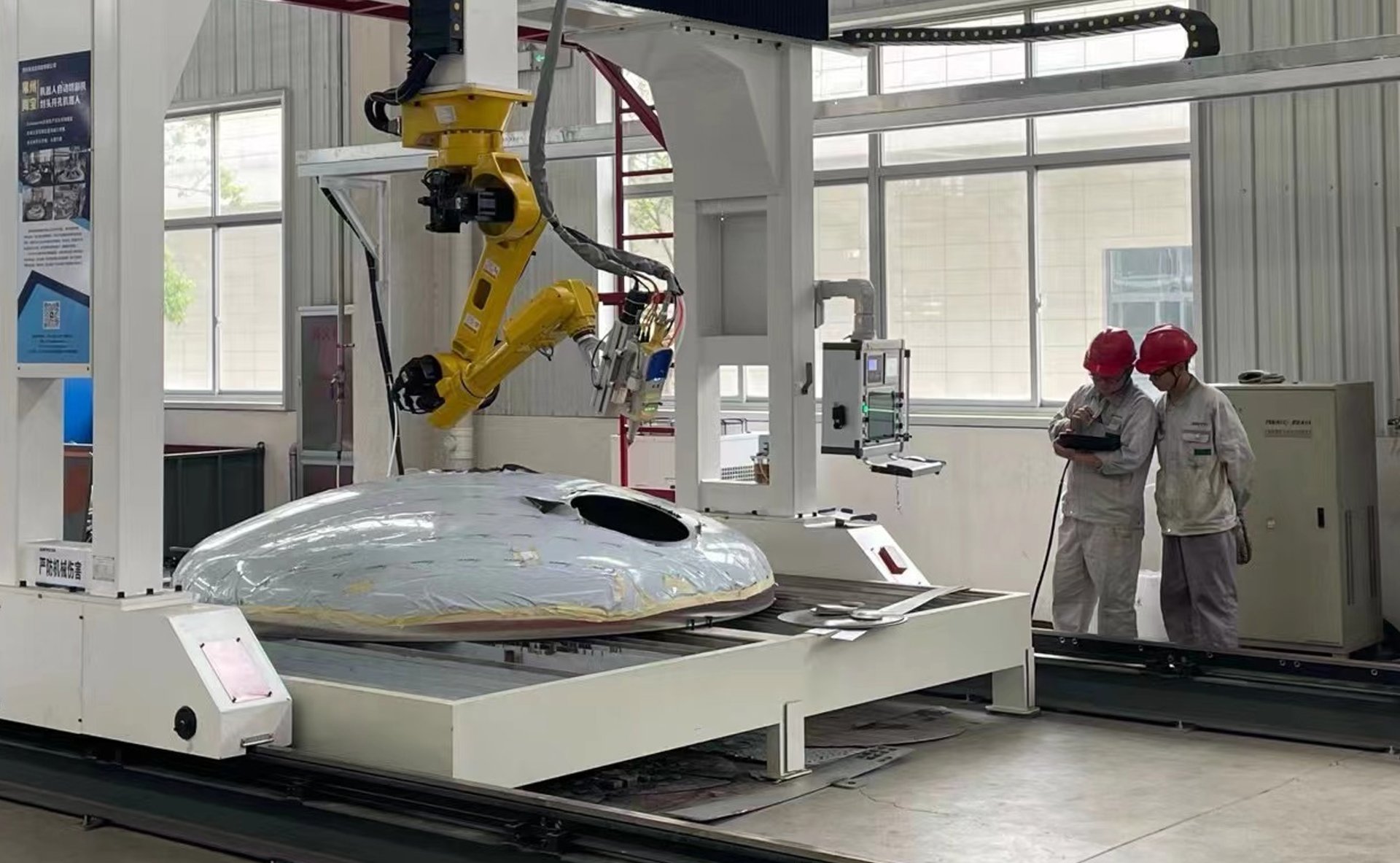
Cutting is one of those manufacturing tasks that looks simple on paper and turns out to be anything but. The difference between a clean cut and a scrapped part can be a fraction of a millimeter, a few degrees of heat, or the wrong choice of process for the material in front of you. Robots have been taking over cutting work for years, not because they are cheaper than a skilled fabricator, but because they hold a path more consistently and do not tire, flinch, or rush. The global market for robotic cutting, deburring, and finishing sat at roughly five point six billion dollars in 2023 and is projected to pass eleven billion by 2030. That growth is not coming from one single technology. It is spread across laser, plasma, oxyfuel, waterjet, and ultrasonic cutting, each of which makes sense for a different set of materials, tolerances, and budgets. Knowing the differences between those five processes is what turns a cutting robot purchase into a machine that actually fits the work.
Why Robots Are Taking Over Cutting Work
A robot that holds a cutting tool solves three problems at once. The first is path consistency. A complex 3D cutting path that takes a programmer an afternoon to write can be executed by the robot within a few hundredths of a millimeter of the programmed trajectory, cycle after cycle. The second is safety. Plasma arcs, laser beams, and high-pressure water jets are dangerous at close range. A robot lets the operator step back from the hazard and manage the process instead of standing inside it. The third is material utilization. A robot cutting system paired with offline programming software can nest parts closer together on a sheet or a tube, reducing scrap and stretching raw material further than manual layout usually allows. These three advantages hold true regardless of which cutting process is attached to the end of the arm.
Laser Cutting: Precision at Speed
Laser cutting is the fastest-growing segment in robotic cutting, and the reason is straightforward. A high-power fiber laser focused through a cutting head melts material along a narrow kerf while an assist gas blows the molten metal clear. The result is a cut that requires little to no secondary finishing, with a heat-affected zone measured in tenths of a millimeter. Robots bring something extra to laser cutting that a flatbed gantry laser cannot: the ability to cut complex 3D contours on formed parts. Hot-stamped automotive components, hydroformed tubes, and stamped panels with pre-formed features all need cutting after forming, and a six-axis robot with an integrated laser head can follow the part's actual surface rather than a flat plane. FANUC's M-800iA/60 is built for this kind of work, with sixty kilograms of payload, over two meters of reach, and repeatability at fifteen thousandths of a millimeter. KUKA's KR 120 R2700 extra HA is a high-accuracy variant designed specifically for laser cutting and metrology, holding tight tolerances across its full two-point-seven-meter reach. ABB's IRB 4400 runs cutting and deburring at high speed with the rigidity needed for 3D paths, and Yaskawa's Motoman GA50 is purpose-built for high-precision laser applications with path accuracy at five hundredths of a millimeter.
Plasma Cutting: The All-Rounder for Conductive Metals
Plasma cutting runs a high-velocity jet of ionized gas through a nozzle, melting the workpiece and blowing the molten metal out of the kerf. It works on any conductive material. Steel, stainless, aluminum, brass, copper. It is fast, with cut speeds on thinner plate reaching hundreds of inches per minute, and the operating cost is lower than laser for medium-to-thick sections. The trade-off is a wider kerf and a larger heat-affected zone. For parts that will be welded and ground afterward, that is often acceptable. FANUC's Arc Mate 120iD with its twelve kilograms of payload and over two-point-two meters of reach doubles as a plasma cutting platform when paired with the right power supply. KUKA's KR 16 handles smaller plasma torches on medium-gauge plate. ABB's IRB 2600, with payloads from twelve to twenty kilograms, is a versatile platform for plasma and general cutting. Yaskawa's Motoman GP200R with two hundred kilograms of payload and nearly three meters of reach runs plasma on heavy structural sections where the torch and cable assembly alone can weigh more than a small robot's full payload.
Oxyfuel Cutting: Heavy Steel, Low Cost
Oxyfuel cutting has been around longer than any other automated cutting process, and it still owns a corner of the market that no other technology has taken away. A fuel gas and oxygen mixture heats the steel to its ignition temperature, then a high-pressure oxygen jet burns through the material and ejects the slag. The equipment is simple, the cost is low, and no other process can economically cut through steel plate that is several inches thick. The cuts are slow and the heat input is massive, which means the workpiece will need straightening or stress relief afterward. In heavy structural fabrication, shipbuilding, and large-diameter pipe manufacturing, those downstream steps are already part of the workflow, so the trade-off makes sense. ABB's IRB 6700 with payloads from one hundred fifty to three hundred kilograms handles the heavy torches and long reaches required for large plate cutting. FANUC's R-2000iB series, already common in heavy fabrication, takes on oxyfuel work with the same reliability it brings to spot welding. KUKA's KR QUANTEC series in the one hundred twenty to two hundred ten kilogram range mounts flame cutting torches for structural steel processing, and Yaskawa's Motoman HP series provides the payload capacity needed for multi-torch setups on thick plate.
Waterjet Cutting: Cold Cutting for Almost Anything
Waterjet cutting uses a pump to pressurize water to sixty thousand psi or more, then forces it through a tiny orifice. For harder materials, abrasive garnet is pulled into the stream. Because there is no heat involved, the material properties at the cut edge do not change. There is no heat-affected zone, no micro-cracking, no warping. The process cuts metals, stone, glass, composites, plastics, rubber, and even food. In aerospace, waterjet robots trim titanium and carbon fiber components without introducing thermal stress. In automotive interiors, they cut carpet, headliners, and composite panels with a clean edge and no fumes. FANUC's M-20iA carries twenty kilograms over one thousand eight hundred millimeters and is available in an IP67-rated variant for wet environments. KUKA's KR 120 handles larger waterjet heads on thick composite sections. ABB's IRB 6660, with one hundred thirty kilograms of payload and over three meters of reach, was designed for press tending but its high rigidity makes it a strong candidate for 3D waterjet cutting. Yaskawa's Motoman GP165R rounds out the heavyweight waterjet options with one hundred sixty-five kilograms of capacity.
Ultrasonic Cutting: Clean Edges for Delicate Materials
Ultrasonic cutting is the odd one out in this group. It does not melt, burn, or erode the material. A vibrating blade oscillating at twenty thousand cycles per second severs the workpiece by concentrating energy at a microscopic contact point. The result is a cut with almost no debris, no fumes, and very little resistance. Food processing uses ultrasonic robots to cut cakes, breads, and cheeses without crushing them. Textile manufacturers cut fabrics without frayed edges. The automotive industry uses ultrasonic robots to trim composite interior panels and rubber seals. The robots themselves tend to be smaller because the forces are lower and the parts are lighter. Yaskawa's Motoman MH24 is a common choice for ultrasonic trimming cells. FANUC's LR Mate series handles light ultrasonic cutting in food-grade and clean environments. ABB's IRB 1200 provides the compact reach and precision needed for detailed trim work. The robot is almost never the limiting factor in ultrasonic cutting. The challenge is matching the blade design and oscillation frequency to the specific material, because a blade that works on rubber will smear through cheese and burn through textile.
What to Know When Buying a Used Cutting Robot
Used cutting robots come from a wide range of industries, and the retirement history tells you a lot about what to inspect. A waterjet or ultrasonic robot from an automotive interior trim line has probably run millions of short, fast cycles. The wrist and the cable carrier will show that. A plasma or oxyfuel robot from a structural steel fabricator has dealt with heat, smoke, and grinding dust. Check the seals on every axis and look inside the controller cabinet for fine metallic dust that conductive environments leave behind. A laser cutting robot from an aerospace or automotive hot-forming line has likely been maintained to a high standard, but the laser optics and the cutting head are precision wear items that need documented inspection history. Across all cutting processes, the one thing that matters most is path accuracy. Ask for a recent path accuracy test report, not just a general repeatability specification. A robot that can hold a point in space may still wander on a curved cutting path if the servo tuning or gear wear has degraded its dynamic tracking. Also verify that the cutting software, any offline programming packages, and the post-processor licenses are installed and transferable. A cutting robot without its software is just an arm that moves.
This article was prepared by Tyche Robotic, a supplier of refurbished six-axis industrial robots serving integrators and resellers in Latin America, Southeast Asia, and Europe.

Contact Us
As a professional supplier of used industrial robots, Jiangmen Tyche Robotic Co., Ltd. is committed to providing customers with integrated solutions—from hardware selection and configuration to software programming, debugging, and after‑sales maintenance.
© 2025. All rights reserved.

Mr. Victor Ismael