Used FANUC Welding Robots: A Practical Buyer's Guide
A practical guide to buying used FANUC welding robots. Covers popular Arc Mate and R-2000iB models, cost advantages, weld-ready integration, and a checklist of what to inspect before purchasing.
Tyche Robotic
5/7/20264 min read
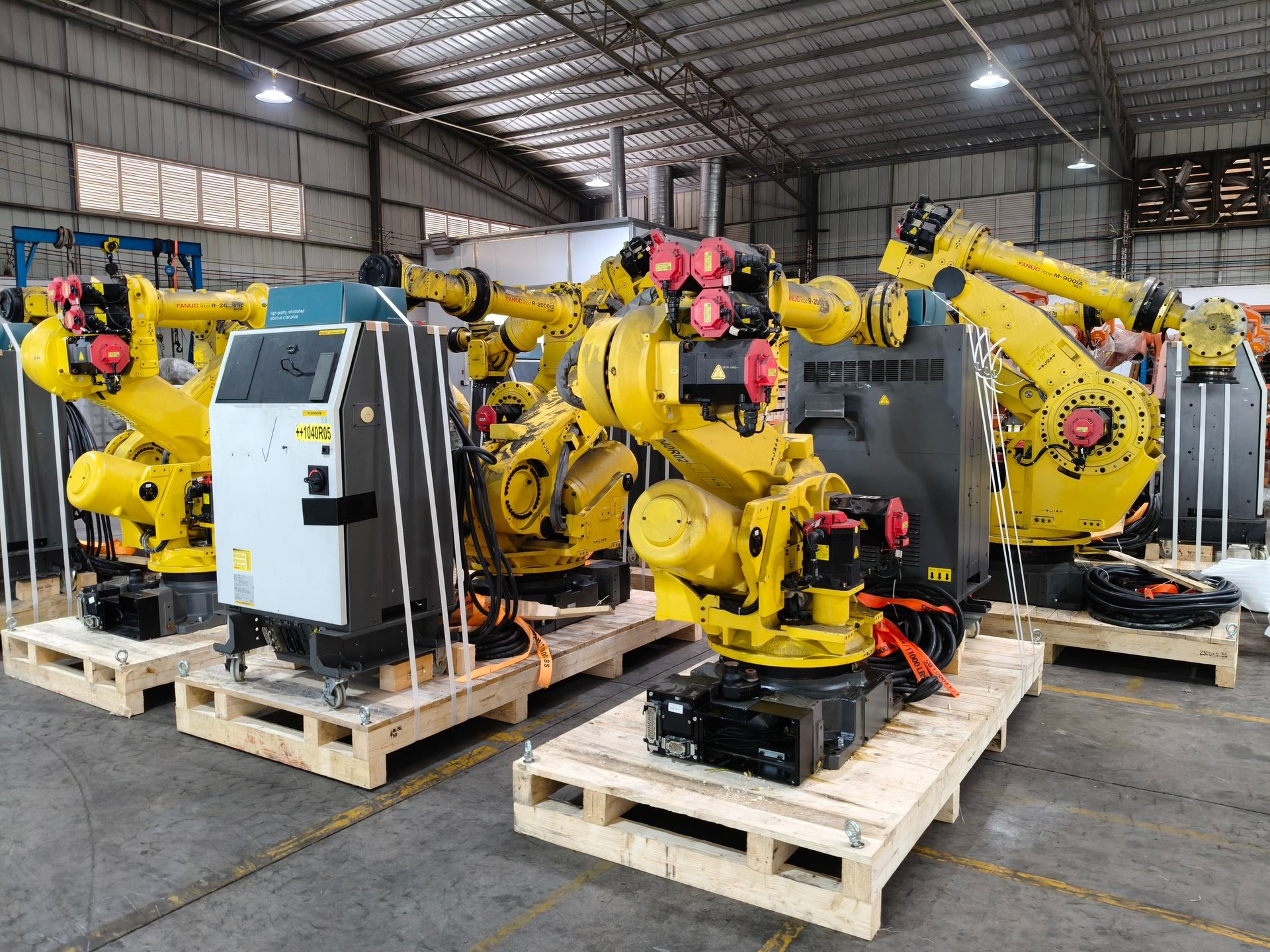
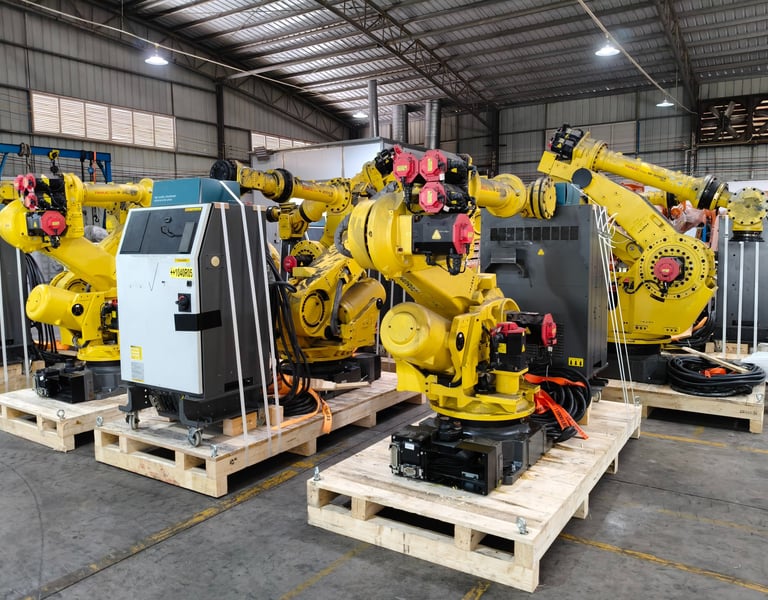
Walk into any shop that does robotic arc welding, and the odds are better than even that the yellow arm in the corner says FANUC on the side. FANUC has been building arc welding robots for over twenty-five years, and the installed base is deep enough that finding a used FANUC welder today is mostly a matter of picking the right model, not hunting for a needle in a haystack. That is good news for anyone looking to automate welding without signing off on a brand-new machine. The used market for these robots is active, pricing is competitive, and because FANUC built so many of them, parts and service knowledge are everywhere. But buying a used welder is not the same as buying a used material handling robot. There are extra things to check, and skipping them can turn a bargain into a headache.
Popular Used FANUC Welding Models
A few FANUC models show up in used listings more than any others, and they each serve a different corner of the welding world. The Arc Mate 100iC with the 6L designation handles a payload of six kilograms and reaches just under fourteen hundred millimeters. This is the lightweight production welder. It fits into compact cells, works well on thin to medium gauge steel, and runs the R-30iA or R-30iB controller. If you need to weld slightly larger assemblies, the Arc Mate 120iC steps up to ten kilograms of payload with around fourteen hundred millimeters of reach. Same controller family, same software environment, just more muscle for heavier torches or slightly bulkier parts. On the other end of the spectrum sits the R-2000iB series. The R-2000iB/165F, for instance, carries one hundred sixty-five kilograms out to over twenty-six hundred millimeters. That is a heavy-duty machine built for spot welding and heavy material handling, not fine TIG work. Knowing these three categories will help you filter listings faster. A 100iC is not a small R-2000iB. They are built for different jobs, and mixing them up leads to a robot that does not fit.
Why Buy Used FANUC Instead of New
Cost is the obvious starting point. A used FANUC welding robot typically runs forty to sixty percent less than a comparable new unit. That gap alone makes automation accessible to shops that would otherwise wait another year or two. Lead time is the second lever. New robots can take months. Used FANUC welders are often sitting in a warehouse ready to ship, which means a cell can go from decision to production in weeks instead of quarters. But there is a FANUC-specific reason that goes beyond price and speed. These machines are famously durable. It is not unusual to find a fifteen-year-old Arc Mate still holding its programmed path accurately. FANUC's closed controller ecosystem helps here. The R-30iA and R-30iB are purpose-built and stable. They do not run a general-purpose operating system that bloats over time. For a used buyer, that means the controller you get is likely still running the same software it left the factory with, which is exactly what you want when you are integrating into a production line.
The Hidden Advantage: Weld-Ready Integration
A lot of used FANUC welding robots do not come in as bare arms. They show up with a welding package already bolted on. Many of these machines were originally commissioned with Lincoln or Fronius power supplies, a wire feeder, and a torch already integrated. If you buy a complete used cell or a robot that was decommissioned as a welder, you might get the whole setup in one shot. That saves integration time and money because you are not starting from scratch matching a power supply to a controller and tuning the communication. The same goes for additional axes. If the previous application used a servo-driven positioner or a rotating table, that hardware is often included and already configured in the controller. FANUC's large installed base means that finding a used robot with the exact options you need is more a question of patience than luck.
What to Check When Buying a Used FANUC Welder
Welding is harder on a robot than most other applications. Heat, spatter, fumes, and high duty cycles age a machine faster than palletizing ever will. When you evaluate a used FANUC welding robot, start with the torch cable and dress pack. Look for burn marks from spatter, especially where the cable flexes near the wrist. A damaged dress pack can cause intermittent arc starts that drive programmers crazy. Next, inspect the wire feeder. Check the drive rolls for wear and confirm the guide tubes are aligned. A worn feeder produces erratic wire delivery, which shows up in the weld as porosity or an inconsistent bead. Then move to the controller. Verify the ArcTool software package is installed and that the license is present. Without it, you have a robot that can move but cannot weld. Check the controller batteries. A dead battery on an R-30iA or R-30iB means lost mastering, and re-mastering a six-axis arm adds time you probably did not budget for. Finally, ask for backlash measurements on axes four, five, and six. The wrist takes the most abuse in arc welding, and any slop in those joints will show up directly in weld quality. A reputable seller should have this data.
Where to Find Quality Used FANUC Welding Robots
The used FANUC market is large enough that you have options, but not every seller understands welding. Look for a supplier who can tell you the robot's application history, not just its model number. Ask for inspection data. Ask for a video of the robot running a test cycle. A supplier who specializes in welding equipment will know why the wire feeder matters and why the wrist backlash readings are non-negotiable. Tyche Robotic focuses on refurbished six-axis industrial robots from the major brands, including a steady supply of used FANUC welding models that have been through a documented inspection process. When a seller can show you the test results before you commit, you are not gambling. You are making an informed purchase.
This guide was prepared by Tyche Robotic, a supplier of refurbished six-axis industrial robots serving integrators and resellers in Latin America, Southeast Asia, and Europe.
Contact Us
As a professional supplier of used industrial robots, Jiangmen Tyche Robotic Co., Ltd. is committed to providing customers with integrated solutions—from hardware selection and configuration to software programming, debugging, and after‑sales maintenance.
© 2025. All rights reserved.

Mr. Victor Ismael