Robotic Integration for First-Time Buyers: What to Know Before You Start
A practical guide to robotic integration for first-time buyers. Covers what integration involves, different project levels, common myths, cost breakdown, and how to choose your integration path.
Tyche Robotic
5/7/20264 min read
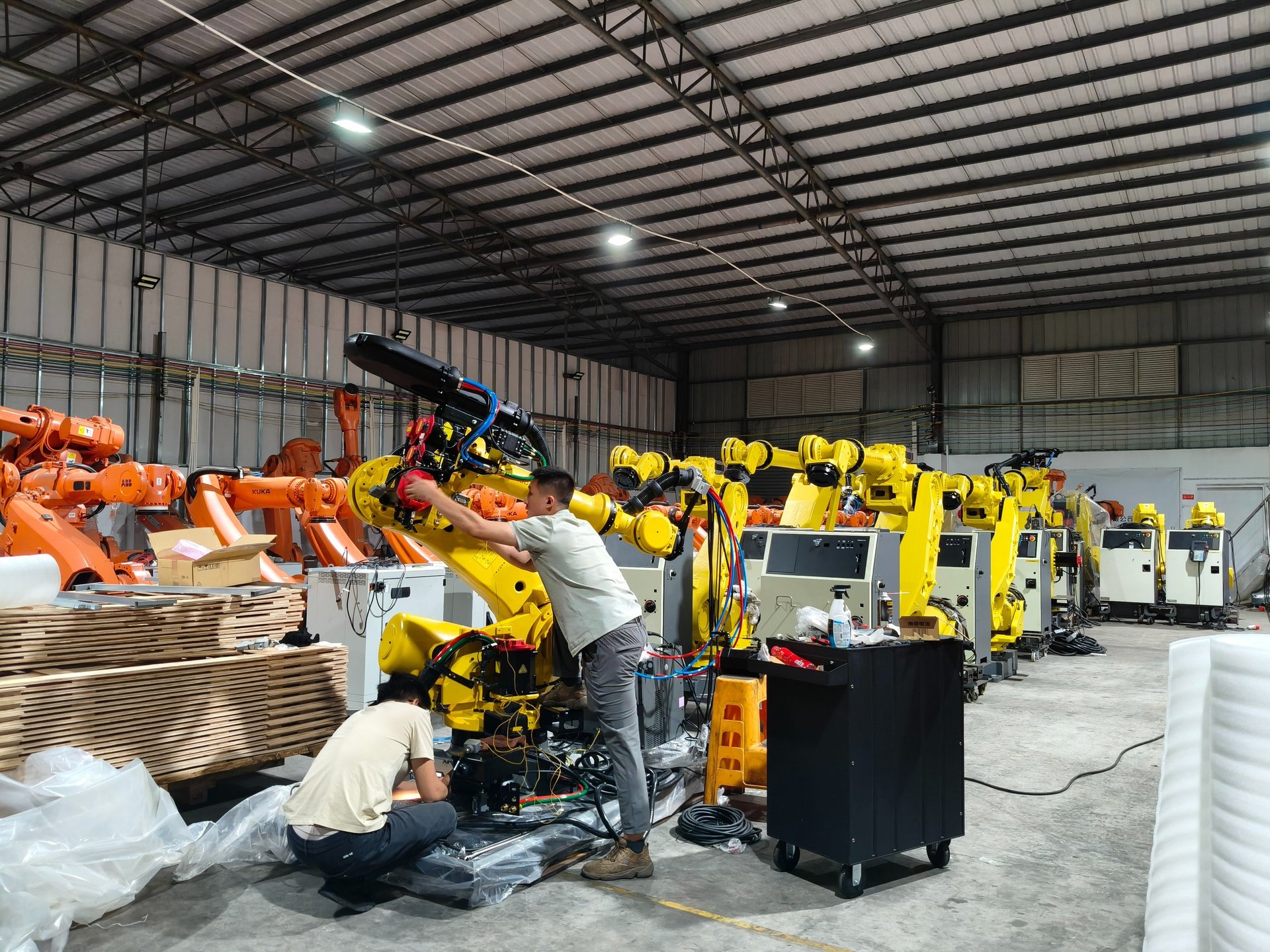
Buying a robot is the easy part. Getting it to actually do something useful on your factory floor is where the real work begins. That process has a name: robotic integration. It covers everything from bolting the arm down and wiring the controller to programming the first weld, pick, or pallet pattern. For someone who has never been through it, integration can sound like a black box. Expensive, unpredictable, and probably full of surprises. It does not have to be that way. A clear picture of what integration actually involves, what it costs, and where the common traps lie will put you in control of the project instead of the other way around.
What Robotic Integration Actually Means
In plain terms, integration is the process of turning a robot arm into a production tool. The arm itself is just one component. It needs a gripper or a welding torch or some other end-of-arm tooling to interact with parts. It needs a controller programmed with the specific sequence of moves, speeds, and process parameters that the job demands. It needs peripheral equipment around it: conveyors, part feeders, fixture tables, positioners, safety fencing, light curtains. And it needs to communicate with the rest of the plant, usually through a PLC or a network interface. Integration ties all of those pieces together so that when you press the green button, the cell runs the way it is supposed to. The goal is not just movement. It is reliability. A robot that drifts out of position after a hundred cycles, or that the operator has to babysit, is not integrated. It is just bolted down.
Different Levels of Integration
Not every integration project is the same size, and understanding the differences will save you from overpaying or underestimating the timeline. The simplest scenario is a drop-in replacement. You have an existing cell with a robot that died or aged out. You swap in a used unit of the same model and controller generation, reload the program or touch up a few points, and the line is back up. This can happen in days. One step up is a standard work cell. You buy a robot that was previously configured for a common application, say a FANUC Arc Mate 120iC set up for MIG welding or a KUKA KR 210 palletizing cell. The hardware is already matched to the job, and the integration effort focuses on fixturing, programming, and safety. You might go from delivery to production in a few weeks. At the far end is a full custom integration, sometimes called a turnkey system. Here you start with a bare robot and build everything around it from scratch. Custom end-of-arm tooling, custom safety layout, full PLC integration, possibly vision systems or force sensing. This is a multi-month project with a corresponding budget. None of these approaches is wrong. The mistake is not knowing which one you are signing up for.
Common Integration Myths, Busted
The first myth is that integration is a one-time plug-and-play job. Even a well-engineered cell needs tuning during the first weeks of production. Fixtures settle. Temperatures change. Parts vary slightly from batch to batch. A realistic plan includes a shakedown period where you adjust parameters and train operators. The second myth is that any integrator can handle any application. In reality, integrators specialize. The shop that excels at palletizing cells may not be the right choice for a TIG welding application. Ask to see examples of work similar to yours. The third myth is that the robot brand determines integration difficulty. It matters, but the bigger variable is the controller generation and whether the required software options are already installed and licensed. A used robot that arrives with the correct welding or handling software package already loaded integrates far faster than a new robot that needs everything configured from zero. The fourth myth is that safety is optional if the robot runs slowly. Safety is never optional. A proper risk assessment and correctly installed guarding are part of the integration budget, not an add-on you decide about later. The fifth myth is that integration costs more than the robot itself. It can, especially on complex turnkey projects. But on a simple replacement or a pre-configured standard cell, the integration cost is often a fraction of the robot's value.
What Integration Actually Costs
Integration pricing is hard to pin down with a single number, but it helps to know where the money goes. The major cost buckets are mechanical setup, safety, programming, and logistics. Mechanical setup includes designing and building the end-of-arm tooling, mounting the robot, and installing any conveyors or positioners. Safety covers fencing, light curtains, interlocks, and the risk assessment documentation. Programming is the labor to write, test, and optimize the robot's motion and process parameters. Logistics covers shipping, rigging, and on-site commissioning. One thing worth knowing upfront: buying a used robot reduces the equipment cost but does not change the cost of tooling and safety. Those are application-specific and have to be built regardless. Where used equipment can save integration time is in the controller. A refurbished robot that arrives with the correct software already configured skips the licensing and setup phase that a bare new controller would require.
Choosing Your Integration Path
You generally have three options. If you have in-house automation expertise, you can buy the robot and handle the integration yourself. The risk is bandwidth. Integration work has a way of eating more hours than estimated, and your best engineers are usually already busy. The second path is hiring an independent integrator. They bring experience and capacity, but you will want to check their track record in your specific application. The third path is buying from a supplier who delivers the robot pre-configured and can point you toward an integrator they have worked with before. This middle ground can accelerate the project because the robot shows up ready for the job, not as a blank slate. Tyche Robotic and other established used equipment suppliers understand that a robot shipped with the correct software and a documented inspection history reduces the downstream integration burden. Fewer surprises on arrival means fewer delays at commissioning.
This guide was prepared by Tyche Robotic, a supplier of refurbished six-axis industrial robots serving integrators and resellers in Latin America, Southeast Asia, and Europe.
Contact Us
As a professional supplier of used industrial robots, Jiangmen Tyche Robotic Co., Ltd. is committed to providing customers with integrated solutions—from hardware selection and configuration to software programming, debugging, and after‑sales maintenance.
© 2025. All rights reserved.

Mr. Victor Ismael