Refurbished Industrial Robot Sourcing: A Buyer's Guide for Integrators and Resellers
For system integrators and automation resellers, sourcing refurbished industrial robots is a strategic decision that impacts project margins and client satisfaction. While buying used can save 40% to 70% compared to new equipment, the due diligence required is significantly greater when you're responsible for the machine's performance on someone else's factory floor. This guide covers the critical evaluation points that professional buyers should verify before committing to a purchase, with a focus on the unique considerations for projects destined for Latin America, Southeast Asia, and Europe.
1. The Professional Buyer's Inspection Checklist
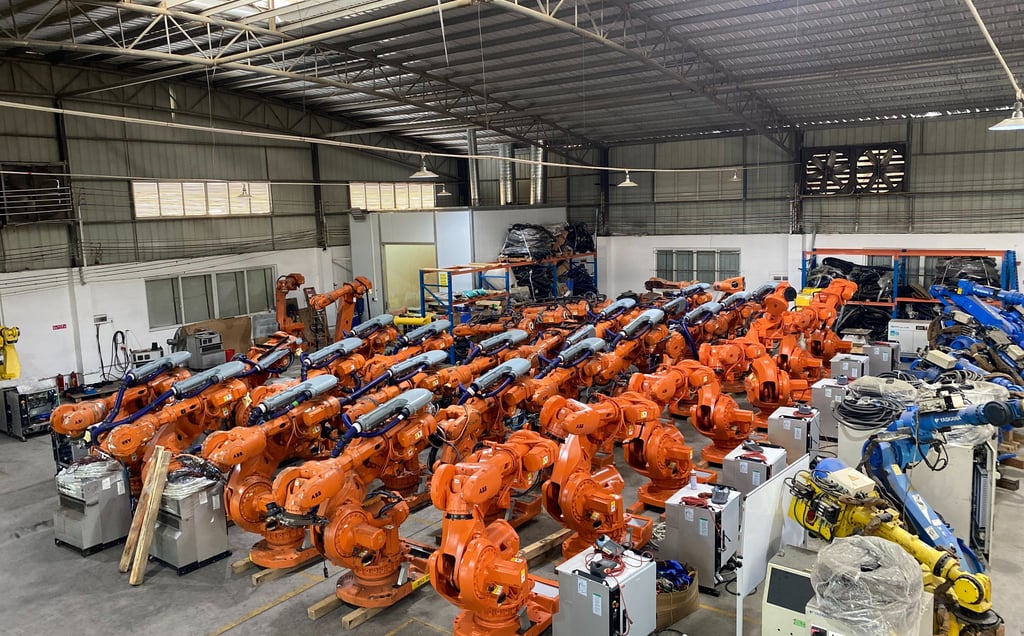
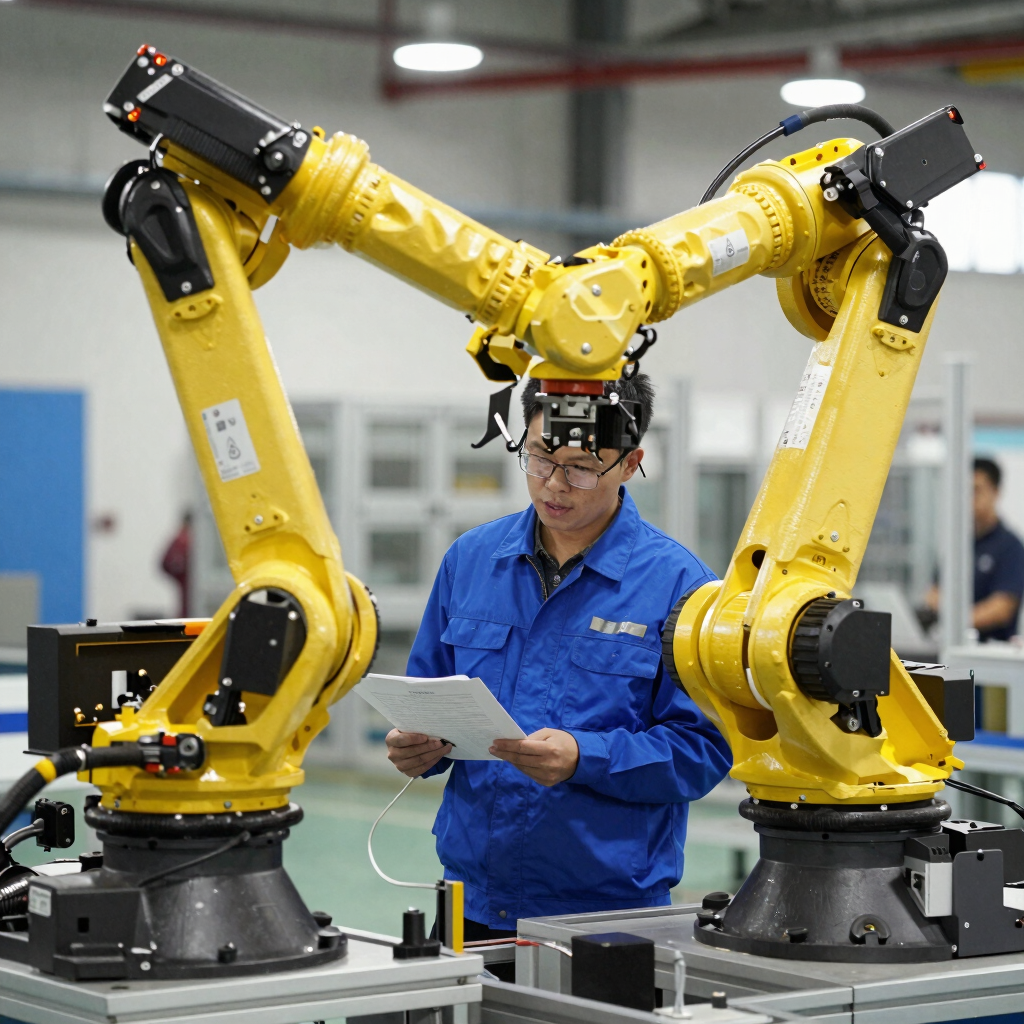
When you're not the end-user, your reputation is tied to the reliability of the equipment you source. Here's a detailed checklist to use when evaluating any refurbished six-axis robot.
Mechanical & Physical Condition
Arm Integrity: Inspect for signs of past collisions—dents, cracks, or non-factory welds that could indicate structural stress.
Cables and Dress Pack: Look for brittleness, cracking, or makeshift repairs on the cable harness and protective tubing. Damaged dress packs are a leading cause of early-stage downtime and should be factored into your project budget if replacement is needed.
Gearbox Health: Check for oil seepage or excessive grease buildup around axis joints. While some residue is normal, active leaks suggest seal degradation that may require attention.
Axis Movement: All six axes should rotate smoothly through their full range of motion without grinding, clicking, or unusual vibration. Pay particular attention to the wrist axes (A4/A5/A6), which often see the most aggressive duty cycles.
Electrical Systems & Controls
Controller Boot-Up: The controller should power on without persistent error codes. Note any battery-low warnings—these may indicate the need for mastering the robot after shipment.
Teach Pendant Functionality: Test the screen responsiveness, emergency stop button, and enabling switch. A faulty teach pendant can delay integration by weeks if a replacement is not readily available.
Safety Circuits: Confirm all external E-stop loops and safety interlocks respond correctly. For robots being integrated into modern safety-rated systems, verify the controller's SafeOperation compatibility.
Software & Licensing
This is one of the most frequently overlooked cost centers in used robot purchases. Verify the KUKA System Software version on the KR C4 controller and check whether any optional technology packages (ArcTech, GripperTech, ForceTorque, etc.) are included with the controller. Purchasing these licenses separately from the manufacturer can add thousands of dollars to the final landed cost.
2. Understanding Key Specifications
Knowing the numbers is one thing; understanding what they mean for a real-world integration is another.
Payload and Reach Margins: Always leave at least 20% headroom between the robot's rated payload and the combined weight of your end-of-arm tooling plus the workpiece. Operating near the limit accelerates wear on all axes. For heavy-payload applications, models like the KUKA KR 210 R2700 PRIME offer a 210 kg capacity with a 2,696 mm reach—useful benchmarks when specifying equipment for palletizing or spot welding cells.
Repeatability in Practice: A specification of ±0.06 mm is excellent, but this assumes a properly mounted robot, stable ambient temperature, and a well-tuned servo system. Field conditions may vary.
Operating Hours vs. Application: A robot with 25,000 hours in a cleanroom assembly line is mechanically very different from one with 12,000 hours in a foundry or welding cell. Total hours matter, but the previous application environment matters more.
Controller Generation: The KUKA KR C4 offers native Ethernet/IP and Profinet communication, making it straightforward to integrate with modern PLC architectures. Older KRC2 controllers often require additional interface hardware.
3. Questions Worth Asking Any Supplier
Not every supplier will have complete answers to every question, but the willingness to engage with these topics is itself a useful signal.
Application History: "What was this robot doing in its previous life?" Even a general answer—welding, palletizing, machine tending—provides useful context for what to inspect more closely.
Documentation Gaps: Maintenance records are often incomplete or unavailable in the secondary market. This is the industry norm, not a red flag. Instead of fixating on missing paperwork, focus on verifiable current condition: request a recent test log showing axis temperatures, motor currents, and any recorded faults.
Included Components: "Is the controller and teach pendant included and fully functional? Are the original manuals available in English or Spanish?" Even if manuals aren't included, knowing the exact model and controller version allows you to source documentation independently.
Pre-Shipment Verification: "Can I see a video of this specific robot running a test cycle?" A short video showing all six axes moving under load provides more assurance than any written description.
This guide was prepared by Tyche Robotic, a supplier of refurbished six-axis industrial robots serving integrators and resellers in Latin America, Southeast Asia, and Europe.
Additional resources: For specific model specifications and current availability, browse the KUKA inventory or view the ABB used robot listings.
4. Considerations for International Buyers
For integrators and resellers importing robots into Latin America or Southeast Asia, a few additional factors deserve attention before the purchase order is signed.
Ocean Freight and Corrosion Risk
A robot that leaves the warehouse in perfect condition can arrive with surface rust if not packaged with humid, tropical transit in mind. If your supplier does not already use VCI anti-corrosion film and sealed desiccant packs inside the crate, it's worth requesting this—or budgeting for a thorough inspection and potential cleaning upon arrival.
Export Crating Standards
Confirm that the wooden crate meets ISPM 15 requirements for heat treatment. Non-compliant crates can be held at the destination port, incurring storage fees and delaying your project timeline.
Voltage and Frequency Compatibility
KUKA KR C4 controllers are generally configurable for both 50 Hz and 60 Hz power supplies, but always verify the specific unit's configuration matches your client's facility. A mismatch discovered on-site adds unnecessary commissioning time.
5. Building a Reliable Sourcing Pipeline
Given the variability inherent in the used robot market, many professional buyers develop relationships with a small number of suppliers who demonstrate consistent quality and transparent communication. Over time, this reduces the per-unit inspection burden and streamlines the logistics workflow.
When evaluating a new supplier, consider not just the condition of a single robot, but their responsiveness to technical inquiries and their willingness to share test data. These soft indicators often correlate more strongly with long-term reliability than any single specification sheet.