Common Robotic Welding Applications: Which Robot Fits Which Job
A practical guide to robotic welding applications across automotive, aerospace, electronics, and heavy fabrication. Covers which robots fit each job, and what different industry backgrounds mean for used buyers.
Tyche Robotic
6/1/20264 min read
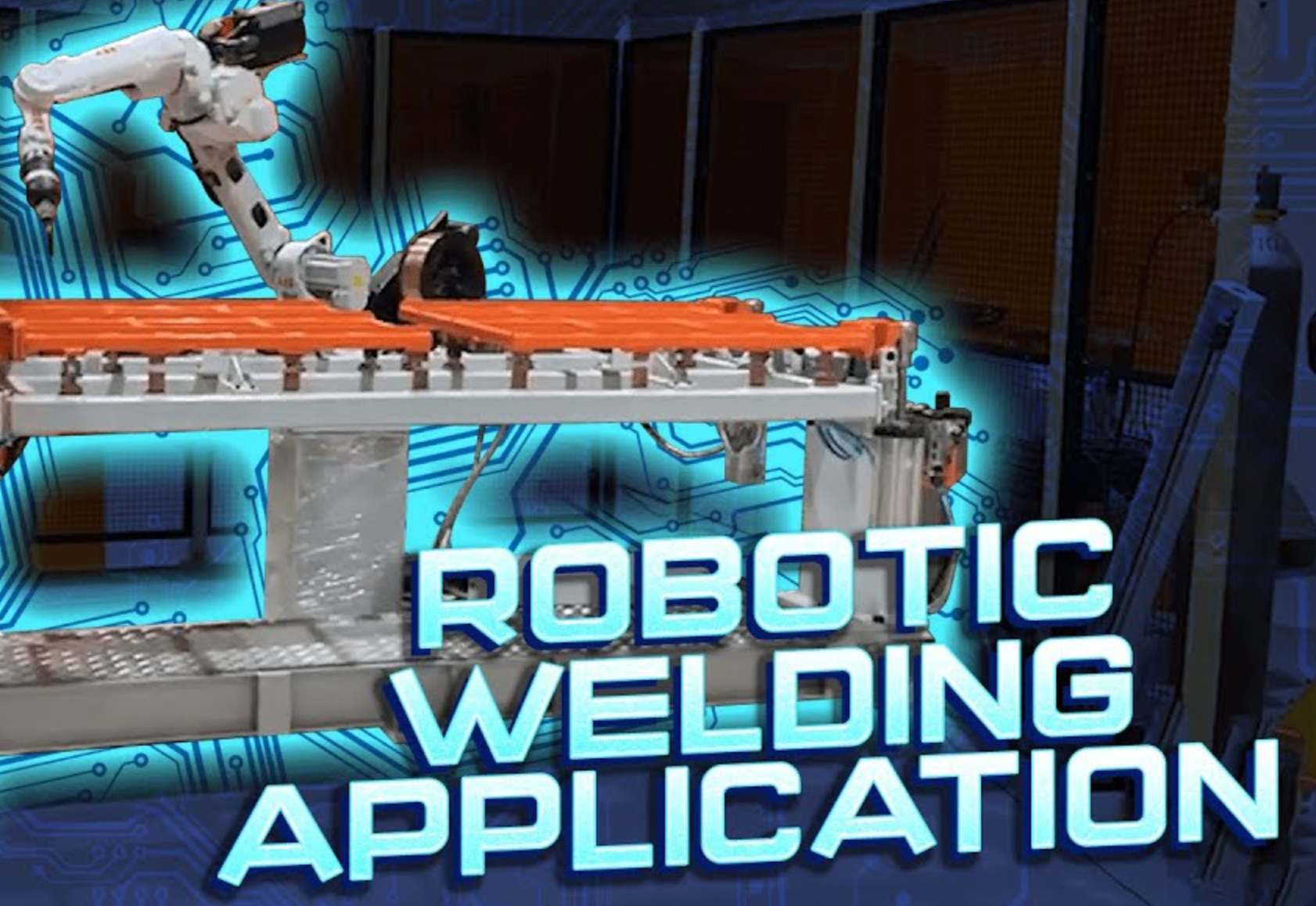
Welding is the biggest application for industrial robots, period. Something like sixty percent of all industrial robots installed around the world are holding a weld gun or a welding torch. But saying a robot is used for welding is like saying a vehicle is used for transportation. The welding that holds a car body together is not the same as the welding that seals a pacemaker housing or joins a bridge beam. Different industries push different welding processes, different robot specs, and different levels of abuse on the equipment. Knowing which robot fits which kind of welding is how a buyer ends up with a machine that handles the job instead of one that fights it.
Automotive Welding: The High-Volume Heavyweight
Automotive welding is where industrial robots earn their reputation, and it breaks into two very different jobs. Spot welding is the body shop workhorse. A robot carries a weld gun that can weigh over a hundred kilograms, presses it against two panels, and fires a current through the joint. The FANUC R-2000iB series is the most common machine doing this work anywhere on the planet. The ABB IRB 6700 and KUKA KR QUANTEC are also heavy players in the same cells. Spot welding robots run millions of cycles at high force, and the wrist axes absorb the brunt of it. When these robots hit the used market, wrist backlash is the first thing any buyer should measure.
Arc welding in automotive handles the lighter, more intricate stuff. Exhaust systems, seat frames, suspension components. The FANUC Arc Mate 120iD and the Motoman AR1440 are the two names that show up most often in these cells. The robots are smaller, the payloads are lighter, and the duty cycles are less punishing than spot welding. Automotive arc welding robots tend to retire with less structural wear than their spot welding cousins, though the torch cable and dress pack still take a beating from spatter and heat
Aerospace Welding: Precision Where It Counts
Aerospace welding does not tolerate variation. Engine components, turbine blades, and landing gear structures are welded to standards where a single defect means the part is scrapped. TIG is the dominant process because it gives the welder, human or robotic, tight control over heat input and filler deposition. The ABB IRB 1520ID is a benchmark robot here. Its hollow wrist routes the torch cable internally, which protects the leads and keeps the arm compact enough to reach into tight assemblies. The KUKA KR 16 and Motoman AR series also show up in aerospace cells, particularly for structural components. Aerospace robots tend to be maintained to a higher standard than any other industry. The documentation is better, the preventive maintenance is actually done on schedule, and the environments are cleaner. When an aerospace welding robot hits the used market, it often has lower mechanical wear than a robot half its age from a fab shop. The trade-off is that aerospace robots are rare on the used market. They stay in service longer, and when they do retire, buyers who know what they are looking at move fast.
Electronics Welding: Small Parts, Tight Tolerances
Electronics welding operates in a completely different world from automotive or aerospace. The parts are tiny. The welds are microscopic. The environment is often a cleanroom. Laser welding and micro-resistance welding are the go-to processes for circuit boards, sensors, connectors, and battery tabs. The FANUC LR Mate series is the dominant robot in this space. It is compact, precise, and available in cleanroom and wash-proof versions. The Motoman GP8 is another compact option that handles small-part welding at high speed. Electronics welding robots retire with very low mechanical wear because the payloads are light and the forces are small. What wears instead are the precision components. Vision systems, force sensors, and calibration drift over time. A used electronics welding robot that looks mechanically perfect may still need its vision system recalibrated or its force sensor checked before it can hold the tolerances that electronics manufacturing demands.
Construction and Heavy Fabrication Welding: Big Parts, Tough Conditions
Structural steel, bridge beams, and large-diameter pipe do not fit in a clean, climate-controlled cell. Construction and heavy fabrication welding happens in shops where the doors are open, the parts are measured in meters, and the robots are expected to work through dust, heat, and temperature swings. The KUKA KR QUANTEC series and the FANUC R-2000iB series are the workhorses here, paired with high-power welding power sources that can run multipass welds on thick plate. The Motoman MH series also handles heavy fabrication welding, particularly in structural steel and agricultural equipment. These robots retire with a different kind of wear. The reducers handle heavy payloads, so backlash is still a concern. But the bigger issue is environmental. Seals degrade from dust and temperature cycling. Coatings peel. Controllers collect grime that a cleanroom robot would never see. A used heavy fabrication welding robot needs a close inspection of every external seal and a look inside the controller cabinet before anyone should trust it to run production.
What Different Welding Applications Mean for Used Buyers
The industry a welding robot came from tells a buyer more than the spec sheet ever will. Automotive spot welding robots are the most common on the used market and the most likely to have significant wrist wear. They are also the easiest to find parts for and the most straightforward to repair. Aerospace welding robots are the unicorns. Low wear, high maintenance standards, but hard to find and priced accordingly. Electronics welding robots look clean but need sensor and vision checks that a structural welding robot would never require. Heavy fabrication robots are the opposite. The mechanicals may be solid, but the seals and coatings have been through conditions that shorten their life. The smartest used buyers match the inspection to the industry the robot came from. Asking for backlash data on an aerospace robot without also asking for calibration records misses the point. Checking seals on a heavy fab robot is not optional. It is the first thing to look at.
This article was prepared by Tyche Robotic, a supplier of refurbished six-axis industrial robots serving integrators and resellers in Latin America, Southeast Asia, and Europe.

Contact Us
As a professional supplier of used industrial robots, Jiangmen Tyche Robotic Co., Ltd. is committed to providing customers with integrated solutions—from hardware selection and configuration to software programming, debugging, and after‑sales maintenance.
© 2025. All rights reserved.

Mr. Victor Ismael