What Does a Used Industrial Robot Cost?
A breakdown of used industrial robot pricing, covering cost ranges, the five factors that drive price, total ownership costs beyond the purchase, and what condition levels mean for your budget.
Tyche Robotic
5/8/20264 min read
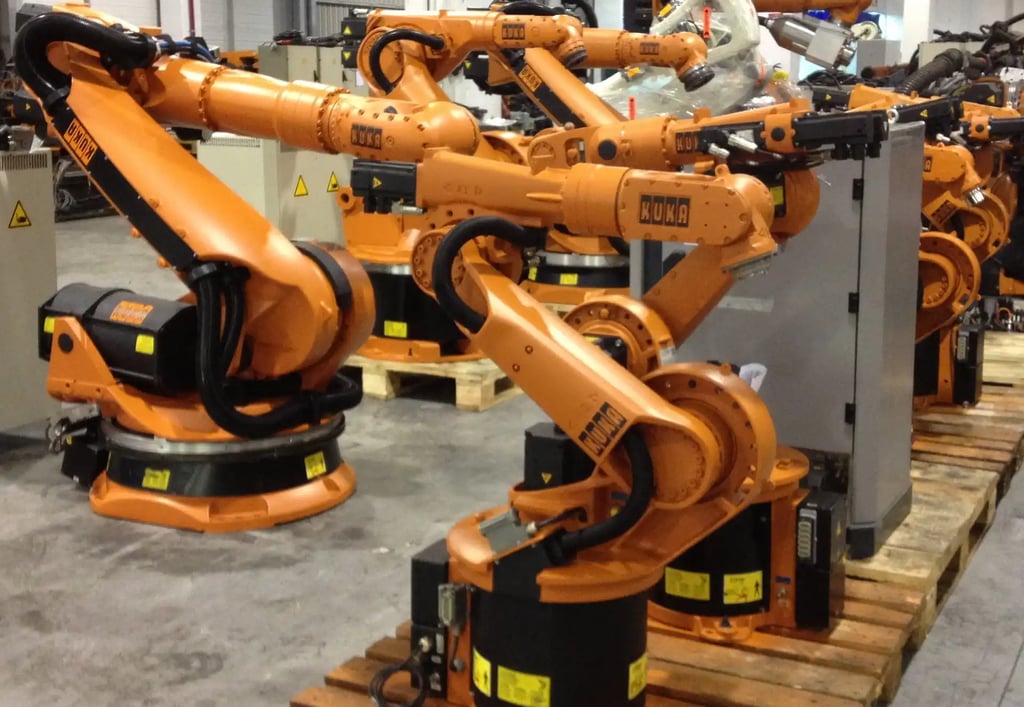
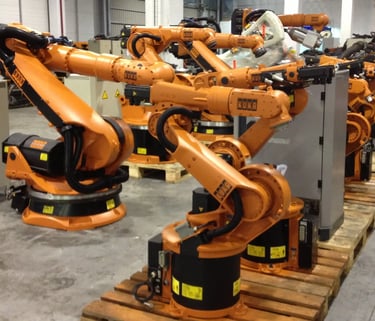
Ask ten different sellers and you will get ten different numbers. That is not because the market is random. It is because the price of a used industrial robot is built from a handful of specific factors, and no two machines are exactly the same. A clean, low-hour KUKA KR 210 that just came out of an automotive line will price differently from an as-is FANUC Arc Mate that has been sitting in a warehouse for two years. Understanding what drives those differences puts you in control of the conversation. You stop asking "Is this a good deal?" and start knowing what a fair number looks like.
How Much Do Used Industrial Robots Actually Cost
A used industrial robot price can land anywhere from under ten thousand dollars for a small, older model sold as-is to over eighty thousand dollars for a recently refurbished heavy-payload machine with a modern controller. Most six-axis robots in the 100 to 210 kilogram payload class fall into a few recognizable bands. Refurbished units from the big four brands that have been through a documented inspection and load-testing process typically sit between twenty thousand and sixty thousand dollars, depending on the model, the controller generation, and what is included. Tested and working robots, which run but have not been refurbished to a specific standard, often price between fifteen thousand and fifty thousand dollars. As-is machines with no guarantees can dip well below that, but the risk is baked into the number. These ranges move around based on what is happening in the broader industrial economy. When automotive plants retool, larger robots flood the used market and prices soften. When demand for palletizing cells spikes in logistics, clean high-payload units get harder to find and more expensive.
The Five Factors That Drive Price
The first factor is size and payload. A compact robot that lifts six kilograms costs less than a palletizing arm rated for two hundred kilograms. That spread is intuitive. More metal, bigger motors, heavier gearboxes. The second factor is brand. Not all big four industrial robots are priced equally. FANUC tends to command a premium in the used market, partly because of its reputation for reliability and partly because its U.S. installed base is so large that parts and service are never far away. KUKA and ABB units can sometimes be found at more moderate prices for comparable specs, while Yaskawa Motoman often offers the lowest entry point of the four. The third factor is the controller and software. A robot with a modern controller and pre-installed welding or handling software is worth more than the same arm with an older controller and no software licenses. Controller generation alone can swing a used robot's price by several thousand dollars. The fourth factor is what comes with the robot. A complete package with teach pendant, cables, and documentation is worth more than a bare arm. The fifth factor is the seller's process. A refurbished unit with a detailed inspection report will always cost more than a tested-and-working machine from a seller who cannot describe what they tested.
Beyond the Purchase Price: What You Will Actually Spend
The price tag on the robot is only part of the story. Getting the machine from a warehouse pallet to a working production cell adds costs that have nothing to do with whether the robot is new or used. End-of-arm tooling for a palletizing or welding application can run anywhere from a few thousand dollars for a simple pneumatic gripper to substantially more for a custom multi-function head. Programming and integration labor adds another layer. Even a straightforward setup takes time to write, test, and optimize the robot's paths. Safety guarding, whether it is fencing, light curtains, or scanners, is mandatory and application-specific. Then there is freight, rigging, and on-site commissioning. These costs show up regardless of whether you bought the robot new or used, which is why the savings on a used unit are so powerful. You can cut the equipment cost by forty to sixty percent and put that capital toward tooling, programming, and a properly guarded cell.
Condition Level and What It Means for Price
The used robot market uses a few terms that directly affect pricing. A refurbished robot has been inspected, repaired as needed, and tested under load. A reputable refurbisher will provide documentation: axis temperature logs, motor current readings, backlash measurements before and after service. These units carry the highest price because the buyer is paying for confidence that the machine will run when it arrives. A tested and working robot powers up and moves, but it has not been through a formal refurbishment process. The price is lower, and so is the certainty. An as-is robot may or may not run. The price is the lowest, but the buyer takes on the full burden of inspecting and repairing whatever issues exist. Choosing between these levels is mostly a choice about how much risk you are willing to manage internally.
A Quick Note on Brand and Resale Value
Brand does not just affect the purchase price. It also affects what the robot will be worth when you decide to sell it. FANUC holds its value well in North America. KUKA and ABB have their own strongholds, particularly in heavy payload applications and European manufacturing environments. Yaskawa Motoman is widely available and often priced more accessibly, which makes it a common entry point for first-time buyers. The key is to match the brand to your application and your local support ecosystem, not just to chase the lowest number on a listing.
The Bottom Line
A used industrial robot is one of the few pieces of capital equipment where the price tag is genuinely negotiable in a meaningful range. Two identical-looking robots can be priced thousands of dollars apart for reasons that are completely explainable once you know what to ask. Get clear on the payload and reach you need. Compare quotes at the same condition level, not across them. Ask what is included and what is extra. And insist on inspection data. The sellers who have it and are willing to share it are the ones whose numbers make sense. Tyche Robotic focuses on refurbished six-axis robots with documented testing, because a price that looks fair on a quote is only fair if the robot shows up ready to work.
This guide was prepared by Tyche Robotic, a supplier of refurbished six-axis industrial robots serving integrators and resellers in Latin America, Southeast Asia, and Europe.
Contact Us
As a professional supplier of used industrial robots, Jiangmen Tyche Robotic Co., Ltd. is committed to providing customers with integrated solutions—from hardware selection and configuration to software programming, debugging, and after‑sales maintenance.
© 2025. All rights reserved.

Mr. Victor Ismael