Welding, Palletizing, Assembly, and More: Where Industrial Robots Are Used Today
A beginner-friendly guide to common industrial robot applications. Covers welding, palletizing, assembly, material handling, and what first-time buyers should know.
Tyche Robotic
4/20/20266 min read
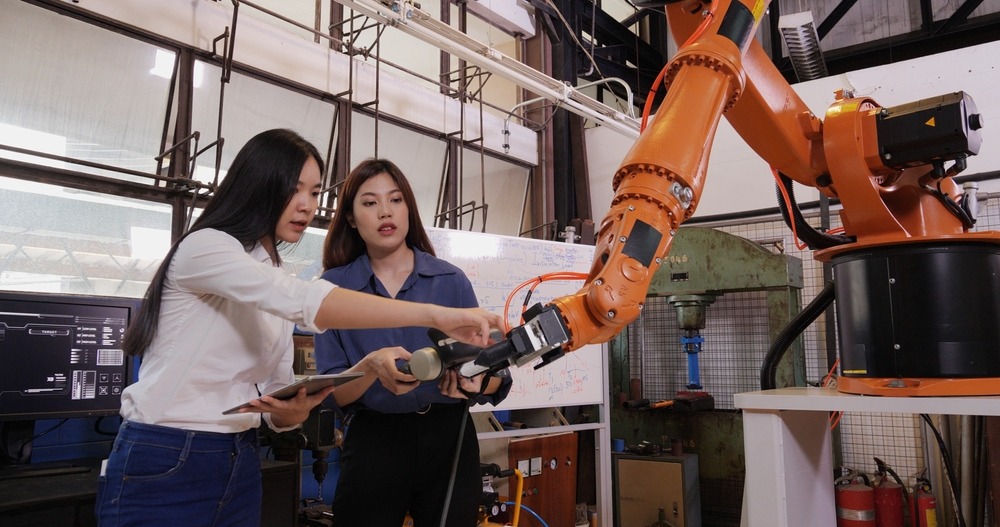
If you're reading this, you've probably walked past a robot on a factory floor and wondered what industrial robots are used for—and whether something similar could work in your own operation. Maybe you've got a welding station that's hard to staff, a palletizing area where guys are throwing out their backs, or an assembly line where quality slips after lunch. The thought crosses your mind, but then the questions start. What can these machines actually do? Where do you even start? It's a fair hesitation. Robots aren't magic, and they're not right for everything. But in a handful of specific, well-understood industrial robot applications, they've been proving their worth for decades. Once you know what those applications are, spotting opportunities in your own facility gets a lot easier.
This guide was prepared by Tyche Robotic, a supplier of refurbished six-axis industrial robots serving integrators and resellers in Latin America, Southeast Asia, and Europe.
Welding: The Most Common Entry Point
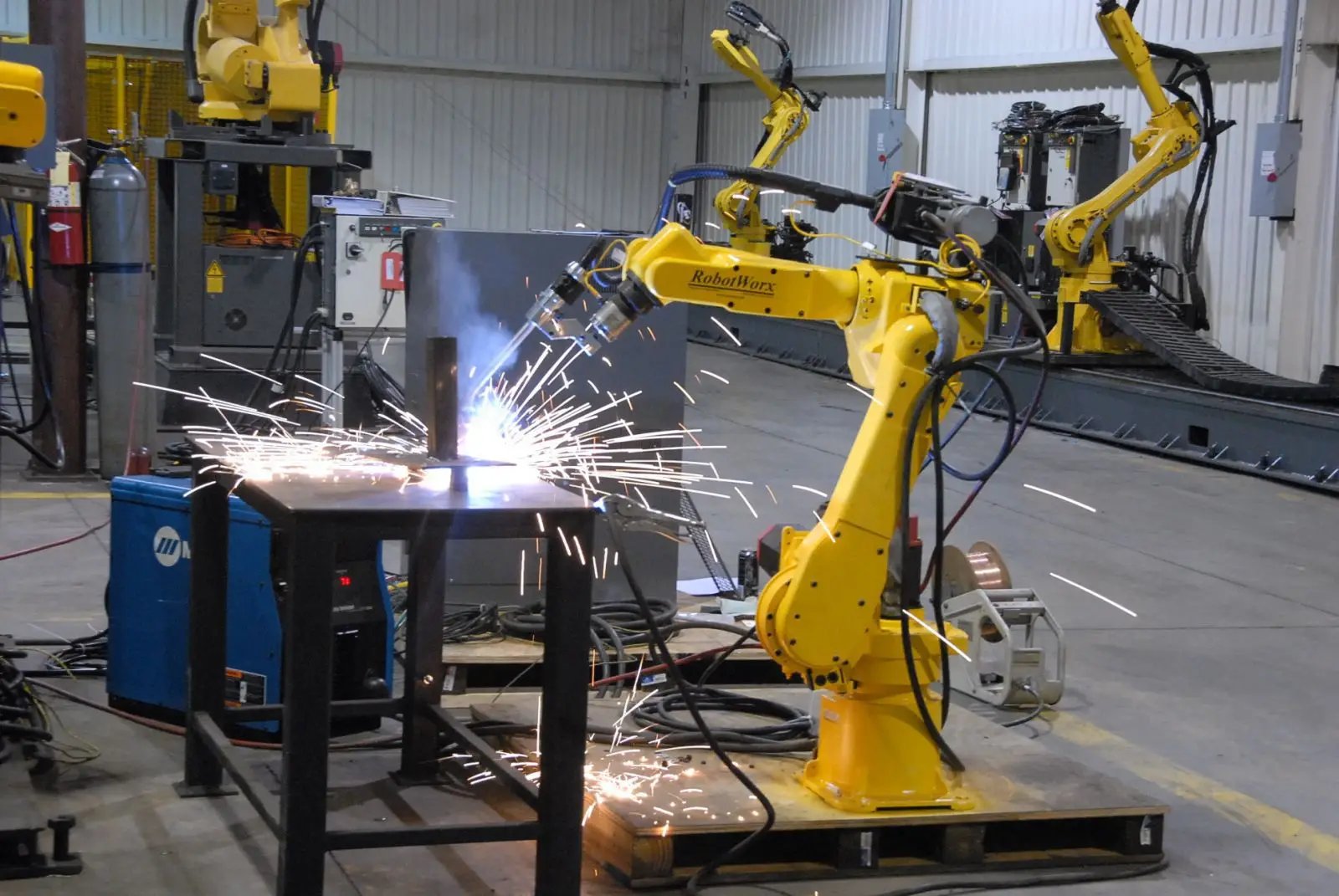
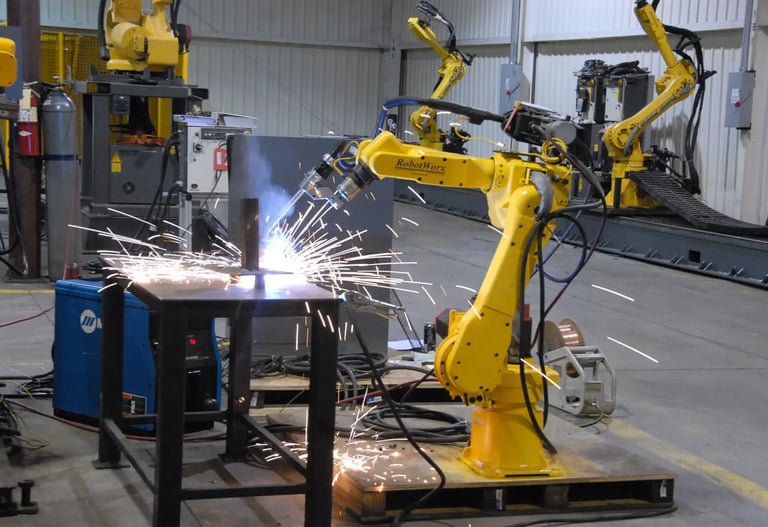
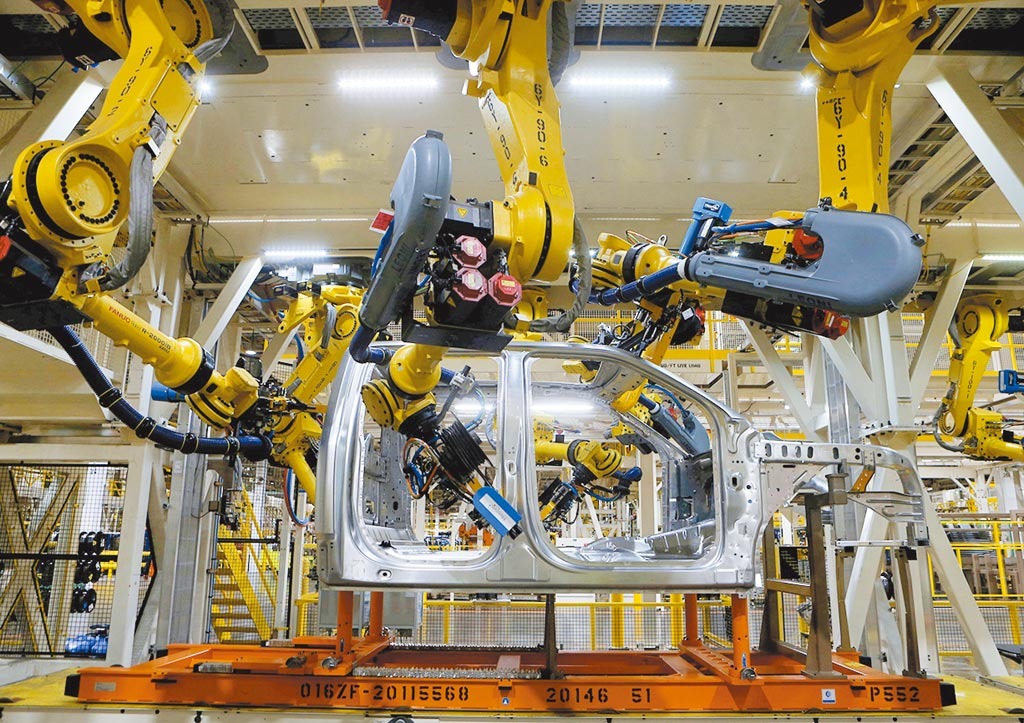
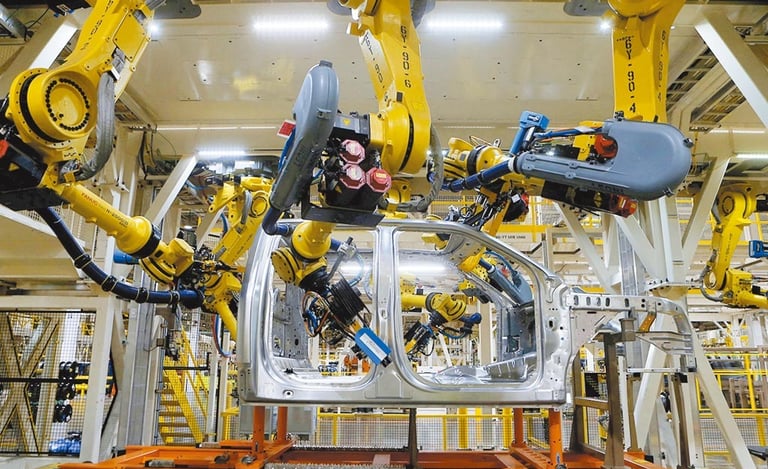
Welding is where industrial robots first made their name, and it's still the biggest application out there. There are two main flavors. Spot welding is what you see in automotive plants, those big orange or yellow arms pressing welding guns against car bodies. The robot handles the weight and hits the same spots every time, shift after shift. Then there's arc welding, which is more common in general metal fabrication. A robot arm moves a welding torch along a seam, laying down a bead that's consistent from start to finish. Robotic welding applications have become the standard in any high-volume metalworking environment because the reasons are pretty straightforward. You get the same weld quality at 4 PM as you did at 8 AM. You can run more hours without stopping. And you take your best welders and move them away from the fumes and the arc flash, which is better for everyone. If you're looking at used industrial robots for sale, welding robots are everywhere. A lot of shops start their automation journey right here because the payoff is easy to see.
Palletizing: Solving a Back-Breaking Problem
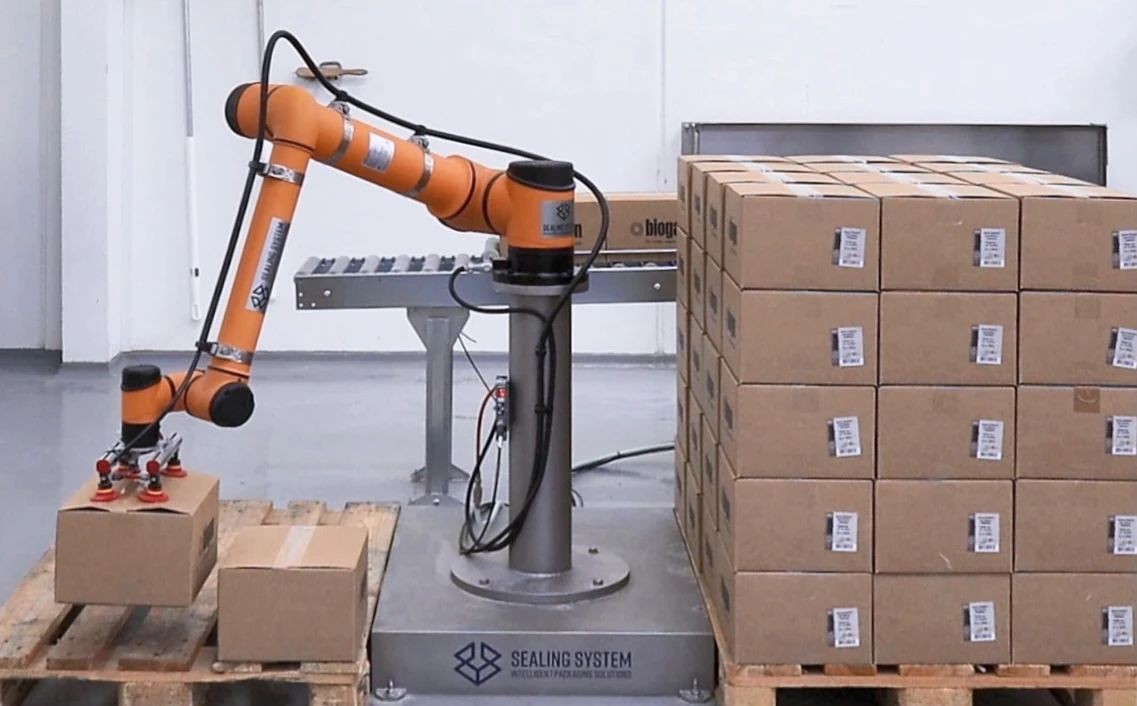
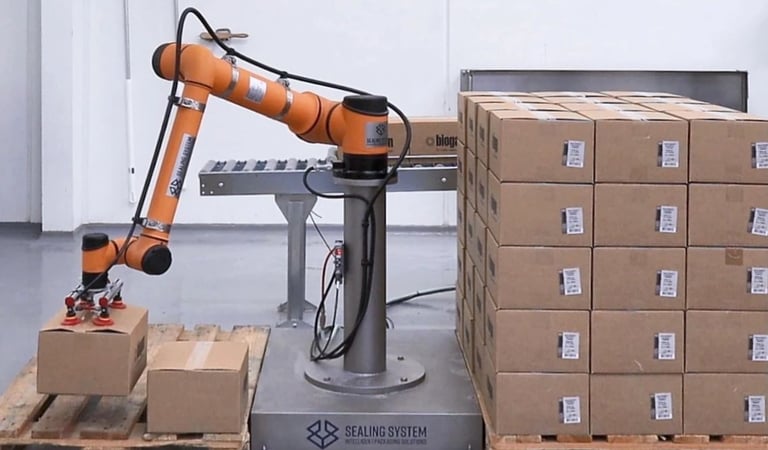
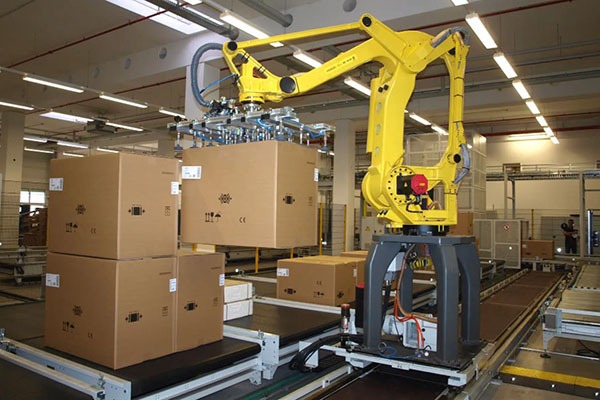
If you've ever stacked boxes or bags onto a pallet for eight hours, you know why this application exists. It's heavy, it's boring, and after a few hours, the stacks start getting a little crooked. A robot palletizing system doesn't get tired. It picks up a bag, box, or case, puts it exactly where it belongs, and does it again. And again. Food and beverage plants use them constantly. So do chemical companies, building material suppliers, and anyone with a busy shipping dock. The robot doesn't need to be a genius. It just needs enough reach to cover the pallet and enough payload to handle what you're stacking. These days, even smaller operations are looking at palletizing robots. It's not always about replacing people. Sometimes it's about filling a job that nobody wants to do, or freeing up your crew to do something that actually requires a brain. The math on a palletizing robot tends to be pretty simple, which is why you see so many of them in warehouses and at the end of production lines.
Assembly: Precision Without the Drift
Assembly covers a lot of ground. It might mean placing a small component onto a circuit board, driving screws into a housing, or pressing a bearing into place. The common thread is that it's a job humans do well for about an hour before their attention starts to wander. A robot on a robotic assembly line doesn't wander. It places the part in the same spot, with the same force, on every cycle. You see robotic assembly in electronics, in automotive component lines, in medical device manufacturing. Anywhere that consistency matters more than speed, or where a missed step creates expensive scrap. Assembly robots often need a bit more setup. The gripper has to be just right, and sometimes you need a vision system to help the robot find the part. But once it's dialed in, it just runs. For a lot of manufacturers, the payoff comes in fewer rejected parts and less rework, which adds up faster than you'd think.
Material Handling: The Unsung Hero
Industrial robot material handling isn't flashy. It's picking up a raw casting and putting it into a CNC machine. It's taking a finished part off a conveyor and placing it in a tray. It's moving a heavy mold from one station to the next. Nobody gets excited about material handling. But it might be the most practical place to start with automation. The tasks are usually simple. Pick, place, repeat. The integration is often easier than welding or assembly because you're just moving things from point A to point B. And the alternative is usually a person doing the same repetitive motion for an entire shift. Machine tending is the classic example. A robot loads and unloads a CNC mill or lathe, so the machine can run longer with less human intervention. In foundries, robots handle hot, heavy castings that nobody should be lifting manually. In packaging, they keep product flowing between stations. If you're trying to find a first project for automation, look for the spot where someone is just moving things back and forth. That's where a robot can make an immediate difference. This kind of straightforward automation is exactly why factory automation in Southeast Asia and other growing manufacturing regions continues to expand—the return on a simple material handling cell is easy to justify.
Other Applications Worth Knowing About
So far we've covered the major industrial robot applications, but there are a few more worth knowing about. Once you start looking, you notice robots doing all kinds of things you might not have thought of. Painting is a big one. A robot arm with a spray gun delivers even coverage, doesn't waste paint on overspray, and keeps people out of the paint booth. Dispensing adhesives or sealants is similar. The robot lays down a precise bead along a programmed path, something that's hard to do by hand. Inspection is another growing area. A robot equipped with a camera can check parts for defects faster and more consistently than human eyes, especially on high-volume lines. Then there's material removal. Grinding, deburring, polishing. These are dirty, noisy, vibration-heavy jobs that wear people down. A robot doesn't mind the dust or the noise. It just does the work. These applications are more specialized, but they're worth knowing about because they solve real problems that a lot of factories just accept as part of doing business.
Matching the Robot to the Job
Once you have a sense of what industrial robots are used for, the next question is what kind of robot you need. It's not as complicated as it sounds. The application tells you what specs to care about. If you're palletizing, you need payload. The robot has to lift whatever you're stacking, plus the gripper. You also need reach, so it can access the entire pallet area without stretching. If you're welding, payload isn't usually the issue, but reach and repeatability matter. The robot needs to get into tight spots and hit the same position every time. For assembly, precision is everything. Even a little slop in the joints translates to parts that don't fit. And for high-speed picking or packaging, speed and acceleration are what you watch. The key is to not overcomplicate it. Figure out what the hardest part of the job is, and look for a six-axis robot that handles that part well. Six-axis robot uses are broad enough that you can usually find a fit. For anyone buying their first industrial robot, a six-axis machine with decent reach and a payload that covers your heaviest part with room to spare is usually a safe place to start.
Taking the First Step
Automation can feel like a big leap, especially if you've never done it before. But you don't have to automate an entire factory on day one. Most successful automation projects start small. A single welding cell. One palletizing station. A robot loading a machine that used to sit idle waiting for an operator. The key is to pick a task that's repetitive, physically demanding, or quality-critical, and start there. Once that first robot is running, you learn what works, what doesn't, and what else in your operation might benefit. The machines are out there. The applications are well understood. And with quality used industrial robots available at a fraction of new equipment cost, the barrier to entry is lower than it's been in a long time.
Contact Us
As a professional supplier of used industrial robots, Jiangmen Tyche Robotic Co., Ltd. is committed to providing customers with integrated solutions—from hardware selection and configuration to software programming, debugging, and after‑sales maintenance.
© 2025. All rights reserved.

Mr. Victor Ismael