The ABB IRB 6640: A Heavy-Duty Robot Built for Foundries, Welding, and Big Parts
A detailed look at the ABB IRB 6640 heavy payload robot. Covers four main variants, Foundry Plus and Foundry Prime options, spot welding and material handling applications, IRB 6710 comparison, and used buying tips.
Tyche Robotic
5/18/20266 min read
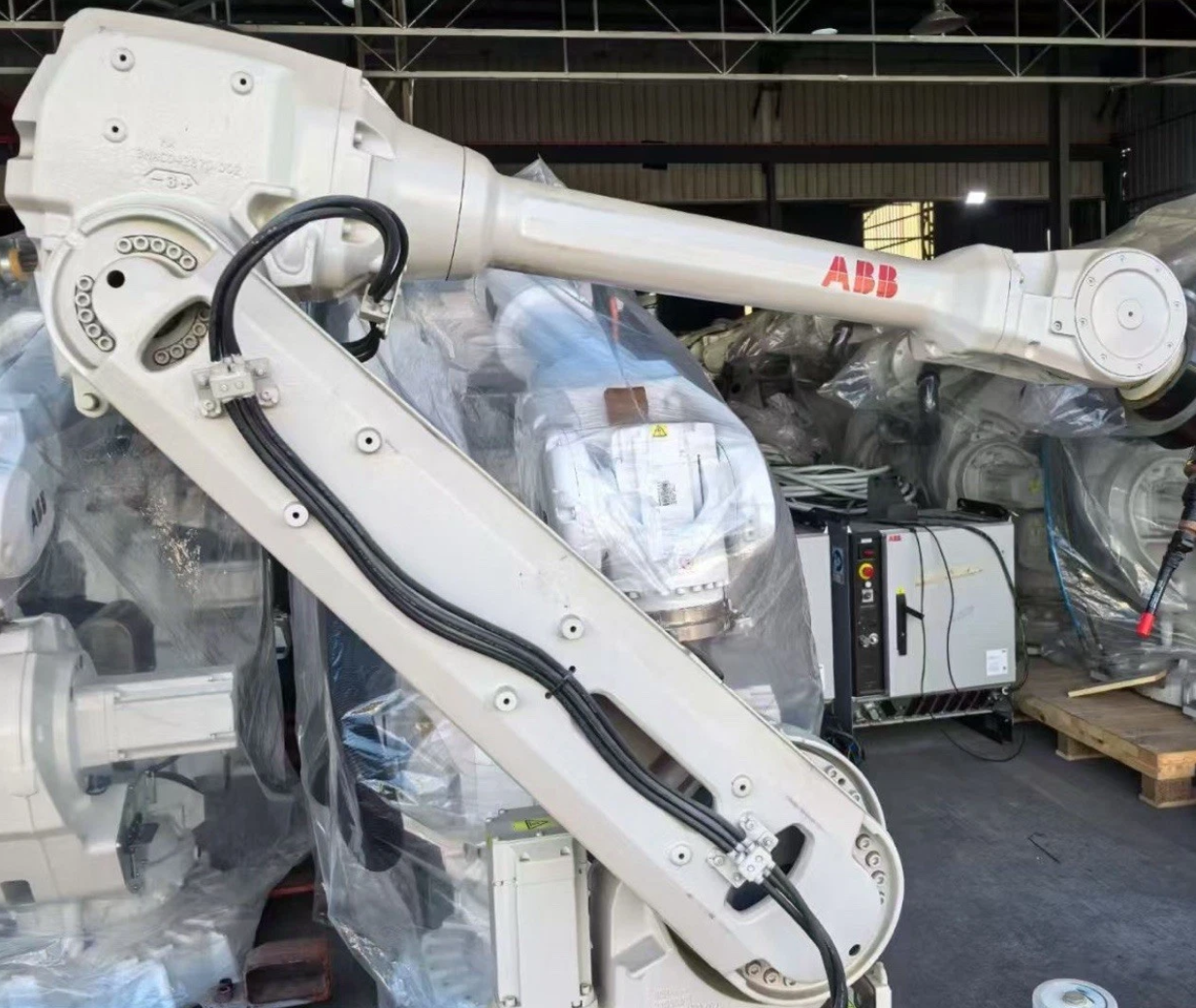
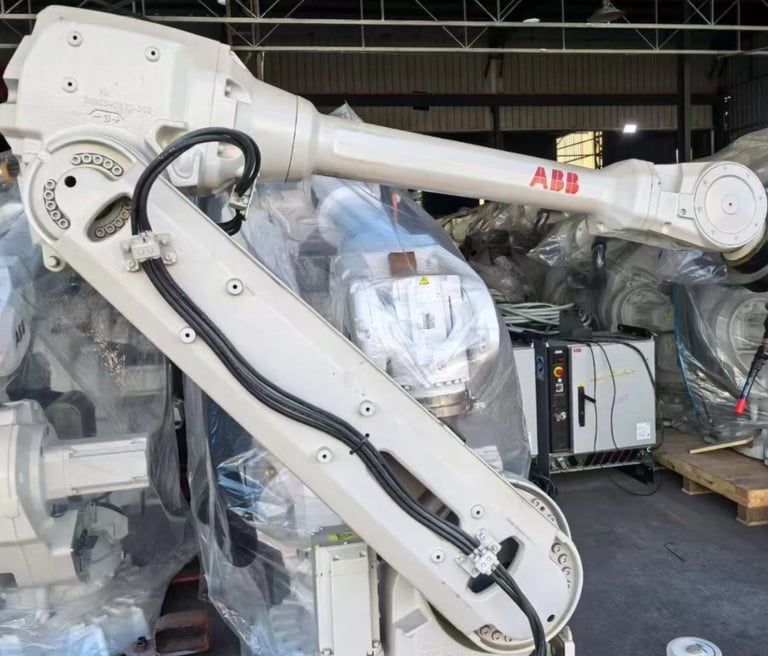
If you walk through a foundry, a body shop, or a heavy fab plant, there is a good chance the robot moving large castings or swinging a weld gun says ABB on the side. The IRB 6640 has been one of ABB's most deployed heavy-payload robots, picking up where the earlier IRB 6600 left off. With payloads from 130 to 235 kilograms and reaches from 2.55 to 3.2 meters, it covers the weight class where the work gets physically punishing and the environment does not pull punches. ABB built the 6640 to be lighter and stiffer than its predecessor, and it shows in how many of these machines are still running in tough conditions years after they were first commissioned. For a used buyer, the IRB 6640 is worth understanding in detail because it shows up regularly on the secondary market, retired from automotive weld lines and foundry cells where the hours are real but the maintenance was usually disciplined.
The IRB 6640 Family: Four Versions for Different Heavy Jobs
The IRB 6640 lineup is built around a common platform, but the four main versions push payload and reach in different directions. The IRB 6640-130/3.2 is the long-reach specialist. It carries 130 kilograms out to 3.2 meters, which makes it the press shop and large-part handling variant. The IRB 6640-185/2.8 steps payload up to 185 kilograms at 2.8 meters, a middle ground for general heavy handling. The IRB 6640-205/2.75 is the balanced workhorse, running 205 kilograms over 2.75 meters. This is the most common variant on the used market. The IRB 6640-235/2.55 pushes payload to 235 kilograms at 2.55 meters, built for the heaviest spot welding guns and foundry handling where every kilogram of payload margin counts. ABB also offered an ID version of the 6640, the IRB 6640ID-170 and IRB 6640ID-200. The ID designation means the dress pack is routed through the upper arm and wrist instead of hanging externally. In a spot welding cell, that protects the weld cables from snagging on fixtures and reduces wear from the constant flexing that happens when the robot repositions between welds.
What Makes the IRB 6640 Built for Tough Environments
ABB made a few design decisions on the IRB 6640 that separate it from lighter industrial robots and from its own predecessor. The first is weight. The 6640 shed roughly 400 kilograms compared to the IRB 6600. Less mass means easier installation and less structural reinforcement needed on the cell floor. ABB also strengthened the forklift pockets, which sounds minor until you have to reposition a robot that weighs over a ton. The second is the full backward bend capability on floor-mounted units. The robot can fold its arm completely behind itself, which extends the effective work zone without requiring a longer reach. In a dense body shop, that extra flexibility reduces the number of robots needed on a line. The third is the IRC5 controller paired with TrueMove and QuickMove motion control. TrueMove keeps the programmed path accurate regardless of speed, and QuickMove shaves cycle time by optimizing acceleration. Repeatability lands at roughly seven hundredths of a millimeter. The fourth is the range of environmental protection. Standard IP67 protection covers the wrist and key joints. Foundry Plus adds enhanced sealing against dust and moisture for general casting environments. Foundry Prime is the top tier, built for high-pressure washdown and the kind of heat, grit, and abuse that would kill a standard robot in weeks. It includes a positive-pressure air system inside the arm to keep particles from working their way in. There is also a Clean Room variant for applications where particle shedding is unacceptable.
Where You Will See IRB 6640 Robots at Work
Spot welding is where the IRB 6640 earned its keep. The 235-kilogram variant runs in body shops worldwide, carrying weld guns that can weigh over a hundred kilograms. The ID version with internal dress pack routing is especially common here, because exposed weld cables in a high-cycle cell are a reliability liability. ABB also offered a SpotPack configuration for the 6640, which bundles the robot, controller, weld timer, and dress pack into a single pre-integrated package. That makes setup faster and reduces the integration work compared to sourcing each component separately. In foundries, the Foundry Plus and Foundry Prime variants handle hot castings, load die casting machines, and transfer parts through trim presses. The environment is brutal, but the protection is designed for it. In material handling and palletizing, the 185 and 205-kilogram versions move large parts, stack heavy bags and cases, and feed CNC machining centers with raw castings or forgings that smaller robots cannot manage. In press shops, the 130/3.2 long-reach version extracts stamped panels from large tandem press lines where the robot needs to reach deep into the press and clear the panel before the next stroke.
IRB 6640 vs. the New IRB 6710-6740 Series: What Changed
ABB launched the IRB 6710, 6720, 6730, and 6740 series in 2023 as the next generation of large robots, covering 150 to 310 kilograms of payload with reaches from 2.5 to 3.2 meters. These run on the OmniCore controller, which tightens repeatability to around three hundredths of a millimeter and cuts energy consumption by up to 20 percent. OmniCore also integrates TrueMove, QuickMove, and SafeMove on a single platform. That is a genuine step forward in precision and efficiency. KUKA's KR QUANTEC and FANUC's R-2000iD series have made similar generational improvements over the years, but ABB's weight reduction and full backward bend remain distinctive design choices. The practical takeaway for a used buyer is that the IRB 6640 is now a generation behind, which means pricing on the secondary market is softening. For applications like general material handling, palletizing, and machine tending, where the extra precision and energy savings of the OmniCore generation are not essential, a used IRB 6640 becomes a stronger value proposition than it was before the new series launched.
What to Know When Buying a Used IRB 6640
Used IRB 6640 robots come from three main sources: automotive body shops, foundries, and press lines. Each leaves a different signature on the machine. Robots retired from body shops have absorbed millions of spot weld cycles. The wrist axes take the brunt of that, so backlash measurements on A4, A5, and A6 are essential regardless of which variant you are looking at. Robots from foundries with Foundry Plus or Foundry Prime ratings need a close inspection of every external seal. Heat and chemical exposure degrade rubber and silicone over time. On Foundry Prime units, verify that the positive-pressure air system still functions. If it does not, the robot may have been operating without its primary defense against particle ingress, and the internals deserve extra scrutiny. Robots from press lines tend to have high cycle counts but lower joint loads compared to spot welders. The long-reach 130/3.2 variant needs a path accuracy test at full extension to confirm the arm has not developed positioning drift over years of reaching deep into presses.
The controller on a used IRB 6640 is usually an IRC5, though earlier units may have shipped with the S4C. Confirm which generation you are getting. IRC5 is preferred for easier integration with modern PLCs and access to ABB's current software tools. Check the controller battery condition. A dead battery means lost mastering data, and re-mastering a robot in this payload class adds commissioning time you probably did not budget for. Verify that any application software is installed and licensed. Spot welding packages, handling tool software, and any foundry-specific options need to be present and transferable. The SpotPack configuration, if the robot was originally sold as a pre-integrated spot welding package, should include the weld timer and dress pack hardware. Ask whether those components are still with the machine.
The mechanical advantage of the IRB 6640 over its predecessor is its lighter weight and reinforced forklift pockets, which make installation and repositioning easier. But check the base mounting points for fatigue cracks, especially if the robot spent its life in a high-cycle spot welding cell where the base absorbs reaction forces from every weld. A loaded test report showing the robot running under conditions that reflect real work is the minimum standard before purchasing. A clean IRB 6640-205/2.75 with an IRC5 controller is the most common configuration on the used market and pricing tends to be transparent. The 235-kilogram and long-reach 130/3.2 variants appear less often and command a premium when they do.
This article was prepared by Tyche Robotic, a supplier of refurbished six-axis industrial robots serving integrators and resellers in Latin America, Southeast Asia, and Europe.

Contact Us
As a professional supplier of used industrial robots, Jiangmen Tyche Robotic Co., Ltd. is committed to providing customers with integrated solutions—from hardware selection and configuration to software programming, debugging, and after‑sales maintenance.
© 2025. All rights reserved.

Mr. Victor Ismael