Should You Buy a New or Used Industrial Robot?
A practical guide to deciding between a new or used industrial robot. Covers application needs, robot lifespan, real price differences, refurbishment quality, and which choice fits your business.
Tyche Robotic
5/8/20264 min read
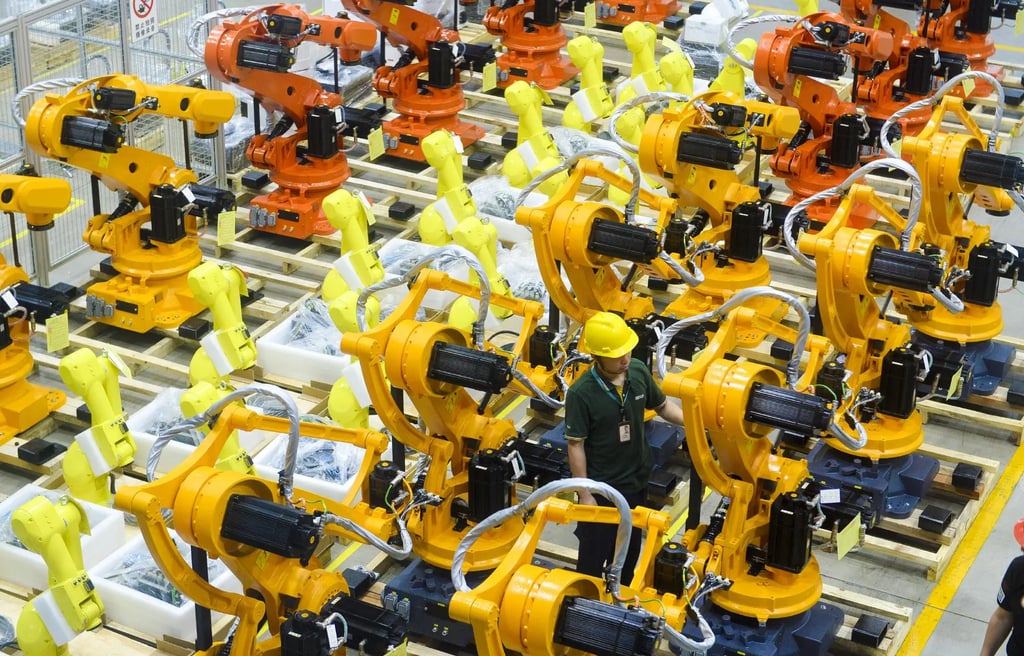
The question comes up in almost every automation conversation sooner or later. New or used? It sounds simple, but the answer pulls in a lot more than just the price tag. The global market for used industrial robots was worth just over three point three billion dollars in 2025, and it is projected to keep growing at roughly eight percent a year through the early 2030s. That is not a small side market. That is a mature, liquid, global trade in machines that still have years of work left in them. For a manufacturer staring at a quote for a brand-new six-axis robot and wondering if there is another way, understanding what drives the new-versus-used decision is the first step toward a choice that makes financial and operational sense.
What Does the Application Actually Need?
A lot of production tasks have not fundamentally changed in twenty years. Arc welding a steel frame, palletizing bags of cement, loading a CNC machine with raw castings. The robot is doing the same moves today that it was doing in the early 2000s. If your application falls into one of these well-established categories, a used robot from the big four industrial robot brands will handle it without breaking stride. A KUKA KR 210 moving pallets, an ABB IRB 6600 handling heavy foundry parts, a FANUC Arc Mate running MIG welds, a Yaskawa Motoman on a fab shop welding cell. These are mature applications on mature platforms. The robot does not need the latest controller generation to get the job done. What it needs is the right payload, the right reach, and a control system that your team or your integrator knows how to work with.
How Long Do You Need the Robot to Run?
People sometimes assume a used robot is near the end of its life. That is rarely the case with the major brands. Industrial robots are built for duty cycles that most factories never fully exploit. A fifteen-year-old ABB IRB 6600 that spent its life in a clean, well-maintained automotive line can easily have another decade of reliable service in a less demanding environment. If your production horizon is three to five years before the next line redesign, a properly inspected used robot will see you through that window and then some. The key variable is not the year stamped on the serial plate. It is the application the robot came from and how it was maintained. A robot that ran three shifts in a foundry is mechanically different from one that loaded parts in a climate-controlled machine shop. Ask about the previous life. A seller who knows the history will tell you. A seller who does not is guessing.
What Is the Real Price Difference?
The headline number is well known. A used industrial robot typically costs forty to sixty percent less than a comparable new unit. But the price gap widens when you look at the total landed cost. New robots often require additional software licenses, new teach pendants, and sometimes new cables or connectors that are not included in the base quote. A used robot that comes as a complete package with its controller, teach pendant, cables, and already-installed software options can close that gap even further. That said, not every used robot is priced the same. Refurbished units with documented inspection reports command a premium over tested-and-working machines, which in turn cost more than as-is units sold with no guarantees. The used robot price versus new comparison only makes sense when you are comparing similar levels of readiness. The cheapest listing is not always the best value. The one that arrives ready to plug in and calibrate usually is.
Beyond the Three Questions: What About Quality?
Price and specs get you interested. Quality is what keeps you from regretting the purchase. In the used robot market, quality comes down to the seller's inspection process. A reputable supplier will provide data, not just a description. That means load test results showing axis temperatures and motor currents. Backlash measurements on the wrist joints. A video of the specific robot running a test cycle, not a library clip of a similar model. The difference between a refurbished robot and one that just got cleaned up and repainted is in the paperwork. If the seller cannot produce an inspection report, the "refurbishment" claim is probably cosmetic. Robot refurbishment quality is not regulated by any universal standard, so the burden is on the buyer to ask. The sellers who welcome those questions tend to be the ones worth dealing with.
What Is the Right Choice for Your Business?
There is no universal answer, but the logic is clear once you look at it through the lens of your own operation. Buy new if the application demands a capability that only the latest controller generation can provide, or if the project budget has room and the accounting team prefers a standard depreciation schedule. Buy used if the application is well understood, the required software and hardware are available on the secondary market, and you want the machine to start paying for itself within months, not years. Buy refurbished if you want the cost advantage of used equipment with the confidence of a documented inspection process. For most manufacturers in metal fabrication, logistics, and general material handling, a quality used or refurbished robot from one of the major brands checks every box. The savings are real, the machines are available, and the path to getting them into production is shorter than it has ever been. Tyche Robotic and other established equipment suppliers in this space focus on making sure the robot you buy is ready to run, not just ready to ship.
This guide was prepared by Tyche Robotic, a supplier of refurbished six-axis industrial robots serving integrators and resellers in Latin America, Southeast Asia, and Europe.
Contact Us
As a professional supplier of used industrial robots, Jiangmen Tyche Robotic Co., Ltd. is committed to providing customers with integrated solutions—from hardware selection and configuration to software programming, debugging, and after‑sales maintenance.
© 2025. All rights reserved.

Mr. Victor Ismael