Robotic Gripper Power Sources: Pneumatic, Electric, or Hydraulic?
A practical comparison of pneumatic, electric, and hydraulic gripper power sources covering how they work, costs, maintenance, Big Four integration, and what to inspect when buying a used gripper system.
Tyche Robotic
6/11/20265 min read
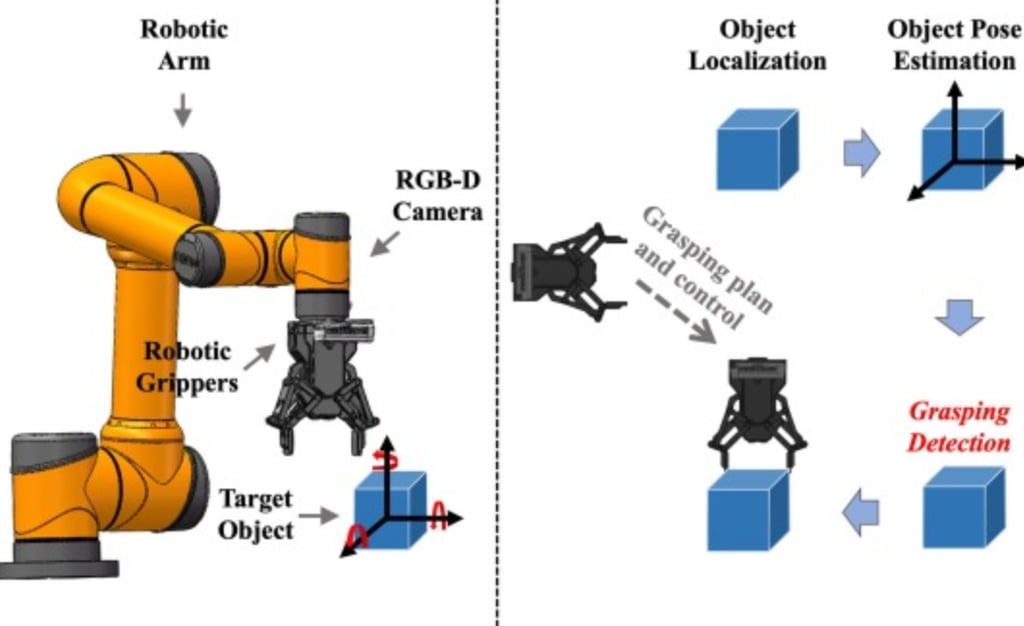
A gripper is only as good as the power behind it. Pick the right gripper design but the wrong power source, and the result is a tool that moves too slowly, cannot hold the part securely, or needs constant maintenance just to keep running. The three options, pneumatic, electric, and hydraulic, each solve a different set of problems. Pneumatic grippers are the default choice for most factories because they are fast, cheap, and simple. Electric grippers took over precision work where control matters more than speed. Hydraulic grippers own the heavy end where the forces involved would stall anything else. Understanding the trade-offs between them is not a side detail. It determines how the robot interacts with every part it touches.
Pneumatic Grippers: Fast, Simple, and Everywhere
A pneumatic gripper runs on compressed air. A valve opens, air pushes a piston, and the fingers close. The whole cycle happens in under a tenth of a second on a small unit. The cost runs from a couple hundred dollars for a simple two-finger model to a couple thousand for a more complex design. This combination of speed and low cost is why pneumatic grippers are the most common type on factory floors. They handle high-speed pick-and-place, palletizing, and general material handling where the part is consistent and the grip force does not need to change from one cycle to the next.
The downsides are in the fine print. A pneumatic gripper typically has two positions, open and closed. There is no programmable mid-point, which means the gripper cannot adapt its stroke to different part sizes without a mechanical change. The grip force depends on the air pressure available. If the compressor is undersized or the air lines are long, the force drops. And the seals wear. The O-rings and gaskets inside the cylinder degrade with every cycle, faster in hot or dirty environments. A pneumatic gripper maintenance schedule should plan for seal replacement roughly every six to twelve months depending on duty cycle. FANUC and Yaskawa robots in welding and general handling cells commonly pair with pneumatic grippers from Schunk, Zimmer, and other independent suppliers. The integration is straightforward. Standard digital I/O signals open and close the valve, and the gripper does the rest.
Electric Grippers: Precision and Control
An electric gripper uses a servo motor to move the fingers. The motor is controlled by a drive that receives commands from the robot controller, and the drive knows exactly where the fingers are at every moment. This changes what the gripper can do. Instead of being limited to open and closed, an electric gripper can stop at any position along its stroke. The grip force can be programmed from a few grams for handling delicate electronics to tens of kilograms for holding a metal part during machining. The force feedback tells the robot whether the part is properly gripped, whether it slipped, and whether the insertion force is within the acceptable range. These capabilities make electric grippers the standard for precision assembly, cleanroom handling, and any application where the robot needs to handle multiple part sizes without changing tooling.
The trade-offs are cost and speed. An electric gripper runs from eight hundred to over five thousand dollars depending on the payload and the level of force control. The cycle time is generally a little slower than a comparable pneumatic unit because the motor has to accelerate and decelerate the fingers with precision. ABB and KUKA robots in assembly and collaborative applications frequently integrate with electric grippers from Robotiq, OnRobot, and other manufacturers. The integration path is more involved than pneumatic because the force and position data need to flow between the gripper drive and the robot controller, but the result is a gripper that can feel what it is doing.
Hydraulic Grippers: Maximum Force for Heavy Lifting
A hydraulic gripper uses pressurized fluid to generate clamping force. The power density of hydraulics is unmatched. A hydraulic gripper the size of a shoebox can generate forces that would require a pneumatic or electric unit ten times its size. This is the domain of foundries, forge shops, and heavy fabrication, where the parts weigh hundreds of kilograms and the gripper has to hold them securely while the robot moves them through the cell. A FANUC M-900iA handling a raw casting or a KUKA KR QUANTEC moving a structural steel beam is likely running a hydraulic gripper.
The downsides are significant. Hydraulic systems are more expensive to buy and more expensive to maintain than pneumatic or electric alternatives. The pump, hoses, fittings, and seals are all wear items. A hydraulic leak near a hot part or in a clean environment is a serious problem. The fluid itself needs to be filtered, cooled, and changed on a schedule. Hydraulic grippers are not for general use. They are for applications where the force requirement leaves no other choice.
How the Big Four Approach Gripper Power
The robot brands do not build their own grippers, but they do build the controllers and software that make grippers work. FANUC's R-30iB integrates pneumatic and electric grippers through standard digital and analog I/O, with force data from electric grippers feeding back into the controller for applications that need it. ABB's IRC5 and OmniCore support integrated force control, which pairs naturally with electric grippers that can report position and grip force back to the robot. KUKA's open KRC4 and KRC5 architecture makes it straightforward to integrate third-party electric grippers with custom force and position profiles. Yaskawa's YRC1000 handles pneumatic gripper control through standard I/O and pairs with electric grippers when MotoSight vision or force sensing is part of the cell. The important thing to understand is that the gripper power source is an open ecosystem. A Schunk pneumatic gripper mounts to any major robot brand. A Robotiq electric gripper works with FANUC, ABB, KUKA, or Yaskawa. The choice of power source is driven by the application, not by the color of the arm.
What to Know When Buying a Used Gripper System
A used gripper needs its own inspection. The robot arm may be in perfect condition, but if the gripper fails on day one, the cell is not running. For pneumatic grippers, the seals are the first thing to check. O-rings and gaskets harden with age and use, especially in hot, dusty, or chemical environments. A leaking seal means lost grip force and inconsistent cycle times. Listen for air hissing when the gripper is pressurized and stationary. Check the solenoid valve for crisp actuation. A sluggish or sticky valve usually means it is gummed up with oil or debris and needs cleaning or replacement. For electric grippers, run the gripper through its full range of motion and compare the commanded position to the reported position. Any discrepancy suggests the encoder or the drive needs attention. Test the force feedback by having the gripper close on a known object and confirming the reported force matches the expected value. A force sensor that has drifted out of calibration will cause the robot to either grip too hard and damage parts or grip too lightly and drop them. For hydraulic grippers, look for leaks around every fitting, hose, and seal. Hydraulic fluid leaves a film that attracts dust and makes leaks easy to spot. Check the hoses for cracks or bulges. A hydraulic hose that fails under pressure is a safety hazard. Ask for service records showing when the fluid was last changed and the filters replaced. The power source is the part of a gripper system that gets the most wear and the least attention. On a used robot, it is worth ten minutes of inspection before the first cycle.
This article was prepared by Tyche Robotic, a supplier of refurbished six-axis industrial robots serving integrators and resellers in Latin America, Southeast Asia, and Europe.
Contact Us
As a professional supplier of used industrial robots, Jiangmen Tyche Robotic Co., Ltd. is committed to providing customers with integrated solutions—from hardware selection and configuration to software programming, debugging, and after‑sales maintenance.
© 2025. All rights reserved.

Mr. Victor Ismael