Robotic End Effectors vs. Grippers: What's the Difference and Why It Matters
A clear explanation of the difference between robotic end effectors and grippers, covering the main types of end effectors, how the Big Four approach integration, and what to inspect when buying used end effector systems.
Tyche Robotic
6/15/20265 min read
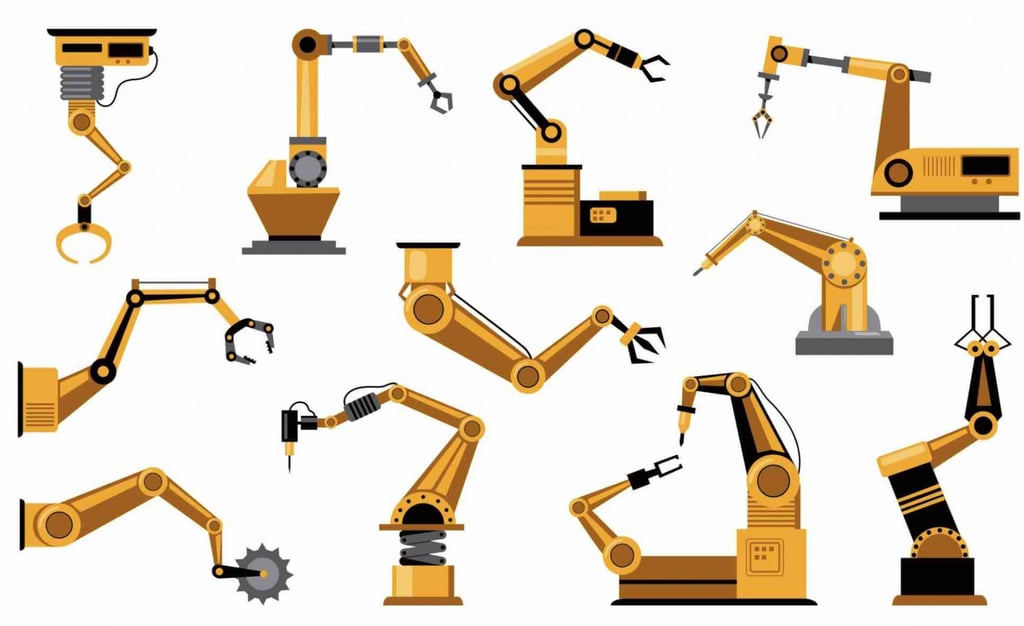
If you have spent any time around industrial robots, you have heard both terms thrown around, often as if they mean the same thing. They do not. A gripper is a type of end effector. An end effector is any tool mounted to the robot wrist that interacts with the part or the process. A gripper grabs things. A weld gun joins things. A paint sprayer coats things. A deburring spindle removes material. A vision sensor inspects things. All of them are end effectors. Calling every end effector a gripper is like calling every vehicle a pickup truck. It works until you need a sedan, a dump truck, or a motorcycle. Understanding the difference matters because the two terms lead you to different places when you are specifying a robot cell, pricing the tooling, or evaluating a used system.
What Is an End Effector? What Is a Gripper?
An end effector is the device at the end of the robot arm. It is the part that does the work. The robot positions the end effector, and the end effector performs the operation. A gripper is a specific category of end effector designed to grasp, hold, and release parts. The relationship is simple. Every gripper is an end effector. Not every end effector is a gripper. A welding torch is an end effector that melts metal. It does not grip anything. A paint atomizer is an end effector that applies coating. It does not grip anything. A vision camera is an end effector that captures images. It never touches the part at all. The confusion persists because grippers are the most common type of end effector. Most robots in material handling, machine tending, and palletizing run grippers. When the only end effector a person has seen is a gripper, the two terms start to blur. But the first time someone orders a robot for welding and specifies a gripper, they find out quickly how different the two terms are.
The Main Types of End Effectors Beyond Grippers
Grippers are the volume leader, but the robot tooling world extends well beyond them into process-specific devices. Welding tools are the second major category. An arc welding torch and a spot welding gun are both end effectors, and neither has anything to do with gripping parts. The torch is designed to deliver filler metal, shielding gas, and electrical current to a weld joint. The weld gun is designed to clamp two panels together and pass a high current through them. Material removal tools are the third category. Deburring spindles, grinding discs, routing bits, and drills all mount to the robot wrist and remove material from the part. These tools experience forces that grippers never see. Dispensing and painting tools are the fourth category. A sealant nozzle, a paint atomizer, and an adhesive dispensing head all apply material to the part. Vision and inspection sensors are the fifth category. A camera, a laser profiler, or a force-torque sensor mounted to the robot wrist is technically an end effector, even though it never touches the part at all.
The tool changer is the piece that ties all of these together. It is not an end effector itself. It is the device mounted between the robot wrist and the end effector that lets the robot swap between a gripper, a weld gun, and a vision sensor in seconds. A cell with a tool changer can run multiple processes from a single robot, and the end effectors become interchangeable attachments rather than permanent installations.
How the Big Four Approach End Effector Integration
The robot brands do not build most end effectors, but they build the controllers, software, and interfaces that make end effectors work. FANUC's R-30iB controller integrates with pneumatic and electric grippers through standard I/O and Ethernet fieldbus protocols. The iRVision system and the Force Sensor connect directly into the controller, which simplifies vision-guided and force-guided applications. The ArcTool software manages the weld torch as an integrated part of the welding cell. ABB's IRC5 and OmniCore support Integrated Force Control, which pairs with electric grippers and process tools that need to report force and position data back to the robot. The RobotStudio simulation environment lets integrators test end effector paths offline. KUKA's KRC4 and KRC5 use an open architecture that accepts end effectors from a wide range of manufacturers. The VisionTech and ForceTorque packages integrate with the controller for applications that need vision guidance and force control. Yaskawa's YRC1000 handles pneumatic grippers through standard I/O and electric end effectors through Ethernet communication. The MotoSight vision system and the MotoWeld welding package manage the sensor and welding end effectors as part of a coordinated system.
The important thing to understand is that end effectors are an open ecosystem. A Schunk gripper mounts to any major robot brand. A Binzel welding torch works with FANUC, ABB, KUKA, or Yaskawa. The mechanical mounting interface at the robot wrist follows an ISO standard, and the electrical and communication interfaces follow industry protocols. The end effector is chosen for the process, not for the color of the arm.
What to Know When Buying a Used End Effector System
A used end effector needs its own inspection, and the checklist changes completely depending on what type of tool it is. For grippers, the mechanical wear is the first thing to check. Cycle the fingers and feel for play in the joints. A pneumatic gripper needs a check for air leaks around the seals and fittings. An electric gripper needs a test of the force feedback to confirm the sensor has not drifted. For welding tools, the torch cable is the first priority. Spatter burns pinholes through the jacket, and the constant flexing near the wrist hardens the copper conductors inside. A torch that looks fine can still cause intermittent arc faults. Check the nozzle for deformation and the wire feeder drive rollers for wear. For material removal tools, the spindle bearings are the critical wear item. Run the spindle and listen for noise or vibration. Check the tool holder for runout and the motor insulation for signs of heat aging. For vision and inspection sensors, calibration is everything. A camera that has lost its calibration or a force sensor that has drifted will produce data that looks correct but is not. Ask for calibration records and, if possible, a functional test showing the sensor responding to a known input.
The tool changer deserves its own inspection regardless of what end effectors are attached to it. The locking mechanism wears with every cycle. With the tool plate attached, try to move it by hand. Any play between the master and tool plates means the locking surfaces or alignment pins have worn. A worn tool changer can drop a tool mid-cycle, and the damage from a dropped weld gun or gripper is far more expensive than the tool changer itself.
This article was prepared by Tyche Robotic, a supplier of refurbished six-axis industrial robots serving integrators and resellers in Latin America, Southeast Asia, and Europe.
Contact Us
As a professional supplier of used industrial robots, Jiangmen Tyche Robotic Co., Ltd. is committed to providing customers with integrated solutions—from hardware selection and configuration to software programming, debugging, and after‑sales maintenance.
© 2025. All rights reserved.

Mr. Victor Ismael