The Real Cost Effectiveness of Industrial Robots: Breaking Down the Numbers for First-Time Buyers
A data-backed look at the cost effectiveness of industrial robots, covering operating cost savings, quality improvements, productivity gains, long-term ROI, and how buying used maximizes the financial benefits.
Tyche Robotic
6/9/20264 min read
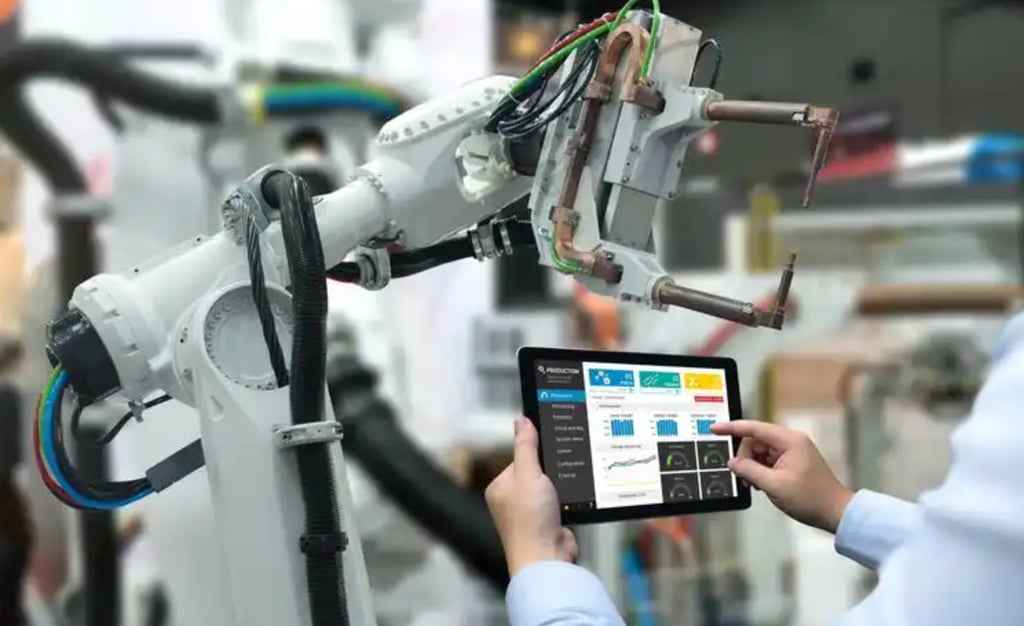
The conversation about robot cost usually starts and ends with the sticker price. That is a mistake. The sticker price is the smallest part of the equation. The real money is in what happens after the robot is bolted down and running. A robotic welding cell that costs more to install than a manual station will pay back that difference within a year or two. After that, the savings keep compounding for another fifteen to twenty years. That is the time horizon that matters, and it is the one that most cost comparisons never reach. For a buyer trying to decide whether automation makes financial sense, the numbers are more straightforward than the industry sometimes makes them look. And for a buyer who is open to used equipment, the numbers tilt even further in favor of automation.
Lower Operating Costs: More Than Just Labor
Labor is the cost everyone sees. A robot does not draw a wage, does not need benefits, and does not require overtime pay when a big order lands. But the operating savings go further than headcount. A robotic arc welding cell lays down a weld for roughly seventy-five cents per part. The same weld done manually costs between a dollar eighty and two fifty. The gap comes from arc-on time, the robot keeps the arc lit over ninety percent of the shift while a manual welder manages about thirty percent, and from filler metal utilization. A manual welder wastes roughly sixty to seventy percent of the filler wire through spatter, stub ends, and over-welding. A robot pushes that utilization past ninety percent. Less metal on the floor means less metal to buy and less grinding time to clean it up. Energy costs drop because a robotic cell can run with reduced lighting and climate control compared to a manual station. Compressed air, ventilation, and HVAC all shrink as line items.
The used robot vs new robot cost comparison pushes these savings even further. A refurbished industrial robot costs forty to sixty percent less than a comparable new unit. The operating savings are the same because the robot's mechanical performance is the same. What changes is the upfront investment, and that shorter payback window turns a good financial decision into an easy one.
Improving Product Quality and Reducing Waste
Quality problems are expensive. A rejected part has already consumed the material, the machine time, and the labor that went into it. If it reaches the customer, the cost multiplies. Robots reduce those costs by making the output predictable. A weld bead that is the same width, penetration, and appearance on every part eliminates the variation that causes rejects. Dispensing robots apply exactly the programmed amount of adhesive or sealant, with no extra bead added for safety. Assembly robots place parts with the same force and position every cycle. The cost of poor quality is not theoretical. Scrap rates, rework hours, and warranty claims are line items on a spreadsheet. Robots shrink all three.
Increasing Throughput and Productivity
A robot runs at the same speed on a Friday afternoon as it did on Monday morning. It does not slow down, does not take breaks, and does not lose focus. A robotic cell can run through shift changes, through lunch breaks, and in lights-out operation. The throughput gain is not about the robot moving faster than a person. It is about the robot moving continuously. A manual welder spends roughly thirty percent of the shift with an arc lit. A robot flips that number past ninety percent. The same logic applies to palletizing, machine tending, and assembly. More parts per shift with the same floor space and the same utility costs means the fixed overhead gets spread thinner across every unit.
Long-Term Return on Investment
An industrial robot is a twenty-year asset. The RV reducers in the joints are sealed units that require lubrication on a schedule measured in years. The controller does not wear out. The arm itself is a casting that can survive millions of cycles without fatigue. A refurbished robot return on investment is even stronger because the depreciation has already been taken by the first owner. The robot costs less to buy, delivers the same throughput, and still has a decade or more of useful life ahead of it. The payback period on a new robotic cell typically runs eighteen to twenty-four months. On a used cell, it can drop to under a year. After that, the robot runs in the black for the rest of its service life. The industrial robot payback period is not a guess. It is a calculation, and the variables are known.
The Used Robot Factor: Maximum Cost Effectiveness
Nothing about the cost advantages described above requires a new robot. A properly refurbished robot delivers the same precision, speed, and reliability as a new machine. The difference is the price. Buying a used industrial robot cuts the initial investment by forty to sixty percent, which means the same operating savings start producing net returns months earlier. Affordable used industrial robots have opened automation to manufacturers who could not make the numbers work at new equipment prices. The industrial robot cost comparison between new and used is not about getting less. It is about getting the same performance at a price that accelerates the payback and reduces the financial risk. The one thing that separates a smart used purchase from a gamble is a loaded test report. A robot that has been tested under real conditions and comes with the data to prove it is a known quantity. Everything else is speculation.
This article was prepared by Tyche Robotic, a supplier of refurbished six-axis industrial robots serving integrators and resellers in Latin America, Southeast Asia, and Europe.
Contact Us
As a professional supplier of used industrial robots, Jiangmen Tyche Robotic Co., Ltd. is committed to providing customers with integrated solutions—from hardware selection and configuration to software programming, debugging, and after‑sales maintenance.
© 2025. All rights reserved.

Mr. Victor Ismael