Mistakes to Avoid When Buying a Used Industrial Robot
Avoid costly errors when purchasing a used industrial robot. Covers supplier reputation, condition verification, spare parts, controller compatibility, and international shipping.
Tyche Robotic
4/21/20265 min read
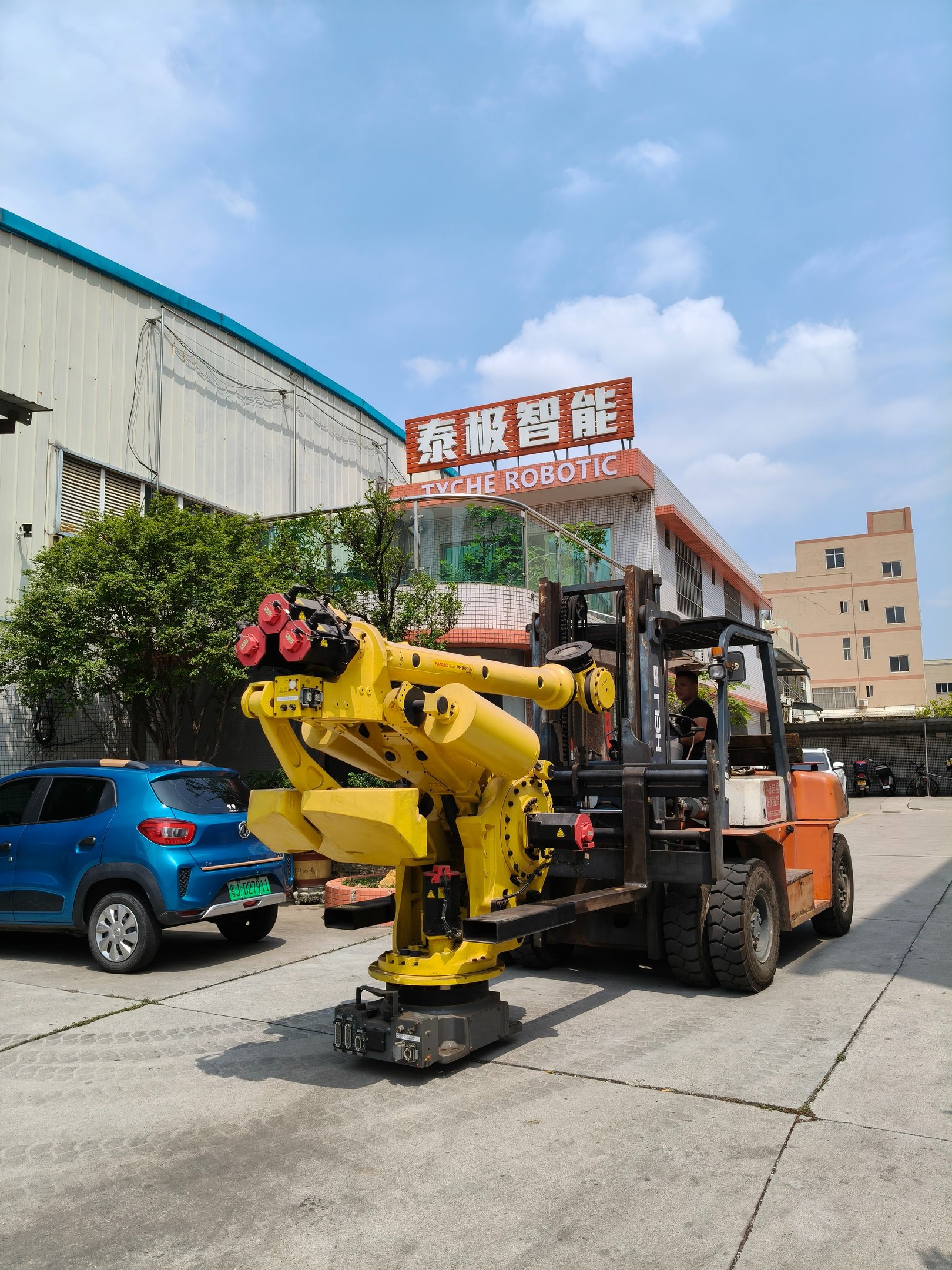
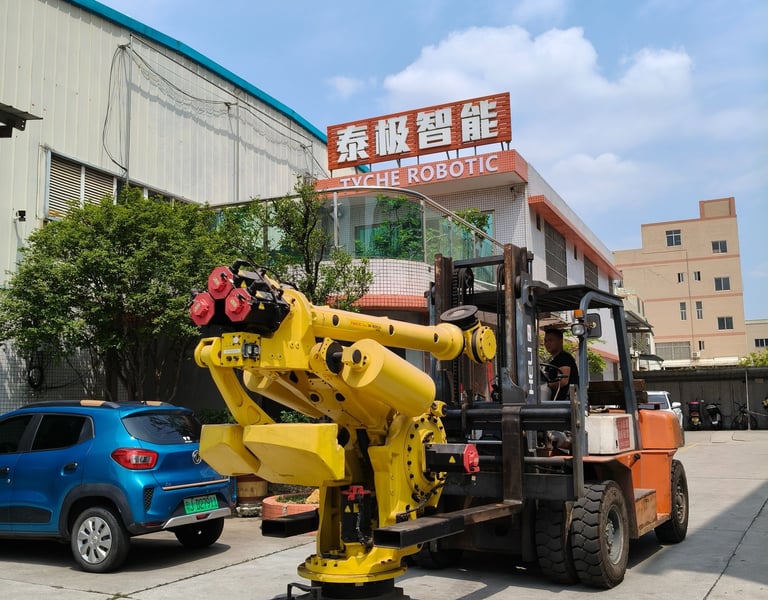
Buying a used industrial robot can be one of the smartest moves a factory or integration shop makes. You get a capable six-axis machine at forty to sixty percent off new equipment pricing, and if you pick the right unit, it'll run for years without drama. But there's a flip side. The used robot market isn't like buying a refurbished iPhone. Every machine has its own history, its own wear patterns, and its own little surprises waiting for the buyer who doesn't ask the right questions. Walk into a purchase blind, and what looked like a bargain can turn into a project that bleeds time and money. The good news is that most of the common mistakes are easy to avoid once you know what to look for.
Mistake One: Not Buying from a Reputable Supplier
This one sounds obvious, but it's where a lot of first-time buyers get tripped up. A reputable supplier isn't just someone with a website and a few photos of robots. It's someone who can tell you where the robot came from, what it was doing, and what kind of shape it's in right now. You want a supplier who runs actual tests, not just a visual once-over. That means load testing, checking axis temperatures, measuring backlash on the reducers. A decent supplier will have no problem sending you a test log or even a short video of the robot running through its paces. If the answer to "Can I see it move?" is anything other than "Sure, here's a video," that's a flag. You're not buying a toaster. You're buying something that needs to hold position to within a fraction of a millimeter while swinging a heavy payload. The seller should act like it. Tyche Robotic and other established suppliers in this space understand that transparency isn't a favor to the buyer. It's just how you do business when you're selling equipment that has a real job to do.
Mistake Two: Not Verifying the Robot's Actual Condition
Hour meters are useful, but they don't tell the whole story. A robot with ten thousand hours in a cleanroom is a very different machine from one with eight thousand hours in a foundry. The application matters more than the number on the counter. When you're evaluating a used robot, you need to know what it was doing before. Welding? Expect more wear on the wrist axes. Palletizing? Check the base and the primary arm for signs of heavy lifting cycles. Material handling in a dirty environment? Look inside the controller cabinet for dust or coolant residue. Also, ask about the maintenance history even if it's incomplete. Sometimes just knowing that the previous owner was a tier-one automotive supplier tells you they probably had a preventive maintenance schedule. If the seller can't give you any context about the robot's past life, you're buying a mystery box. That doesn't mean the robot is bad, but it does mean you should budget extra time for inspection and possible repairs on your end.
Mistake Three: Failing to Have a Source for Spare Parts
Industrial robots are built to run for decades, but they're still mechanical machines. Reducers wear out. Cables fatigue. Teach pendant membranes crack. It happens. The difference between a minor annoyance and a major headache is whether you can get parts when you need them. This is where buying from one of the Big Four brands really pays off. KUKA, ABB, FANUC, and Yaskawa all have massive installed bases and established parts channels. You can find servo motors, gearboxes, and controller components without too much trouble. But it's still worth thinking about before you buy. Ask your supplier what parts availability looks like for the specific model and controller generation you're considering. Some older controllers have components that are getting harder to source. That doesn't mean you shouldn't buy the robot. It just means you should know what you're getting into. A good supplier will be upfront about this. At Tyche Robotic, the focus is on models and generations where parts are still readily available, because nobody wants a robot that becomes a paperweight because of a dead power supply.
Mistake Four: Buying from a Supplier with Limited Inventory
If a supplier only has one or two robots that might fit your application, you're in a weak negotiating position and you might end up settling for a machine that's not quite right. Maybe the reach is a little short. Maybe the payload is cutting it close. Maybe the controller generation is older than you'd like. A supplier with deeper inventory gives you options. You can compare multiple units of the same model and pick the one with the best test results and the cleanest history. You can also build a relationship with a single source instead of shopping around every time you need a robot. This matters more than you'd think. When you find a supplier who consistently delivers quality equipment and doesn't play games with condition reports, you save yourself a ton of time on every subsequent purchase. You already know what to expect.
Mistake Five: Ignoring Controller Generation and Software Compatibility
The mechanical arm gets all the attention, but the controller is where a lot of integration headaches live. Different generations of controllers have different capabilities, and not all of them play nicely with modern PLCs and safety systems. Take KUKA as an example. The older KRC2 controller is still out there on plenty of used robots. It works fine, but getting it to talk to a newer EtherNet/IP network often requires extra hardware and some engineering time. The KR C4 is more modern, with native support for the protocols most integrators use today. ABB has a similar story with S4 versus IRC5. FANUC's R-30iA and R-30iB are both solid, but the software options and licensing are tied to the specific controller. Before you commit to a used robot, know exactly which controller you're getting and what software version it's running. Also ask about technology packages. Arc welding software, force sensing, vision support. These are often licensed features. If they're included, great. If not, factor that cost into your budget.
Mistake Six: Overlooking International Logistics
If you're buying a used robot and having it shipped across an ocean, there's a whole extra layer of things that can go wrong. A robot that runs beautifully in a warehouse can show up at your facility with surface rust because nobody thought about humidity during the six-week sea voyage. It happens more often than you'd think. Proper export packaging isn't complicated, but it does require attention. VCI anti-corrosion film inside the crate, desiccant packs to absorb moisture, and an ISPM 15 compliant wooden crate so customs doesn't hold your shipment. Also, verify voltage and frequency before the robot leaves. Most controllers can be configured for either 50 or 60 Hz, but finding out on site that nobody flipped the switch is a frustration you don't need. A supplier who handles international shipments regularly will know all of this. If you're buying from someone who mostly sells domestically, you might want to ask a few extra questions about how they prep machines for ocean freight.
The Bottom Line
A used industrial robot is one of the best value propositions in automation, but only if you go in with your eyes open. Buy from someone who tests their equipment and stands behind it. Know what you're getting in terms of condition, controller generation, and application history. Have a plan for spare parts. And if you're shipping internationally, make sure the machine is packaged to survive the trip. Skip any of these steps, and you're rolling dice. Follow them, and you'll likely end up with a workhorse that pays for itself many times over.
This guide was prepared by Tyche Robotic, a supplier of refurbished six-axis industrial robots serving integrators and resellers in Latin America, Southeast Asia, and Europe.
Contact Us
As a professional supplier of used industrial robots, Jiangmen Tyche Robotic Co., Ltd. is committed to providing customers with integrated solutions—from hardware selection and configuration to software programming, debugging, and after‑sales maintenance.
© 2025. All rights reserved.

Mr. Victor Ismael