Industrial Robots in the Oil & Gas Industry: Key Models from FANUC, KUKA, ABB, and Yaskawa
A practical overview of industrial robots in the oil and gas industry. Covers key models from FANUC, KUKA, ABB, and Yaskawa for pipeline welding, heavy handling, and offshore applications, plus what to check when buying used.
Tyche Robotic
5/13/20265 min read
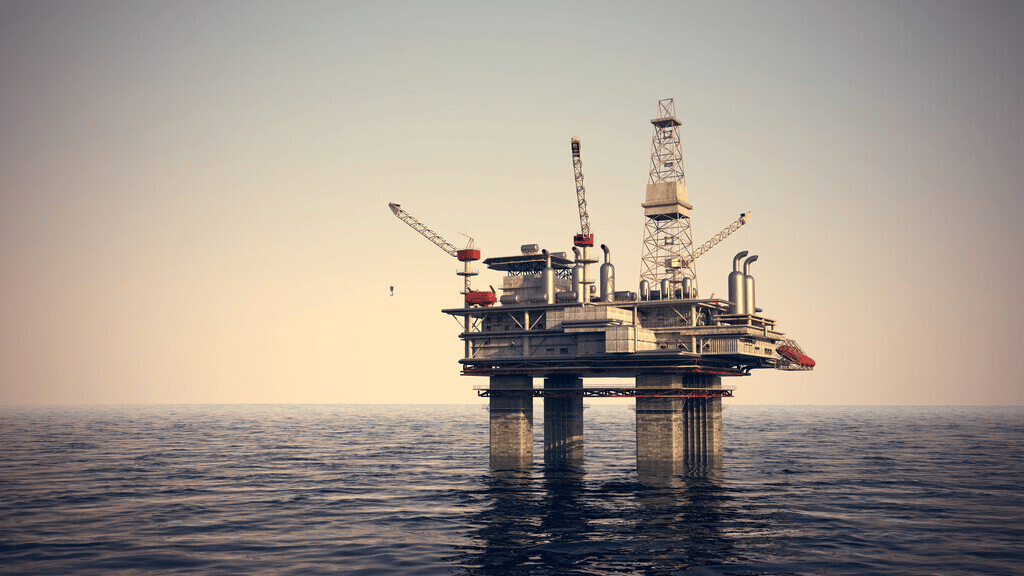
The oil and gas industry does not look like a typical robot factory. There are no tidy assembly lines, no climate-controlled rooms, and the parts being handled weigh tons, not grams. Yet industrial robots have been working in this industry for years, quietly taking over some of the hardest jobs on the planet. Pipe welding on a remote pipeline spread, heavy valve assembly in a fabrication yard, inspection on an offshore platform. These are the tasks that push both humans and machines to their limits. The four major industrial robot brands each have their own approach to solving the challenges of oil and gas, and understanding the differences between their offerings helps buyers pick the right machine for an environment that does not forgive mistakes.
What Makes Oil & Gas Applications Different
Three things set oil and gas apart from any other robot application. The first is an explosive atmosphere. Pipelines, refineries, and offshore platforms operate in environments where a single spark can be catastrophic. Robots working in these zones must meet strict explosion-proof certifications. The second is environmental extremes. A robot on a North Sea platform faces salt spray, sub-zero temperatures, and constant moisture. A robot in a Middle Eastern desert fabrication yard deals with sand, heat above fifty degrees Celsius, and UV exposure that degrades ordinary materials. The third is scale. A pipe weldment can weigh several tons. A valve assembly may need to be rotated and positioned with precision while suspended. Standard industrial robots with payloads of a few hundred kilograms are simply not enough for a lot of this work. The machines that survive here are built differently.
FANUC in Oil & Gas
FANUC entered the oil and gas conversation through heavy payload robots and explosion-proof variants. The M-900iA series is the most visible FANUC model in this sector. With payloads reaching six hundred kilograms and beyond, these robots handle large pipe sections, valve bodies, and drilling components that would dwarf a standard industrial arm. In welding applications, FANUC robots paired with the R-30iB controller run multipass welds on thick-wall pipe, where the bead has to be consistent across dozens of passes. Painting and coating applications use explosion-proof FANUC models to apply protective layers on risers, manifolds, and subsea equipment in ventilated spray booths inside fabrication yards. Inspection robots equipped with iRVision check weld profiles and dimensional tolerances on critical joints, documenting each result for traceability. In machine tending, FANUC robots load and unload CNC machines that cut threads and flanges into drill pipe and casing. The common thread across all FANUC oil and gas applications is the combination of high payload capacity and the availability of explosion-proof configurations that meet the basic safety requirements of hazardous-area operation.
KUKA in Oil & Gas
KUKA brings heavy metal to the oil and gas industry in the most literal sense. The KR QUANTEC and KR FORTEC series handle payloads in the two hundred to three hundred kilogram range for general fabrication tasks, but the real standout for this industry is the KR 1000 titan. With a payload of one thousand kilograms, the titan handles the kind of lifts that would otherwise require a crane or a dedicated positioner. In pipe welding, KUKA robots paired with the KRC4 controller run submerged arc and MIG processes on longitudinal and circumferential seams, the kind of work that builds the large-diameter transmission pipe that moves oil and gas across continents. KUKA has also put robots into offshore applications. Corrosion-resistant coatings and sealed drive systems allow certain configurations to operate in the high-humidity, high-salinity conditions of offshore platforms and coastal fabrication yards. The brand's experience in shipbuilding and heavy marine engineering carries over directly to the oil and gas supply chain, where handling and welding massive structural components is a daily requirement.
ABB in Oil & Gas
ABB approaches oil and gas from a systems perspective. The IRB 6700, IRB 7600, and IRB 8700 series cover the payload range from one hundred fifty to eight hundred kilograms, with reach options that suit large fabrication bays and pipe-coating facilities. What sets ABB apart is not just the arm but the control architecture. ABB has deep roots in process automation for refineries and offshore facilities, which means their robots can integrate with the broader plant control systems that oil and gas operators already use. In remote pipeline inspection, ABB has deployed specialized robotic systems that travel inside pipelines to detect corrosion and wall thinning before they become failures. On offshore platforms, ABB robots handle drilling tool assembly and maintenance tasks in environments where sending a human crew is both dangerous and expensive. The IRC5 controller supports remote monitoring and diagnostics, a capability that matters a great deal for oil and gas installations that are hundreds of kilometers from the nearest service center. IP67-rated variants provide ingress protection against dust and water, which helps in coastal and desert environments where fine particles work their way into unsealed joints.
Yaskawa (Motoman) in Oil & Gas
Yaskawa's Motoman line is best known in oil and gas for welding. The MH and HP series cover payloads from a dozen kilograms to six hundred kilograms, and Yaskawa's strength in arc welding translates directly to the thick-wall, high-integrity welds that oil and gas pipe fabrication demands. MotoWeld, the brand's dedicated welding software package, manages multipass weld scheduling and adaptive fill, which are essential when welding joints that can take hours to complete. Beyond welding, Yaskawa's explosion-proof robot variants operate in the downstream refining and petrochemical sectors, where hazardous atmospheres are an everyday operating condition. Material handling robots from Yaskawa move pipe sections, flanges, and fittings through fabrication cells, often in combination with positioners that rotate the workpiece as the robot welds. The brand's dual-arm robot configurations have found niche applications in subsea equipment assembly, where two arms working together can handle complex geometries that a single arm cannot easily manage. For operators looking for cost-effective entry points into robotic oil and gas fabrication, Yaskawa's used robots are often available at more moderate prices than the other three major brands, while still delivering the payload capacity and reliability the industry requires.
What to Know When Buying a Used Robot for Oil & Gas
Used robots coming out of the oil and gas industry carry a history that matters more than in most other sectors. A robot that spent five years on a remote pipeline spread has dealt with temperature swings, dust, and limited maintenance access. A robot from an offshore platform has been exposed to salt spray and humidity that accelerate corrosion in ways a factory-floor robot never experiences. The first thing to check is the explosion-proof or high-ingress-protection certification. These certifications are not automatically transferable from one owner to the next. Confirm with the seller that the paperwork is intact and that the certification remains valid for your intended operating environment and region, because the ATEX and IECEx standards applied on a robot working in the North Sea may differ from what is accepted in other regulatory jurisdictions. Inspection data from a supplier who has run the robot under load is the minimum standard before purchasing. The second area to examine is environmental wear. Seals degrade faster in this industry. Corrosion on connectors, cable glands, and exposed fasteners is common. A robot that looks clean on the outside may have moisture damage inside the controller if it was stored improperly after decommissioning. Third, verify the software. Welding robots from oil and gas fabrication often carry specialized multipass welding software packages. If those licenses are not transferable, the robot loses a significant part of its value. Fourth, ask for maintenance records. Oil and gas operators tend to be disciplined about maintenance because downtime costs are extreme, but that discipline varies widely between offshore platforms, pipeline contractors, and fabrication yards. A robot with a complete service history is worth more than one without, and the difference in price should reflect that.
This article was prepared by Tyche Robotic, a supplier of refurbished six-axis industrial robots serving integrators and resellers in Latin America, Southeast Asia, and Europe.
Contact Us
As a professional supplier of used industrial robots, Jiangmen Tyche Robotic Co., Ltd. is committed to providing customers with integrated solutions—from hardware selection and configuration to software programming, debugging, and after‑sales maintenance.
© 2025. All rights reserved.

Mr. Victor Ismael