How to Select the Right Robotic Gripper: Matching the Tool to the Job
A practical guide to selecting a robotic gripper covering part requirements, gripper types and power sources, environmental considerations, controller compatibility, Big Four integration approaches, and what to inspect when buying used.
Tyche Robotic
6/12/20266 min read
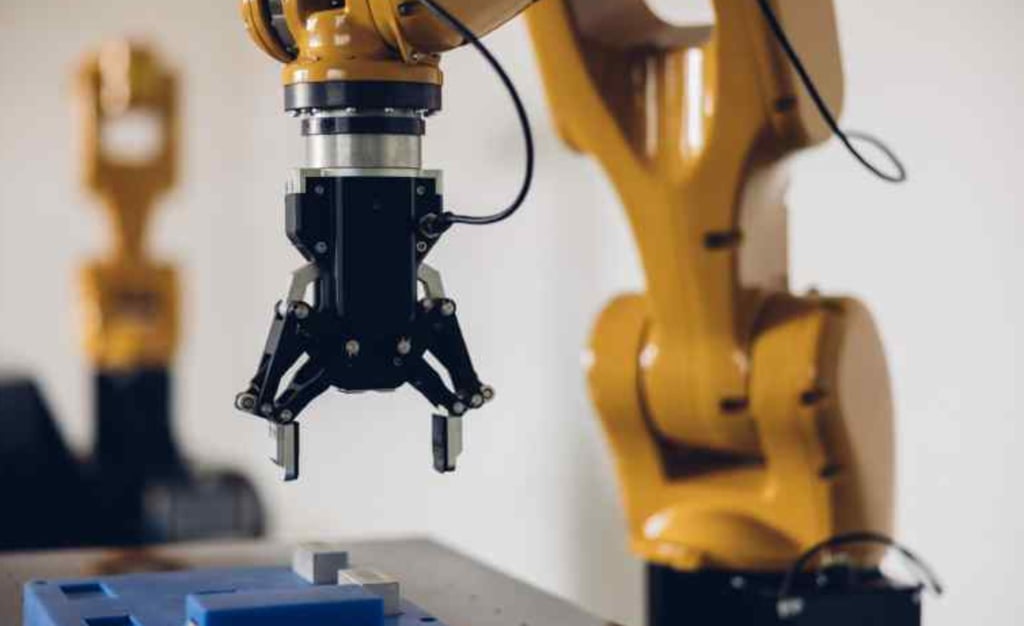
A robot arm can move to a programmed position and orient itself in space, but it cannot do anything useful until something is bolted to its wrist. That something is the gripper, and it is the only part of the robot that actually touches the product. Every other component in the cell exists to support the gripper's work. Pick the wrong one, and the robot will drop parts, damage product, or sit idle while someone figures out why the grip force is not enough. Gripper selection is not about finding the best gripper in a catalog. It is about finding the gripper that matches the part, the process, and the environment. That match starts with the workpiece and works outward from there.
Start with the Part: Weight, Shape, Material, and Size
The part dictates everything else about the gripper. The weight determines the grip force. The rule of thumb is to multiply the part weight by one and a half to two times to account for acceleration during robot motion. A five-kilogram part needs a gripper that can hold at least seven and a half to ten kilograms when the robot is moving at production speed. The shape determines the finger count and configuration. A cylindrical part self-centers in a three-finger gripper. A flat panel needs two fingers with parallel motion. An irregular casting may need custom-shaped jaws or an angled gripper that can approach from the side. The material determines whether the gripper needs soft pads, special coatings, or a different gripping technology entirely. A polished aluminum surface is a candidate for vacuum cups. A porous or textured surface is not. A fragile glass component needs force control precise enough to hold it without cracking. A rough steel casting can be grabbed with hardened steel fingers without worrying about surface damage. The size variation matters more than most buyers realize. If the robot will handle parts of different sizes, the gripper needs enough stroke to accommodate the full range without mechanical changes. If the range is too wide for a single gripper, a tool changer becomes part of the conversation.
Choose the Gripper Type and Power Source
The gripper type and the power source are two decisions that get made together because they depend on the same set of requirements. Mechanical grippers with two or three fingers are the most common. A pneumatic mechanical gripper runs on compressed air, costs between two hundred and two thousand dollars, and cycles in under a tenth of a second. It is the default choice for high-speed pick-and-place, palletizing, and general handling where the part is consistent and the grip force does not need to change. An electric mechanical gripper uses a servo motor, costs between eight hundred and over five thousand dollars, and offers programmable grip force and position. It is the choice for precision assembly, cleanrooms, and applications where the robot handles multiple part sizes without changing tooling. A hydraulic mechanical gripper uses pressurized fluid, costs more than either pneumatic or electric, and generates clamping forces that nothing else can match. It is the choice for foundries, forge shops, and heavy fabrication.
Vacuum grippers use suction cups and regulated air flow. They work on flat, non-porous surfaces like sheet metal, glass, and plastic panels. They are gentle enough for food handling and precise enough for electronics. Magnetic grippers use electromagnets or permanent magnets to grab ferrous parts. They are fast, simple, and have no moving fingers to wear out, but they only work on magnetic materials. The pneumatic vs electric vs hydraulic gripper comparison does not have a universal winner. Each one solves a different set of problems.
Environment and Durability
The environment the gripper works in determines what it is made of and how it is protected. A food-grade application needs a gripper with smooth, crevice-free surfaces, IP69K washdown protection, and NSF-H1 food-grade lubricants. A cleanroom application needs a gripper that does not generate particles. A foundry application needs a gripper that can handle heat, dust, and the occasional impact with a raw casting. A wet or corrosive environment needs stainless steel construction and sealed joints. The environment also determines the maintenance schedule. A pneumatic gripper in a clean, dry factory might need seal replacement every twelve months. The same gripper in a foundry might need new seals every three months. The cost of the gripper is only part of the total cost. The maintenance cost over the life of the machine is the rest.
Controller Compatibility and Integration
The gripper has to communicate with the robot controller, and the integration path depends on the gripper type and the controller brand. A pneumatic gripper integrates through standard digital I/O. The controller sends a signal, a solenoid valve opens, and the gripper closes. This works on any robot brand with no special software. An electric gripper needs a communication path for position and force data. The gripper drive connects to the robot controller through EtherNet/IP, Profinet, or a dedicated interface, and the controller needs to understand the data it is receiving. FANUC's R-30iB handles this through standard I/O and optional Ethernet fieldbus protocols. ABB's IRC5 and OmniCore support integrated force control, which pairs with electric grippers that can report position and grip force. KUKA's KRC4 and KRC5 use an open architecture that accepts third-party gripper integration through standard industrial protocols. Yaskawa's YRC1000 connects pneumatic grippers through standard I/O and electric grippers through Ethernet communication.
The important thing to understand is that gripper compatibility with robot controllers is not brand-specific. A Schunk pneumatic gripper works with FANUC, ABB, KUKA, and Yaskawa. A Robotiq electric gripper integrates with all four. The mechanical mounting interface at the robot wrist is standardized, and the electrical and communication interfaces follow industry standards. The gripper is a separate decision from the robot brand.
How the Big Four Approach Gripper Selection
The robot brands do not manufacture grippers, but they do recommend and support specific gripper ecosystems. FANUC robots in material handling and palletizing commonly run pneumatic grippers from Schunk and Zimmer, with electric grippers used in assembly cells that require force feedback and iRVision integration. ABB integrates electric grippers from Robotiq and OnRobot into collaborative and precision assembly applications, where the TrueMove and QuickMove motion control pairs with the gripper's force sensing for consistent part handling. KUKA's open controller architecture makes it straightforward to integrate grippers from a wide range of manufacturers, with hydraulic grippers commonly paired with the KR QUANTEC series for heavy foundry applications. Yaskawa Motoman robots in arc welding cells frequently use pneumatic grippers for part handling, while assembly applications pair electric grippers with MotoSight vision for part location and verification. None of the Big Four lock buyers into a proprietary gripper ecosystem. The gripper is chosen for the part and the process, not for the color of the arm.
What to Know When Buying a Used Gripper
A used gripper can save money, but it needs its own inspection separate from the robot. The first thing to check is the mechanical condition. Manually cycle the fingers through their full range of motion. The movement should be smooth with no grinding, sticking, or uneven resistance. Any play in the finger joints means the bushings or guide rails are worn. A gripper that has run millions of cycles will show that wear at the pivot points. The second thing is the power system. On a pneumatic gripper, listen for air leaks when the gripper is pressurized. Check the fittings for corrosion and the solenoid valve for crisp actuation. On an electric gripper, run it through a test cycle and compare the commanded position to the reported position. Any discrepancy points to an encoder or drive issue. Test the force feedback by having the gripper close on a known object and confirming the reported force matches. On a hydraulic gripper, look for leaks around every fitting and hose. Hydraulic fluid leaves a residue that is easy to spot. Check the hoses for cracks or bulges. The third thing is the controller compatibility. Confirm that the communication interface on the gripper matches your robot controller. A pneumatic gripper with a standard solenoid valve will work with any controller that has digital I/O. An electric gripper with a proprietary communication protocol may need a specific drive or software package that must be transferred with the gripper. A used robotic gripper inspection is not complicated, but skipping it turns a bargain into a problem that sits on the robot wrist and prevents the cell from running. The gripper is a wear item. It has a finite service life, and on a used robot, knowing how much of that life is left is more valuable than knowing the brand name.
This article was prepared by Tyche Robotic, a supplier of refurbished six-axis industrial robots serving integrators and resellers in Latin America, Southeast Asia, and Europe.
Contact Us
As a professional supplier of used industrial robots, Jiangmen Tyche Robotic Co., Ltd. is committed to providing customers with integrated solutions—from hardware selection and configuration to software programming, debugging, and after‑sales maintenance.
© 2025. All rights reserved.

Mr. Victor Ismael