How Robotic Tool Changers Turn One Robot Into a Multitool
A practical guide to robotic tool changers. Covers pneumatic, electric, hydraulic and manual types, how the Big Four integrate with tool changers, applications across automotive and logistics, and what to check when buying a used robot with a tool changer.
Tyche Robotic
5/20/20266 min read
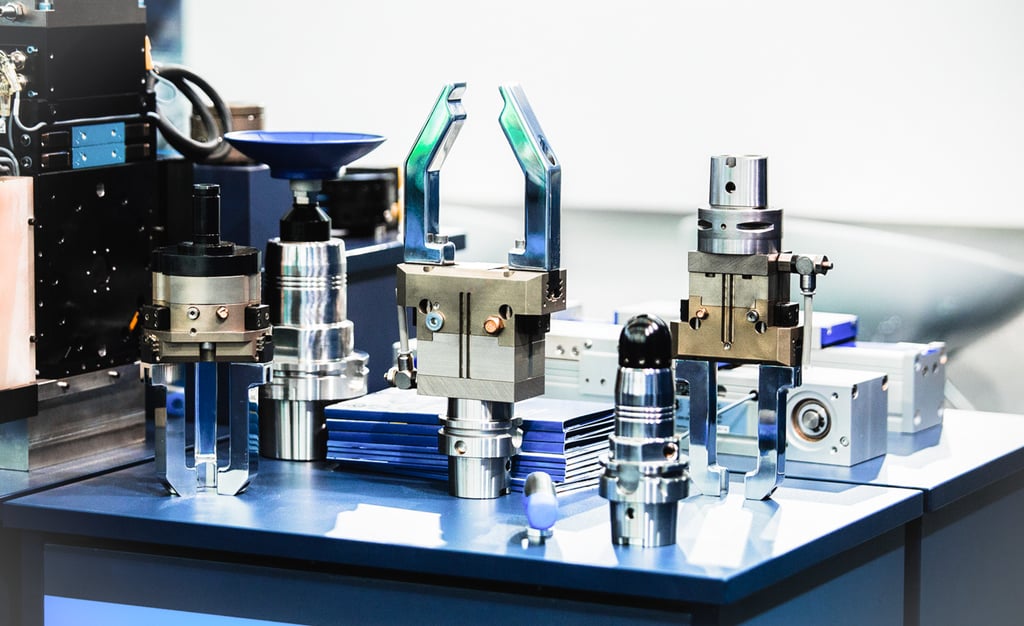
A robot that can only do one thing is a robot that spends a lot of time waiting. The arm might be fast, precise, and strong enough for several different jobs in the same cell, but if it cannot switch its own end-of-arm tooling, someone has to unbolt the gripper, disconnect the airlines, bolt on a weld gun, reconnect everything, and reprogram the positions. That someone is usually a skilled technician, and the clock is running the whole time. A robotic tool changer solves this by letting the robot swap tools on its own in seconds. The global market for these devices is expected to reach roughly three and a half billion dollars by 2034, growing at over eleven percent per year. That growth is driven by manufacturers who need one robot to do multiple things without losing production time to manual changeovers. Understanding how tool changers work, which type fits which job, and what to check when buying a used robot that already has one mounted is now part of evaluating any flexible automation cell.
What Robotic Tool Changers Are and How They Work
A tool changer is two plates that lock together. The master plate bolts to the robot wrist. The tool plate bolts to the end-of-arm tooling. When the robot needs a different tool, it moves to a docking station where the next tool is waiting. The master plate releases the old tool plate, docks with the new one, and locks. The whole swap takes seconds, not minutes. Inside that simple mechanism are several things happening at once. The locking mechanism has to engage with enough force to hold the tool rigidly while the robot accelerates, welds, or presses. Media channels running through both plates pass electrical signals, compressed air, hydraulic fluid, coolant, and data between the robot and the tool. And a safety mechanism has to keep the tool locked on even if power or air pressure is lost.
One thing worth clarifying early, because it trips up a lot of first-time buyers: a tool changer is not the tool itself. The end-of-arm tooling is the gripper, the weld gun, the deburring spindle. The tool changer is the device that lets the robot let go of one EOAT and pick up another. They are separate components, and they are evaluated separately.
Types of Tool Changers: Pneumatic, Electric, Hydraulic, and Manual
Tool changers come in four drive types, and each one makes sense for a different set of applications. Pneumatic is the most common. Compressed air drives the locking mechanism. When a pneumatic tool changer loses air pressure, it fails safe. The tool stays locked on, which is essential for handling heavy parts or working near people. The trade-off is that the locking force is limited by the air pressure available, and the seals need regular inspection. Most general industrial applications run pneumatic.
Electric tool changers use a motor-driven locking mechanism. They offer programmable locking force and can report their status back to the robot controller, confirming that the tool is attached and locked before the robot moves. They do not need compressed air, which simplifies the cell and eliminates a potential contamination source. That makes them popular in cleanrooms and medical manufacturing. The cost is higher than pneumatic.
Hydraulic tool changers use pressurized fluid to achieve very high locking forces. They show up in heavy foundry work and large-part handling where the tool and payload combination exceeds what a pneumatic unit can hold. The downside is that hydraulic systems can leak, and any leak near a hot casting or a machining center is a problem.
Manual tool changers are the simplest and cheapest. A technician unbolts one tool and bolts on another. There is no automation, no air, no power. They only make sense for shops with very low changeover frequency where the labor cost of a manual swap is less than the capital cost of an automated system.
The supplier landscape is fairly consolidated. ATI, Stäubli, Schunk, Nitta, and Destaco together hold roughly seventy percent of the global market. Automatic tool changers of all drive types account for about ninety percent of sales, which tells you that the industry has largely moved past manual changeovers.
Where Tool Changers Make the Biggest Difference
In automotive body shops, the same robot often needs to run spot welding, arc welding, and material handling in the same shift. A tool changer lets the robot drop off a weld gun and pick up a gripper while the line keeps moving. A manual changeover that could take hours gets compressed into seconds. In press shops, robots equipped with tool changers switch between different grippers for different stamped panels, running multiple part numbers through the same cell without stopping.
In foundries and heavy fabrication, a robot might need a gripper to load a raw casting into a trim press, then a deburring spindle to clean the flash, then a different gripper to place the finished part on a pallet. The tool changer makes that sequence possible with one robot instead of three. The environment is rough on seals and the locking mechanism, but pneumatic and hydraulic units designed for foundry use handle it.
In logistics and palletizing, a robot with a tool changer can pick up a case clamp for one product, a bag gripper for another, and a vacuum head for a third. When a distribution center runs hundreds of SKUs, the ability to switch tools automatically keeps one robot productive instead of dedicating separate cells to separate packaging types.
How the Big Four Work with Tool Changers
The major robot brands each support tool changers, but the integration depth varies. FANUC offers the WINGMAN quick-change system as an integrated option. The R-30iB controller manages tool station programming, and iRVision can automatically identify which tool is in the docking station. KUKA uses the KS Trunnion rotating drum system in body shops, where multiple tools mounted on a drum rotate into position as the robot needs them. The KRC4 and KRC5 controllers handle tool management natively. ABB's OmniCore controller supports tool changer programming across the IRB line, and the ModulFlex system stores up to six grippers that the robot can switch automatically. Yaskawa's YRC1000 controller handles automatic tool change scheduling, and the brand integrates with FerRobotics active angle changers and Kosmek quick-change units across the GP and MH series.
What matters for a buyer is that tool changers are mostly an open ecosystem. A FANUC robot can run a Schunk or Nitta tool changer. A KUKA can run an ATI or Stäubli unit. The mechanical interface between the robot wrist and the master plate is standardized, and the controller integration is handled through standard I/O. There is rarely a brand lock-in on the tool changer side.
What to Know When Buying a Used Robot with a Tool Changer
A used robot with a tool changer already mounted needs two inspections, and the tool changer side is where surprises hide. The locking mechanism is the heart of the device. Pneumatic fail-safe locks rely on springs or wedges that wear over time, especially if the robot ran high cycle counts with frequent tool changes. With the tool plate attached and the system pressurized, try to move the tool by hand. Any play between the master and tool plates means the locking surfaces or the alignment pins have worn. The lock should engage with a clean, sharp sound, not a sluggish clunk. Seals and media connections degrade next. Pneumatic tool changers need seal replacement roughly every six months to a year. Ask for service records showing when the seals were last changed. Hydraulic units need inspection for leaks around the fittings and any corrosion on the connectors that suggests fluid has been seeping. Repeatability matters more on a tool changer than most buyers realize. Every time the robot swaps tools, the tool plate has to return to the same position within the changer's rated tolerance. If the alignment pins or the locking surfaces have worn past that tolerance, the robot will pick up the tool slightly differently each time, and that error compounds through the entire process. Ask for repeatability test data from the most recent service. Media channels need individual testing. Each pneumatic, electrical, and hydraulic pass-through should be checked for continuity, leaks, and connector damage. One dead electrical pin in the tool changer means a sensor on the tool does not work. One leaking air channel means constant pressure loss and a compressor that runs harder than it should. The control cabling between the tool changer and the controller is another wear item. Sensor wires and solenoid cables flex with every tool change, and in a high-cycle cell, those conductors fatigue. Look for cracked insulation near the connectors and ask whether the seller has experienced any intermittent tool detection faults.
This article was prepared by Tyche Robotic, a supplier of refurbished six-axis industrial robots serving integrators and resellers in Latin America, Southeast Asia, and Europe.
Contact Us
As a professional supplier of used industrial robots, Jiangmen Tyche Robotic Co., Ltd. is committed to providing customers with integrated solutions—from hardware selection and configuration to software programming, debugging, and after‑sales maintenance.
© 2025. All rights reserved.

Mr. Victor Ismael