FANUC LR Mate 200iC vs. 200iD: What Changed and Which One Makes Sense on the Used Market
A detailed comparison of the FANUC LR Mate 200iC and 200iD compact robots. Covers specs, upgrades, application fit, used market availability, and what to check when buying a used LR Mate.
Tyche Robotic
5/29/20264 min read
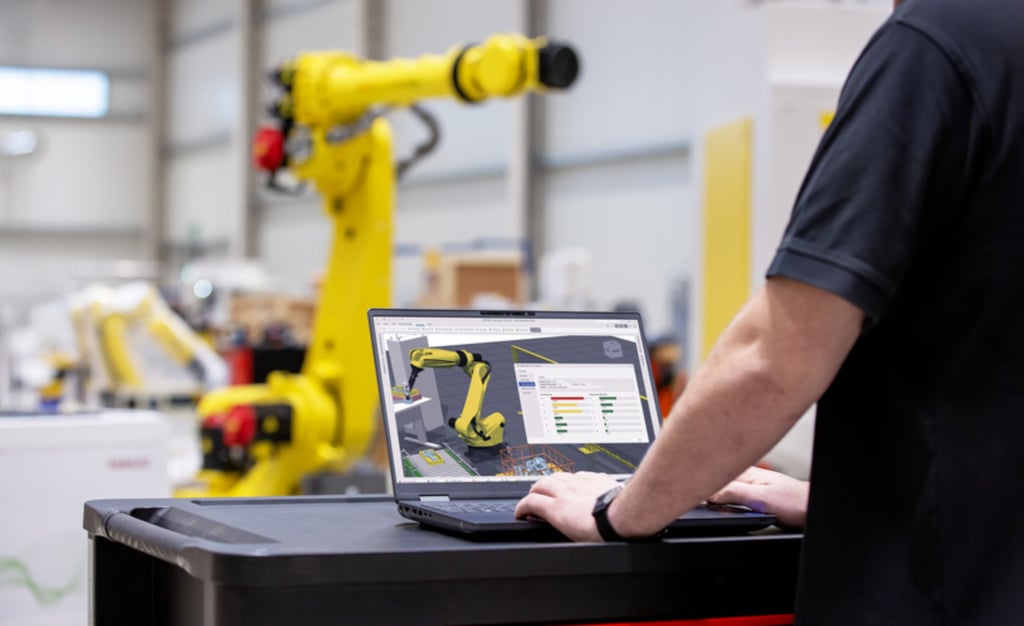
The FANUC LR Mate series has been the go-to compact six-axis robot for a long time. These are the tabletop yellow arms you see in electronics assembly lines, lab automation cells, and cleanrooms where a full-size industrial robot would be overkill. The 200iC was the workhorse of this line for years. The 200iD is its successor, and FANUC made enough changes between the two that the choice between them on the used market is not just a matter of finding the newer one. The 200iD is better on paper in every way. But the 200iC is cheaper, more available, and still perfectly capable for a lot of applications. Understanding what actually changed between the two models and where those changes matter is how a buyer decides whether to save money with a used 200iC or pay up for a used 200iD.
What the LR Mate 200iC Brought to the Table
The LR Mate 200iC carried five kilograms of payload over seven hundred four millimeters of reach. Repeatability sat at two hundredths of a millimeter. It shipped with the RJ3iC controller or the R-30iA Mate, both of which are still widely supported and understood by integrators. Mounting options covered floor, wall, ceiling, and angle. Cleanroom and food-grade versions were available. For years, this was the robot that ran small-part assembly, lab sample handling, and compact machine tending in factories and research facilities around the world. The 200iC was never the flashiest robot in the catalog, but it was one of the most deployed. That installed base is why the used market is full of them today.
What the LR Mate 200iD Improved
FANUC did not just tweak the 200iC when they designed the 200iD. They went after the fundamentals. Payload jumped from five to seven kilograms, a forty percent increase. Reach stretched slightly to seven hundred seventeen millimeters. Repeatability tightened to one hundredth of a millimeter, which puts it in the conversation with robots that cost a lot more. The arm itself got lighter. FANUC called it the lightest robot in its class, and less mass means faster acceleration, smoother motion, and shorter cycle times. The controller moved to the R-30iB, which integrates iRVision without a separate PC and handles more complex motion profiles. The big change for harsh or regulated environments is the IP67 rating across the entire robot. The 200iC had some protection, but the 200iD is fully sealed against dust and temporary immersion. FANUC also released dedicated food-grade, cleanroom, and wash-proof versions of the 200iD, each with the coatings, lubricants, and seals to match the environment they were built for.
Side by Side: Where the Differences Actually Matter
The numbers tell one story. Side by side, the 200iD carries more, reaches slightly further, holds a tighter tolerance, weighs less, and runs on a more modern controller. But the differences matter more in some applications than others. If the robot is going into a dry assembly cell picking small parts and placing them into a housing, a used 200iC will do the job just as well as a used 200iD, and it will cost less. If the application needs the extra payload, the tighter precision, or the higher speed, the 200iD starts to pull ahead. If the environment involves moisture, dust, or frequent washdown, the 200iD's full IP67 rating is not a nice-to-have. It is the reason to buy the newer robot. The 200iC's protection is partial. The 200iD's protection is complete. In a wet or dirty cell, that difference alone determines how long the robot lasts.
What This Means on the Used Market
The used market does not price these two robots based on spec sheets alone. It prices them based on availability and demand. The 200iC was produced for years and deployed in huge numbers across electronics, labs, and general manufacturing. When those facilities upgrade, the 200iC robots hit the used market in volume. Supply is high, so prices are moderate. Parts are everywhere, and every integrator knows the R-30iA Mate controller. The 200iD is newer, which means fewer of them have been retired. Supply is thinner, and prices are higher. But the 200iD robots that do show up on the used market often come from cleanrooms or food-grade applications where the environment was controlled and the maintenance was disciplined. A used 200iD with IP67 seals intact and a clean service history can be a better long-term buy than a 200iC that spent its life in a dusty shop, even if the 200iD costs more up front. The decision usually comes down to a simple question. Does the application need what the 200iD offers, or will the 200iC do the job just as well for less money? If the 200iD is priced more than fifty percent higher than a comparable 200iC and the application is a dry, clean, standard-precision task, the 200iC is usually the smarter buy. If the environment is harsh, the precision requirement is tight, or the extra payload matters, the 200iD earns its premium.
What to Check When Buying a Used LR Mate
Compact robots wear differently than big ones. The reducers are smaller, the seals are tighter, and the dress pack cycles more aggressively because the wrist moves faster and more often. Wrist backlash is the first measurement to ask for on any used LR Mate. A small robot with worn reducers will show positioning drift faster than a large one because there is less mechanical margin. The controller battery is next. An R-30iA Mate or R-30iB with a dead battery loses its mastering data, and re-mastering a six-axis arm adds commissioning time. For food-grade, cleanroom, or wash-proof versions, the certification paperwork is part of the machine's value. If the documents are missing, the robot may still work, but it will not pass an audit. The IP67 seals on the 200iD need inspection. Compact joints make it harder to spot hardened or cracked seals by eye, so ask for service records showing seal replacement history. The dress pack on a small robot takes more abuse than it does on a large one. The wrist flexes more frequently and through tighter angles. Check the protective tubing near the wrist for cracks, pinholes, or stiffness. If the robot came with iRVision, verify the calibration is intact and the software license is transferable.
This article was prepared by Tyche Robotic, a supplier of refurbished six-axis industrial robots serving integrators and resellers in Latin America, Southeast Asia, and Europe.

Contact Us
As a professional supplier of used industrial robots, Jiangmen Tyche Robotic Co., Ltd. is committed to providing customers with integrated solutions—from hardware selection and configuration to software programming, debugging, and after‑sales maintenance.
© 2025. All rights reserved.

Mr. Victor Ismael