The Benefits of Robotic Workcells: Why Manufacturers Are Automating with Integrated Cells
A practical look at the benefits of robotic workcells covering productivity, quality, flexibility, safety, and cost. Includes Big Four workcell approaches and why used robotic workcells deliver the same advantages faster and cheaper.
Tyche Robotic
6/22/20265 min read
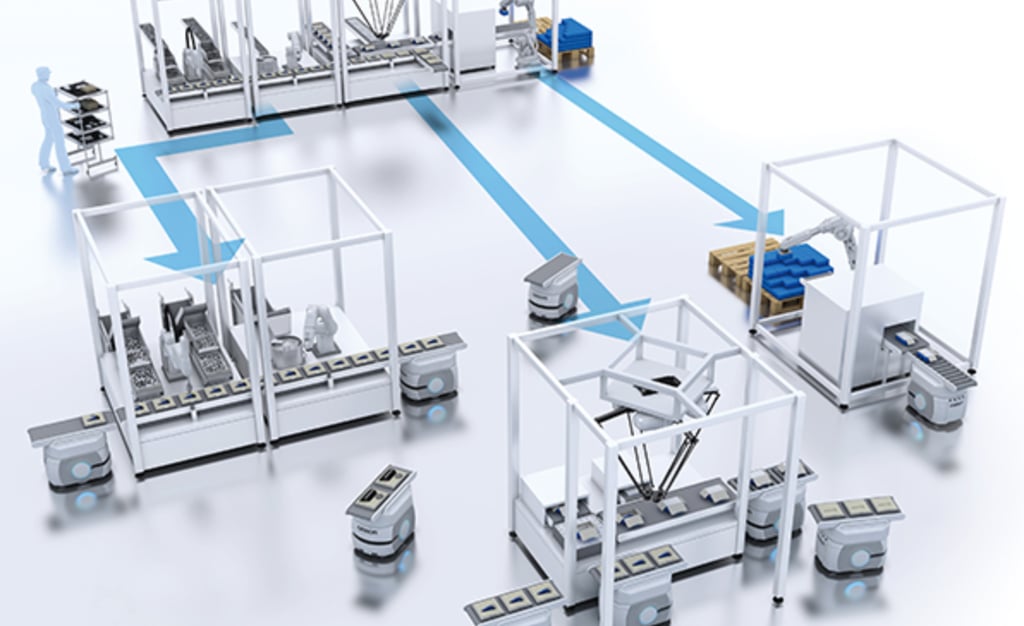
A robotic workcell is the difference between buying a robot and buying a production system. A robot by itself can move, but it cannot produce a finished part until someone builds a world around it—the safety fencing, the part feeders, the fixture table, the end-of-arm tooling, the controller, and the programming that ties all of it together. That world is the workcell. Manufacturers invest in workcells rather than standalone robots because the benefits show up on the production floor, not on a spec sheet. They show up as higher throughput, more consistent quality, fewer injuries, lower operating costs, and the ability to switch from one product to another without rebuilding the line. And for shops that want those benefits without the full cost of new equipment, used robotic workcell advantages are making automation accessible to manufacturers who would have been priced out a decade ago.
Increasing Productivity and Throughput
A robotic workcell compresses the time between the start of one part and the start of the next. The robot does not pause between shifts, does not slow down after lunch, and does not stop while an operator loads the next part. A well-designed cell keeps the robot moving while the operator works in a separate loading zone. The arc stays lit. The gripper keeps cycling. The pallet keeps building. In a robotic welding cell, arc-on time can run above ninety percent. A manual welder manages about thirty percent, with the rest of the time going to setup, repositioning, and the small pauses that happen when a person works. A robotic workcell running three shifts can effectively produce for twenty-two to twenty-three hours a day, stopping only for scheduled maintenance. That throughput is what turns a capital investment into a machine that pays for itself in months instead of years. A refurbished robot workcell ROI calculation tilts even further in the buyer's favor because the upfront cost is forty to sixty percent lower, while the throughput is the same.
Improving Quality and Consistency
A robot does not get distracted, does not rush, and does not have a bad day. Every cycle runs the same program with the same parameters. In a welding cell, the bead width, penetration, and travel speed are identical from the first part of the morning to the last part of the night. In a dispensing cell, the adhesive bead follows the same path with the same volume every time. In an assembly cell, the part is placed with the same force and orientation on every cycle. That consistency eliminates the rejects, rework, and warranty claims that eat into margins. When a pre-owned robot cell integration is done correctly, the quality improvement is the same as a new installation. The robot does not know it was refurbished. It just runs the program it was given.
Flexibility to Handle Different Tasks
A workcell built around a single dedicated process is a workcell that sits idle when the product changes. Modern robotic workcells are designed to adapt. Tool changers let a robot switch between a gripper, a weld gun, and a deburring tool in seconds. Offline programming lets the next part be programmed while the current one is still running. A used robot cell setup that includes a tool changer and a robot with multiple program slots can switch between part numbers in minutes instead of hours. This flexibility is what makes robotic workcells viable for manufacturers who run high-mix, low-volume production. The robot stays the same. The program and the tooling change, and the cell keeps producing.
Improving Worker Safety
A robotic workcell puts a physical barrier between the operator and the hazard. The robot welds behind a fence. The operator loads parts from outside the cell. The safety system, the fencing, the light curtains, the interlocks, and the controller-based safety functions, ensures that the robot stops or slows before a person can reach it. The tasks that cause the most injuries—heavy lifting, repetitive motion, exposure to fumes and arc flash—are the ones the robot takes over. A used robotic workcell with properly maintained safety equipment provides the same level of protection as a new one. The safety standards do not change because the robot was purchased second-hand. The fencing still has to meet the same requirements. The light curtains still have to trip at the same thresholds. The e-stops still have to shut everything down when pressed.
Lowering Operating Costs
The operating cost advantage of a robotic workcell shows up in a few places on the ledger. Labor is the most visible, but material savings run a close second. In a welding cell, the robot pushes filler metal utilization past ninety percent, compared to thirty to forty percent for manual welding. Less metal on the floor means less metal to buy and less grinding time to clean it up. Energy costs drop because the cell can run with reduced lighting and climate control. Maintenance costs become more predictable because the robot follows a known duty cycle and the wear items are replaced on a schedule rather than after a failure. For a shop evaluating second hand robot cell cost savings, the math is even more compelling. The equipment cost is forty to sixty percent lower, but the operating savings are the same. A refurbished robot cell that costs less to buy and delivers the same per-part cost reduction pays for itself in half the time.
How the Big Four Approach Robotic Workcells
The four major robot brands all deliver workcell-ready robots, but the integration philosophy differs. FANUC's R-30iB controller is a closed, stable system. The ArcTool welding package and the iRVision vision system integrate directly into the controller without external hardware, which simplifies the workcell design. A used FANUC robotic workcell with the software already installed and licensed is as close to plug-and-play as the used market gets. ABB builds its workcell offering around the IRC5 and OmniCore controllers. RobotStudio simulates the entire cell offline before installation, and TrueMove and QuickMove optimize the robot's path and cycle time. A used ABB robot cell with the controller intact and the simulation files available can be reconfigured faster than one without. KUKA's KRC4 and KRC5 open architecture makes it straightforward to integrate the robot with third-party equipment like custom grippers, vision systems, and part feeders. A used KUKA workcell can be adapted to new applications without being locked into proprietary interfaces. Yaskawa Motoman's YRC1000 controller handles multi-robot coordination natively, up to eight robots and seventy-two axes from a single unit. In a welding cell with multiple robots and positioners, this reduces the integration effort. Pre-owned robot cell integration with Yaskawa equipment often benefits from this built-in coordination capability.
The Used Robot Workcell Advantage
None of the benefits described above require a brand-new workcell. The robot does the same work, achieves the same throughput, and delivers the same quality whether it was commissioned last month or five years ago. The difference is what the buyer pays to get there. A refurbished robot workcell ROI is accelerated because the equipment cost is forty to sixty percent lower while the operating savings are identical. Buying a used robot cell makes automation accessible to manufacturers who cannot justify new equipment prices, and it allows manufacturers who already automate to expand their capacity faster. The three things to verify on any used workcell are the safety system integrity, the robot's mechanical condition with a loaded test report, and the condition of the end-of-arm tooling and part handling equipment. A used workcell that passes those three checks will deliver the same five benefits as a new one, at a cost that makes the decision to automate a much easier one.
This article was prepared by Tyche Robotic, a supplier of refurbished six-axis industrial robots serving integrators and resellers in Latin America, Southeast Asia, and Europe.
Contact Us
As a professional supplier of used industrial robots, Jiangmen Tyche Robotic Co., Ltd. is committed to providing customers with integrated solutions—from hardware selection and configuration to software programming, debugging, and after‑sales maintenance.
© 2025. All rights reserved.

Mr. Victor Ismael