Automating with Industrial Robots: A Practical Guide for First-Time Buyers
A practical guide to automating with industrial robots covering what robots do, benefits like productivity and cost savings, how FANUC, ABB, KUKA, and Yaskawa approach automation, and why buying used makes automation more affordable.
Tyche Robotic
6/10/20265 min read
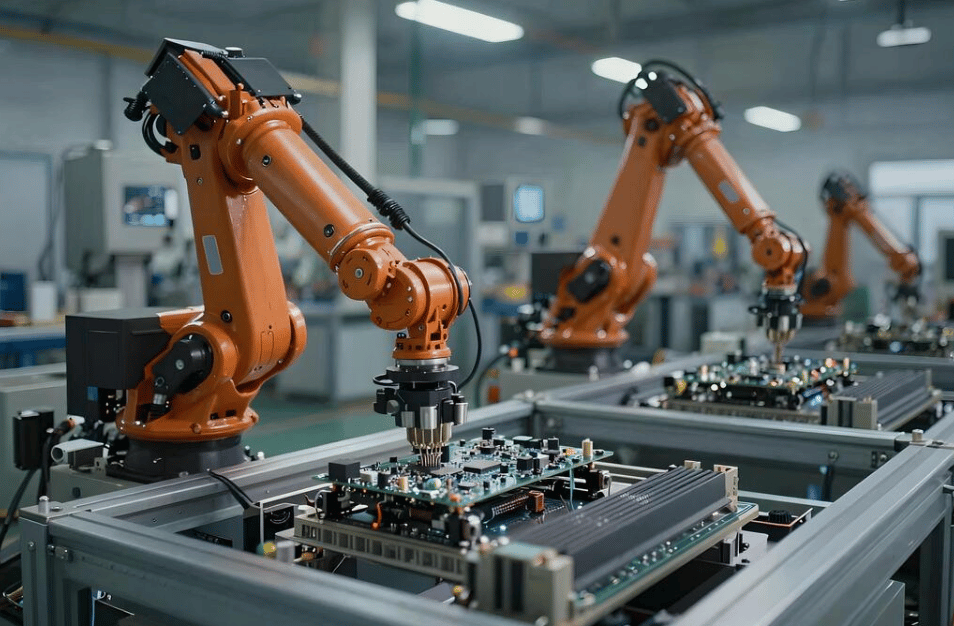
Automation is not some far-off concept that only makes sense for car plants and mega-corporations. It is a decision that small and medium-sized manufacturers make every day, and the math behind it is more straightforward than most people think. A robot does not call in sick, does not forget a step, and does not get hurt doing the jobs that send people home with injuries. The benefits of automating with robots have been proven across decades and across industries. What has changed is who can afford it. The used robot market has turned automation from a capital-intensive gamble into a practical option for shops that could not justify the expense ten years ago. This guide walks through what industrial robots actually do, what advantages they bring, how the major brands approach automation, and why buying used makes the whole thing pencil out faster.
What Industrial Robots Actually Do
An industrial robot is a programmable arm that can be fitted with different tools depending on the job. A welding torch turns it into a welder. A gripper turns it into a material handler. A dispensing nozzle turns it into a glue or sealant applicator. The robot itself is the motion platform. The tool is what gives it a trade. The most common type is the six-axis articulated arm, which moves like a human arm from shoulder to wrist and can reach into tight spaces at angles that a simpler machine cannot. Four-axis SCARA robots handle high-speed pick-and-place on a flat plane. Delta robots move even faster for lightweight sorting and packaging. The application determines the robot type, the payload determines the size, and the environment determines the protection level. These are the three variables that drive every robot purchase, whether new or used.
Improving Productivity and Quality
The most visible change when a robot takes over a task is that the output stops varying. A human welder lays down a slightly different bead every time. The width drifts. The penetration shifts. The travel speed slows down as the shift wears on. A robot eliminates that drift. The weld bead on the thousandth part is the same as the one on the first. The same consistency applies to dispensing, assembly, and material handling. A robot puts the part in the same place, with the same force, every cycle. This is not just about making prettier parts. It is about eliminating the rejects, rework, and warranty claims that eat into margins.
Productivity follows the same logic. A robot does not slow down after lunch. It does not take breaks. It runs through shift changes and can operate lights-out. A robotic welding cell keeps the arc lit over ninety percent of the shift. A manual welder manages about thirty percent. The rest of the time goes to setup, part handling, and repositioning. When the robot is moving, it is working. That ratio is what turns a robotic cell into a throughput engine.
Lowering Costs and Improving Safety
The cost advantage of a robot shows up in a few places on the ledger. Labor is the obvious one, but consumable savings run a close second. A robotic arc welding cell puts down a weld for roughly seventy-five cents per part. The same weld done manually costs between a dollar eighty and two fifty. The gap comes from arc-on time and from filler metal utilization. A manual welder wastes sixty to seventy percent of the filler wire through spatter, stub ends, and over-welding. A robot pushes that utilization past ninety percent. Less metal on the floor means less metal to buy and less grinding time to clean it up.
Safety is the quieter benefit but the one that compounds the most over time. The tasks that hurt workers the most, heavy lifting, repetitive motion, exposure to fumes and arc flash, are the ones robots take over. When the robot handles the hazardous work, the people move to safer roles. Injury rates drop, workers' compensation premiums shrink, and the factory becomes a place where people stay longer. In an industry where skilled labor is harder to find every year, being known as a safe place to work is a recruiting advantage.
Flexibility and Solving the Labor Shortage
A robot is not locked into one job. A welding cell can be reprogrammed for a different part in hours. A palletizing robot can switch between bag, case, and slip-sheet patterns with a program change. Tool changers let a single robot swap between a gripper, a weld gun, and a deburring tool in seconds. This flexibility is what makes automation viable for high-mix, low-volume shops. The robot stays the same. The tooling and the program change.
The labor shortage is the reason a lot of shops pick up the phone and start asking about robots in the first place. Welders, machinists, and machine operators are aging out of the workforce faster than young people are replacing them. The average welder in the United States is in their mid-fifties. A robot in this context is not taking a job from someone who wants it. It is filling a gap left by someone who retired, and without it, the work simply would not get done. The manufacturer who automates is the one who stays in business when the labor pool runs dry.
How the Big Four Approach Automation
The four major robot brands all deliver the same core benefits, but they get there by different paths. FANUC built its name on reliability. The robots are famous for running three shifts a day for twenty years with minimal maintenance. The R-30iB controller is a closed, stable system that does exactly what it was programmed to do. FANUC dominates spot welding and arc welding, and its used robots are the most common on the market. ABB built its name on motion control and precision. TrueMove and QuickMove deliver path accuracy and cycle time optimization. ABB leads in painting, precision handling, and collaborative safety with SafeMove2. KUKA built its name on heavy payloads and an open controller architecture. The KR QUANTEC and KR 1000 titan handle lifts that other robots cannot. The Windows-based KRC4 and KRC5 give integrators flexibility. Yaskawa Motoman built its name on arc welding. It ships more arc welding robots than any other brand. The YRC1000 controller handles multi-robot coordination natively, up to eight robots from a single box. The choice between brands often comes down to which controller the local integrator knows best and which brand has the strongest service presence in the region.
The Used Robot Advantage: All the Benefits at a Lower Cost
None of the benefits described above require a brand-new robot. A properly refurbished industrial robot delivers the same precision, the same speed, the same reliability, and the same safety as a new one. The difference is the price. Buying a used robot for automation cuts the upfront investment by forty to sixty percent. The operating savings are identical because the mechanical performance is identical. What changes is the payback period. An affordable robot automation project that might take eighteen to twenty-four months to pay off with new equipment can pay off in under a year with refurbished equipment. Pre-owned industrial robot benefits are not about settling for less. They are about getting the full return on automation at a cost that makes sense for manufacturers who cannot or will not pay new equipment prices. The one document that separates a smart used purchase from a gamble is a loaded test report. A robot that has been tested under real conditions and comes with the data to prove it is a known quantity. Everything else is a guess.
This article was prepared by Tyche Robotic, a supplier of refurbished six-axis industrial robots serving integrators and resellers in Latin America, Southeast Asia, and Europe.
Contact Us
As a professional supplier of used industrial robots, Jiangmen Tyche Robotic Co., Ltd. is committed to providing customers with integrated solutions—from hardware selection and configuration to software programming, debugging, and after‑sales maintenance.
© 2025. All rights reserved.

Mr. Victor Ismael