The Real Advantages of Automating with Industrial Robots: What First-Time Buyers Should Know
A practical look at the advantages of automating with robots, including quality, cost, safety, flexibility, productivity, and solving labor shortages. Covers how used robots make these benefits more accessible.
Tyche Robotic
6/9/20265 min read
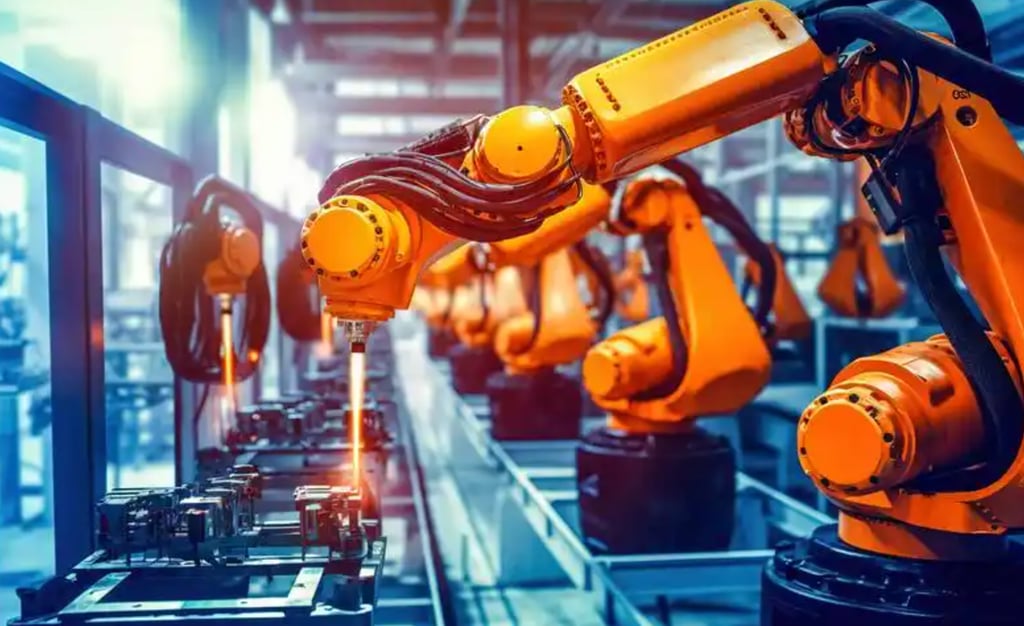
Automation is not some futuristic idea that only belongs to car plants and mega-factories. It is a decision that shops of all sizes make every day, and the reasons are more practical than most people think. A robot does not call in sick. It does not forget a step when the Friday afternoon fatigue hits. It does not get burned by spatter or throw out its back lifting something heavy. The advantages of automating with robots are not about replacing people. They are about doing the work that people should not have to do, at a quality level that people cannot sustain over a ten-hour shift, at a cost that keeps the doors open and the lights on. And these advantages are not reserved for companies that can afford brand-new equipment. The used robot market has made automation accessible to manufacturers who would have been priced out a decade ago.
Eliminating Human Error and Improving Quality
The most immediate change when a robot takes over a task is that the output stops varying. A human welder lays down a slightly different bead every time. The width shifts a little. The penetration is a little deeper or shallower. The travel speed drifts over the course of a shift. A robot eliminates that drift. The weld bead on the thousandth part is the same as the one on the first. The same applies to dispensing, assembly, and material handling. A robot puts the part in the same place, with the same force, every cycle. Quality stops being something you inspect for and starts being something you can predict. Fewer rejects, less rework, and fewer angry calls from the customer who got a bad batch.
Lowering Operating Costs
The cost advantage of robots shows up in a few different places on the ledger. Labor is the most visible one, but material savings run a close second. A robotic arc welding cell can put down a weld for around seventy-five cents per part. The same weld done manually costs between a dollar eighty and two fifty. The gap comes from arc-on time, the robot keeps the arc lit over ninety percent of the shift while a manual welder manages about thirty percent, and from consumable waste, the robot uses filler metal more efficiently and produces less spatter to clean up. Energy costs drop because a robotic cell can run with reduced lighting and climate control. And when you buy a used industrial robot, the equipment cost itself drops by forty to sixty percent, which pulls the payback period forward from years to months. The benefits of industrial robots on the cost side are not theoretical. They show up in the numbers within the first year.
Improving Worker Safety
The tasks that hurt workers the most are the ones robots are best at taking over. Heavy lifting leads to back injuries and joint damage over time. Repetitive motion causes strain injuries that accumulate over years and end careers. Exposure to welding fumes, arc flash, chemical vapors, and extreme heat creates long-term health problems that are expensive to treat and impossible to reverse. A robot does not get injured doing any of these things. When the robot takes the hazardous work, the people who used to do it can be moved to safer roles, programming, monitoring, quality control. The factory becomes a safer place, which makes it easier to recruit and retain employees. Fewer injuries also mean lower workers' compensation premiums and less time lost to injury-related absenteeism.
Saving Floor Space and Reducing Waste
A robotic cell packs more production into less square footage than a manual station. There is no operator aisle around every machine, no staging area for parts that accumulate while the operator is busy elsewhere. The robot is the operator, and it does not need walking room. Material waste drops for the same reason quality improves. The robot applies exactly the right amount of filler metal, adhesive, or sealant. It does not over-weld to be safe. It does not lay down an extra bead of glue because the first one looked a little thin. Those small savings compound across thousands of cycles into real reductions in consumable costs.
Flexibility to Handle Different Tasks
A robot is not locked into one job forever. A welding cell can be reprogrammed for a different part in hours, not days. A palletizing robot can switch between bag, case, and slip-sheet patterns with a program change instead of a mechanical overhaul. Tool changers let a single robot switch between a gripper, a weld gun, and a deburring tool in seconds. This flexibility is what makes automation viable for shops that run high-mix, low-volume production. The robot stays the same. The tooling and the program change, and the cell adapts.
Increasing Productivity and Throughput
A robot does not slow down after lunch, does not take breaks, and does not lose focus at the end of a ten-hour shift. It runs at the same speed from the first cycle to the last. That consistency is what turns a robotic cell into a throughput engine. The arc stays lit. The gripper keeps cycling. The pallet keeps building. The robot does not have an off day. It has the cycle time you programmed into it, and it hits that cycle time every single time.
Solving the Labor Shortage
The skilled trades are aging, and younger workers are not replacing them fast enough. The average welder in the United States is in their mid-fifties. The same is true for machinists and machine operators. Every year, more experienced people retire than enter the workforce. A robot in this context is not taking a job from someone who wants it. It is filling a gap left by someone who retired, and without the robot, the work simply would not get done. The manufacturer who automates is the one who stays in business when the labor pool runs dry.
The Used Robot Advantage: All the Benefits at a Lower Cost
None of the advantages listed above require a brand-new robot. A properly refurbished industrial robot delivers the same precision, the same speed, the same reliability, and the same safety as a new one. The difference is the price. A used robot costs forty to sixty percent less than a comparable new unit, which means the same quality improvement, the same cost reduction, and the same productivity gains are available to shops that could not justify a new equipment purchase. The used robot advantage is not about settling for less. It is about getting the full benefit of automation at a cost that makes sense for small and medium-sized manufacturers. A loaded test report is the document that proves the robot was tested under real conditions, and it is the one thing every used buyer should ask for before signing a check.
This article was prepared by Tyche Robotic, a supplier of refurbished six-axis industrial robots serving integrators and resellers in Latin America, Southeast Asia, and Europe.
Contact Us
As a professional supplier of used industrial robots, Jiangmen Tyche Robotic Co., Ltd. is committed to providing customers with integrated solutions—from hardware selection and configuration to software programming, debugging, and after‑sales maintenance.
© 2025. All rights reserved.

Mr. Victor Ismael